Bitcoin Price Stalls at $68K as Fed Shift Nears — Breakout or Breakdown Next?

On Tuesday, February 10, 2026, Bitcoin (BTC) started the day lower, falling below the key $70,000 mark. Now trading around $68,600, Bitcoin has had trouble regaining strength after a volatile week, with prices dropping to $60,000 before bouncing back.

Right now, the market is stuck in a range between $68,000 and $72,000. This sideways movement comes after forced liquidations made last week’s drop worse, so investors are waiting for clearer economic signals before making moves.

Bitcoin Technical Analysis: 4H Chart Signals Compression

Recent 4-hour chart data shows that the sharp selloff from the $78,900 high has slowed down, but buyers still haven’t taken charge.

  • Descending Channel: Bitcoin’s price has followed a downward channel, bouncing off the falling trendline several times.
  • Fibonacci Levels: BTC found support at the 0.236 Fib level ($64,400) and is now trading between the 0.382 ($67,200) and 0.5 ($69,450) retracement levels.
  • Momentum Indicators: The RSI is between 40 and 45, which shows that selling pressure is easing, but there’s no clear sign of a bullish trend yet.

Trade Idea: Some analysts recommend buying on dips near $67,200, setting a stop-loss below $64,400, and aiming for a target of $71,700, which is the 0.618 Fibonacci resistance.

U.S. Economic Data and the “Warsh Effect”

The crypto market is now watching events in Washington, as investors prepare for two big events this week:

  1. S. Jobs Report (Wednesday): Delayed by a short government shutdown, this report will influence how much risk investors are willing to take right now.
  2. CPI Inflation Data (Friday): This is still the key report for guessing what the Federal Reserve will do next.

The nomination of Kevin Warsh as the next Federal Reserve Chair is also adding uncertainty. Traders are discussing if Warsh will take a strict approach and tighten liquidity. He has called Bitcoin a “store of value” like gold, but his focus on monetary discipline and a possible U.S. CBDC could put pressure on speculative assets for now.

The Bithumb “Glitch” and Altcoin Softness

BTC/USD Price Chart - Source: Tradingview
BTC/USD Price Chart – Source: Tradingview

Market sentiment took another hit after a mistake at the South Korean exchange Bithumb. An internal error accidentally credited users with 620,000 BTC (about $43 billion) instead of small cash rewards. Although 99.7% of the coins were recovered, the incident caused a short-lived 15% price difference on the platform and led to calls for stricter global regulation.

As Bitcoin struggled, the wider altcoin market also saw moderate drops:

  • Ethereum (ETH): Down 2% to $2,052.92
  • Solana (SOL): Down 1.6%
  • XRP: Down 1% to $1.43

Key Bitcoin Support and Resistance Levels

To navigate the current market, traders should focus on clear technical levels. Bitcoin faces strong resistance near $71,700, which matches the 0.618 Fibonacci retracement and is likely to attract selling.

$69,450 serves as a short-term pivot, while $67,200 is the first support level, matching the 0.382 Fib level that has often absorbed selling pressure.

Below that, $64,400 is a key support, marking the recent swing low. If this level breaks, downside risk increases. As long as BTC stays above this base, the market is more likely to consolidate than continue falling.

XRP Defends $1.41 Support: Will the “Era of Capital Markets” Spark a Reversal?

On February 9, 2026, XRP is trading between $1.42 and $1.45. After a volatile start to the year and a drop from January highs, traders are watching a key support level and several upcoming institutional events that could shape its direction in early 2026.

Market Snapshot: XRP’s Resilience Amid Broader Correction

Even after falling 31% in the past month, XRP is still a major player in crypto, ranked #4 by market cap at about $87 billion. While most of the market has seen heavy selling, XRP stands out for its unique support from institutions.

  • Current Price: $1.42 – $1.45 USD
  • 24-Hour Volume: Exceeding $3 billion
  • Key Resistance: $1.46 (50-EMA)
  • Key Support: $1.41 (The “Line in the Sand”)

Institutional “Diamond Hands”: ETF Inflows and Whale Activity

Retail investors are still cautious, but data shows that institutions are buying large amounts of XRP.

1. The Only Green Asset in ETF Flows

This week, while Bitcoin, Ethereum, and Solana had large outflows, XRP was the only major asset with positive ETF inflows, bringing in almost $45 million. The Franklin Templeton XRP ETF led the way, showing that many professional investors see the price drop as a good buying opportunity.

2. Corporate Reserves Hit $2 Billion

In early 2026, eight major companies, including Evernorth Holdings and Trident Digital Tech, have put over $2 billion into XRP reserves. This move from trading to using XRP for company reserves shows the Ripple ecosystem is maturing.

3. Whale Wallets on the Rise

On-chain data shows more wallets now hold at least 1 million XRP. This kind of buying by large holders often comes before a price change, and network activity has jumped 51.5% in new addresses in the past two days.

Technical Analysis: XRP Slips into Fibonacci Support

From a technical view, XRP is at a turning point. On the 2-hour chart, the price is close to $1.41, which is an important support level for buyers.

  • Bearish outlook: XRP is still below a falling trendline from late January. Since the price is under the 50-EMA at $1.46, it has been moving down. If it drops below $1.38, it could fall to $1.31 or even the recent low of $1.11.
  • Bullish outlook: The RSI is steady in the mid-40s, which means the recent panic selling has eased. If XRP moves back above $1.46, it could break the short-term downtrend and aim for the $1.54 Fibonacci level.
XRP/USD Price Chart - Source: Tradingview
XRP/USD Price Chart – Source: Tradingview

Upcoming Catalysts: “The Era of XRP in Capital Markets”

The biggest short-term event is Ripple’s X Spaces event on February 11 and 12, 2026.

The event, called “The Era of XRP in Capital Markets,” will likely include Ripple CEO Brad Garlinghouse. People in the market are expecting:

  • Roadmap 2026: Specifics on the integration of smart contracts (Hooks) on the XRP Ledger.
  • RLUSD Integration: How Ripple’s USD-pegged stablecoin will function as a collateral bridge.
  • Institutional DeFi: New partnerships with custodians like Hex Trust to facilitate deeper capital market access.

Strategic Trade Idea

For traders looking to navigate the current range-bound price action:

  • Entry: Sell near $1.45 (retest of 50-EMA resistance).
  • Target: $1.32 (near major support).
  • Stop Loss: Above $1.50 (to account for a breakout).

Note: Long-term holders should watch the $1.38 support level. If this level stays above on daily closes, the idea of XRP’s bullish use case is still valid.

From Panic to Power Bounce: Equities Surge, Bitcoin Reclaims $70K After $1B Washout

On February 6, 2026, global financial markets bounced back after a tough three-day sell-off hit key support levels. As stocks, cryptocurrencies, and commodities became oversold, institutional investors and automated rebalancing sparked a broad recovery in risk assets.

S&P 500 Defends the 100-Day Moving Average

The S&P 500 rose 1.97% to close at 6,932.30, holding above its 100-day moving average. This level has been a key support since mid-2025. Traders watched it closely, as a drop below could have signaled a shift from a bullish to a bearish market.

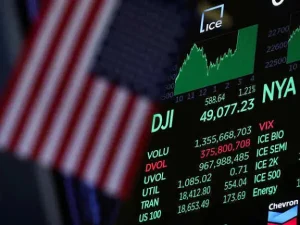
The Dow Jones Industrial Average added to the rally, jumping over 1,200 points to close above 50,000 for the first time. Tech giants such as Amazon and Alphabet faced pressure from high 2026 spending forecasts, but the Philadelphia Semiconductor Index (SOX) climbed 5.7%, driven by gains in AI hardware companies like Nvidia.

Bitcoin Reclaims $70,000 Amid Leverage Reset

Bitcoin (BTC) made a strong intraday comeback, rising almost 15% from a 16-month low of $60,017 to regain the $70,000 mark. This jump was mainly caused by a large leverage washout.

  • Forced Liquidations: Over $1 billion in long positions were wiped out during the initial drop to $60,000, effectively clearing the “weak hands” from the market.
  • Funding Rate Stabilization: As derivatives markets cooled, spot buyers stepped in to capitalize on the 0.236 Fibonacci retracement level near $64,400.
  • Institutional Rebalancing: Mechanical buying from crypto-exposed funds helped sustain the bounce as they rebalanced risk exposure for the month.

US Consumer Sentiment Hits Six-Month High

The University of Michigan’s Consumer Sentiment Index rose to 57.3 in February, beating market expectations. Although this is still low compared to past years, it was the third monthly increase in a row and the highest reading since August 2025.

The data had a cooling effect on bond markets:

  • Bond Yields: Short-term Treasury yields dipped as the data lowered immediate fears of a hard economic landing.
  • Fed Expectations: Market participants increased bets on a near-term Federal Reserve rate cut, providing a tailwind for non-yielding assets.
  • Precious Metals: Gold and silver posted sharp recoveries, reclaiming ground lost during the peak of the week’s liquidity stress.

Technical Outlook: Can the Rally Sustain?

BTC/USD Price Chart - Source: Tradingview
BTC/USD Price Chart – Source: Tradingview

Even with excitement over the Dow reaching 50,000 and Bitcoin’s $10,000 jump, analysts caution that this could be just a temporary relief rally, not a lasting change in trend.

Bitcoin (BTC/USD) 4H Analysis

Bitcoin is now testing the 0.5 Fibonacci resistance zone between $69,450 and $71,700. Although recent trading shows strong dip-buying, the price is still below its 50-day EMA and a downward trendline.

For aggressive traders, buying on pullbacks near $69,400 could target a move toward $73,000. A stop-loss should be set just below $67,200 to protect against another sharp drop.

Market Conclusion

The events of February 6 show how important it is for markets to reset positions. By reducing excess leverage and reaching long-term moving averages, the market has found a short-term bottom. Investors should stay cautious, since volatility from AI spending worries and interest-rate uncertainty will likely continue this quarter.

XRP Price Analysis: Stabilizing Near $1.43 After 25% Correction — Is the Bottom In?

Ripple (XRP) is stabilizing after dropping from its mid-January high near $1.94. Following a technical breakdown to a low of $1.21, XRP now shows less volatility on the 4-hour chart. As of February 8, 2026, it trades around $1.44, just above a key Fibonacci support.

Bearish Channel Breakdown and the Quest for Support

From late January to early February, XRP moved in a clear bearish pattern within a descending channel. The price was repeatedly pushed back by the 50-period Exponential Moving Average (EMA) near $1.52, which acted as resistance.

The sell-off grew worse as market liquidations, totaling over $775 million across crypto, pushed XRP below the key $1.50 support. However, XRP recently bounced from $1.21 (the 0 Fibonacci extension), with long lower wicks showing signs of dip-buying and short-covering.

Key Technical Levels to Watch

XRP has moved back above the 0.382 Fibonacci retracement at $1.43, turning it from resistance into short-term support. The recent price action shows smaller candles, which suggests last week’s heavy selling is slowing down.

  • Immediate Support: $1.43 (0.382 Fib). A failure here could lead to a retest of the $1.31 liquidity zone.
  • Primary Resistance: $1.53 – $1.62. This zone is a “confluence” area where the 0.5 and 0.618 Fib levels align with the prior 2025 breakdown point.
  • The Trend Trigger: Analysts note that a decisive close above the 200-day EMA (currently near $2.20) would be required to shift the macro bias from bearish back to bullish.

Momentum Indicators: Neutrality Reached

XRP/USD Price Chart - Source: Tradingview
XRP/USD Price Chart – Source: Tradingview

The Relative Strength Index (RSI) dropped to a very low level near 20 during the February 5th crash but has now recovered to about 45. This sideways move shows the market is shifting from panic to consolidation.

On-chain data also supports a cautious approach. Whale inflows to exchanges jumped during the crash, but the Chaikin Money Flow (CMF) is now rising, which may mean institutional investors are buying at these lower prices.

Trade Setup: The “Base Formation” Play

For active traders, the current price range gives a clear risk-to-reward setup as XRP tries to form a base.

  • Trade Idea: Buy the dips near $1.43.
  • Target: $1.53 (Take-profit 1) and $1.60 (Take-profit 2).
  • Stop-Loss: Below $1.31 (invalidates the short-term recovery thesis).

Market Note: Macro headwinds remain, with the recent nomination of Kevin Warsh as Fed Chair leading to expectations of a leaner Fed balance sheet. Until ETF flows for XRP stabilize, volatility is expected to remain high.

Crypto Market Crash: Why Is Bitcoin Dropping to $70,000 Today?

The cryptocurrency market is going through a sharp correction. Bitcoin (BTC) has dropped 7% to $70,000. This drop is mainly due to a strict Federal Reserve policy, large holders selling off, and more than $800 million in leveraged liquidations.

Analysts say Bitcoin could fall further toward $60,000, as technical indicators now show “extreme fear.”

Why Is the Crypto Market Crashing?

The current crypto market crash comes from a mix of big economic and technical pressures. The main reasons are:

  • Hawkish Federal Reserve: Signs of ongoing high interest rates have pushed the U.S. Dollar Index (DXY) above 97.5, making investors less interested in riskier assets like Bitcoin.
  • Institutional Outflows: Big investors such as BlackRock have sold large amounts of Bitcoin, with $373.8 million leaving spot BTC ETFs recently.
  • Whale Activity: Large holders have sold off big amounts, causing a chain reaction and pushing the Crypto Fear & Greed Index into “extreme fear.”

How Much Has the Crypto Market Lost Since the October 10 Crash?

Since the market peak on October 10, the total value of all cryptocurrencies has dropped by $1.87 trillion. Just in the past week, the market lost $650 billion as investors moved their money into the rising U.S. dollar.

$800M Liquidations: What Does This Mean for Traders?

Coinglass reports that more than $800 million was liquidated in the past 24 hours, impacting about 165,000 traders.

  • Long vs. Short: Of the total, $650 million came from long positions, while $150 million in short positions were also liquidated.
  • Largest Single Trade: The biggest single liquidation was $11.36 million in BTCUSDT on Hyperliquid.
  • Hyperliquid Lead: The platform had $50 million in long liquidations, showing that too much leverage is quickly being removed from the market.

Technical Analysis: Is Bitcoin Headed to $60,000?

Bitcoin Price Chart - Source: Tradingview
Bitcoin Price Chart – Source: Tradingview

Technical indicators show the downward trend may continue. For the first time since 2022, Bitcoin has dropped below its 365-day moving average, which is an important long-term support level.

  • BTC Bull Score: This sentiment index has dropped from 80 in October to zero, showing clear weakness in the market.
  • Net Realized P/L: The 3D-SMA Net Realized Profit & Loss is now at –$317 million per day, which means more investors are selling at a loss.
  • Key Support Levels: If Bitcoin falls below $70,000, analysts such as Peter Brandt and Michael Burry say the next support levels are $60,176 and $47,824.

Are Gold and Silver Also Falling?

Yes. Even though gold and silver are usually seen as safe havens, both dropped as the U.S. dollar rose. Gold fell 2%, and silver dropped 13% on Thursday. This shows that many investors are moving to cash across all markets.

Bank of America “All In” on XRP? ETF Holdings Revealed as Price Tests Critical $1.58 Support

There is a clear split in the XRP market. As the price drops toward a key support level at $1.58, large institutions are steadily increasing their exposure. Bank of America recently disclosed holdings in XRP ETFs, showing that Wall Street remains interested even as technical trends look bearish.

Institutional Shift: Bank of America Steps In

Bank of America’s latest SEC filing on February 3 shows it holds 13,000 shares in the Volatility Shares XRP ETF, worth about $224,640. While this is a small amount for such a large bank, the move is strategically significant.

  • Strategic Exposure: This purchase marks a deliberate step by BofA to gain regulated exposure to the asset, moving beyond mere partnership discussions to actual balance sheet allocation.
  • “All In” Sentiment: The move aligns with recent comments from Ripple President Monica Long, who confirmed that BofA’s leadership has expressed being “all in on XRP,” particularly regarding cross-border payments and the upcoming RLUSD stablecoin.
  • Client Advisories: BofA is reportedly recommending crypto allocations of up to 4% for wealth management clients, further legitimizing the asset class.

ETF Inflows Continue Despite Price Drop

Bank of America isn’t the only institution interested. Even though XRP is trading below $1.60, US-listed spot XRP ETFs are seeing steady inflows, which suggests that experienced investors are buying while prices are low.

  • Total Daily Inflows (Feb 2): $19.46 million
  • Top Performers: Franklin XRPZ led with $12.13 million, followed by the Bitwise XRP ETF with $4.82 million.

However, not all signs are positive. DCG International Investments Ltd reportedly sold more than 19,000 GXRP shares, showing a split between investors who are holding for the long term and insiders who are selling during the downturn.

XRP/USD Technical Analysis: The “Make or Break” Wedge

As institutions continue to buy, the technical chart shows a risky setup. XRP is stuck in a Descending Broadening Wedge, a pattern that often leads to big price swings.

XRP is now trading at $1.58, right on the lower support line of the wedge. This is a key level for buyers. If the price closes below $1.50 for a day, the wedge pattern would break, and the price could quickly fall toward the next support at $1.25.

Bearish Momentum and Oversold Signals

  • Moving Averages: The price remains well below the 200-day EMA (around $2.30) and is being suppressed by the 50-day EMA ($1.90), confirming the dominant downtrend.
  • RSI Divergence: The Relative Strength Index (RSI) is hovering near 30-40. This “oversold” reading, combined with stable support, often precedes a relief bounce.
XRP Price Chart - Source: Tradingview
XRP Price Chart – Source: Tradingview

Data from the derivatives market shows caution. Total XRP futures open interest fell by 4% to $2.65 billion in the past 24 hours, which means that traders using leverage are closing their positions instead of betting on a price reversal.

The Forecast: Breakout or Breakdown?

Right now, the market is stuck between negative technical signals and positive fundamental news.

  • Bullish Scenario: If the $1.58 support holds and institutional inflows continue, XRP could stage a relief rally targeting the upper channel resistance at $1.81 – $1.90.
  • Bearish Scenario: If macro weakness persists and the $1.50 floor breaks, the institutional “buy wall” may not be enough to stop a flush to $1.25.

In summary, Bank of America’s disclosure offers some fundamental support, but the technical charts suggest caution. Traders should look for a strong bounce from $1.58 with high trading volume to confirm that institutional investors are defending the price.

Ethereum Price Forecast: Bearish Symmetrical Triangle Breakdown Eyes $2,100 Floor

Ethereum (ETH/USD) is facing a major technical breakdown on the daily chart, now trading around $2,327 after dropping sharply from a long period of consolidation. The price fell out of a large symmetrical triangle pattern and broke through key demand zones, showing that momentum has shifted to the bears.

Whale Movements Spark Market Concern

Ethereum co-founder Vitalik Buterin drew market attention by selling 493 ETH worth $1.16 million. Lookonchain reported this transaction on February 3, 2026. Buterin has a history of using his holdings for grants and ecosystem development.

Buterin also confirmed he withdrew 16,384 ETH to support open-source security and privacy projects, planning to use the funds over several years to avoid sudden market effects. Although these transfers are small compared to the whole market, their timing during a downturn added to short-term bearish sentiment.

Trend Research Intensifies Liquidations

Trend Research, a major institutional player, increased selling pressure by depositing 30,000 ETH (about $70.18 million) on Binance on February 1 to pay back leveraged positions. Since early February, the firm has deposited more than 118,589 ETH to different exchanges.

Key points about Trend Research’s ETH liquidation:

  • Reported Losses: The firm’s total loss on its ETH lending positions has reportedly reached $562 million.
  • Current Exposure: Trend Research still holds approximately 618,000 ETH (valued at $1.43 billion), down from its peak of over 661,000 ETH.
  • Liquidation Range: Proactive debt reduction has narrowed their latest liquidation range to $1,685.63 – $1,855.16.
  • Leverage Strategy: The firm recently withdrew 109.1 million USDT to repay on-chain loans, reducing its leverage ratio from 2.4x to 2.2x.

Ethereum  Market Analysis: Heightened Volatility and Derivative Pressure

Ethereum’s price is highly sensitive to large trades and leveraged selling. After a short rebound, ETH dropped sharply this week, hovering near $2,400 after a 10% loss in one day. DBS Bank stood out as a contrarian buyer, picking up 24,898 ETH when prices fell below $2,200.

The ETH/BTC pair failed to maintain the 0.032 level, confirming broader bearish momentum. Furthermore, total futures open interest and high-leverage liquidations—including a $250 million loss for a single whale on Hyperliquid—underscore the current derivative selling pressure.

Ethereum (ETH/USD) Technical Analysis: The Breakdown of Point D

Ethereum Price Chart - Source: Tradingview
Ethereum Price Chart – Source: Tradingview
  • Triangle Violation: The pair recently breached the lower boundary of the symmetrical triangle (near $2,805), a level that had acted as a reliable support floor throughout late 2025.
  • Moving Averages: ETH is now trading well below both the 200-SMA and 50-EMA. Analysts say Ethereum needs to get back above the 200-week moving average at $2,451 to return to a bullish trend.
  • Candlestick Analysis: Daily charts show strong selling pressure and rising volume, which suggests the current trend is likely to continue instead of reversing.
  • RSI Momentum: The Relative Strength Index (RSI) has fallen to 29, showing the market is oversold. This could cause a short-lived bounce, but the overall trend is still weak.

Key Price Levels

  • Resistance Ceiling: Any relief rally will face significant headwinds at the $2,805 breakdown point and the psychological $3,000 mark.
  • Support Floors: Bears are now targeting the $2,161 support level. If ETH falls below $2,200, it could quickly drop toward the $1,800 area.

Trade Idea: Consider a short position if ETH rallies toward $2,500, aiming for a retest of the $2,161 support and setting a stop-loss above $2,810.

XRP at a Crossroads: Will the $1.50 Floor Hold or Is a $1.00 Crash Imminent?

Ripple’s token, XRP, dropped to nine-month lows near $1.59 in early February 2026 as a bearish chart pattern broke down. This article looks at how Ripple’s billion-token escrow unlock and recent high-volume liquidations are affecting the XRP Ledger.

The XRP token plummeted more than 5% in a 24-hour window on February 1–2, 2026, marking a sharp rejection from the $1.80 psychological floor. This article examines the convergence of technical breakdowns and fundamental supply shocks, specifically the routine but high-impact monthly escrow release, which has left XRP struggling to maintain its footing above $1.50. The current sell-off underscores how structural technical patterns can override long-term utility narratives during periods of extreme market fear.

Key Takeaways

  • Price Collapse: XRP hit approximately $1.59 on February 2, 2026, a significant drop from January peaks above $2.00, confirming a breakdown from a long-term descending triangle.
  • Escrow Pressure: Ripple unlocked 1 billion XRP on February 1, 2026. While roughly 800 million were re-locked, the net supply increase added liquidity into a “risk-off” market environment.
  • Network Resilience: Despite price weakness, XRPL daily transactions hit 1.9 million, and Real-World Asset (RWA) TVL on the ledger reached a record $235 million.
  • Sentiment Shift: The Fear & Greed Index for XRP has plunged to 14 (Extreme Fear), reflecting broader altcoin underperformance against Bitcoin.

XRP’s Spectacular Breakdown Amid the Market Turmoil

As the wider crypto market lost $220 billion in value, XRP also saw a major technical change. In early February 2026, its price fell below the $1.81 support, which had held since late 2025. The price dropped to $1.5290 before settling near $1.59, causing many leveraged traders to be liquidated.

This crash shows a widening gap between XRP’s real-world use and its market price. Even though Ripple got new regulatory approvals in Dubai and Singapore this year, the price is still stuck in a bearish trend that has blocked any recovery since mid-2025.

What Caused the Wipeout in XRP Price: Top 4 Reasons

The primary catalyst for XRP’s recent decline was the technical resolution of a months-long consolidation phase. However, secondary fundamental factors amplified the volatility:

  1. Descending Triangle Resolution: The price breached the horizontal floor at $1.81. In technical analysis, this breakdown often leads to a “measured move” downside, targeting the next liquidity pools near $1.28.
  2. Monthly Escrow Inflation: The release of 1 billion tokens on February 1 reminded the market of the ongoing supply expansion. Even with the standard re-locking of most tokens, the optics during a bearish week triggered pre-emptive selling.
  3. ETF Outflows: After a period of institutional hype, spot XRP ETFs saw a net outflow of $41 million in late January, suggesting that “smart money” is temporarily rotating into safer yields or gold.
  4. Death Cross Positioning: The price has remained stuck below the 200-day SMA ($2.35) and 100-day EMA ($2.22), creating a heavy “ceiling” that discourages new buyers from entering until a trend reversal is confirmed.

XRP Price Forecast: Why the Downtrend Still Matters Near $1.60

Looking at the charts, XRP/USD shows signs of a continued downtrend. The Relative Strength Index (RSI) is dropping toward 35, which means the asset is getting close to being oversold, but sellers still have the upper hand.

XRP/USD Price Chart - Source: Tradingview
XRP/USD Price Chart – Source: Tradingview

XRP is now trading in a narrow range between $1.55 and $1.65. The price shows strong selling at both the start and end of each session.

  • Support: The nearest support is at $1.50, with a stronger level at $1.28.
  • Resistance: Any bounce will likely meet selling at $1.71 and again at $1.81, which is now resistance.
  • Indicator Check: The MACD histogram is still negative, but if XRP stays above $1.50 this week, there are early signs of a possible hidden bullish divergence.

Trade Idea: You might consider a short position if XRP bounces to $1.70, aiming for a target of $1.30 and setting a stop-loss above $1.85.

Bottom Line: Utility Growth vs. Technical Gravity

The early February 2026 drop in XRP shows that real-world adoption, such as the Ripple Treasury launch, often takes time to affect prices. Even though XRPL activity is high, the fading $3.00 price target has made XRP a high-volatility sentiment play. Investors should watch escrow re-locks and ETF flows to see if $1.60 is a long-term buying opportunity or just a stop before another drop to $1.00.

Bitcoin Price Prediction: BTC Dips 7.5% to $83K as $2B Liquidations Test Key $80K Support

Bitcoin continued to fall this week, dropping toward $83,000 after it could not hold recent support levels. This marks a sharp change after weeks of unstable prices, and traders are becoming more cautious as they wait for an executive order from US President Donald Trump. Even without many details, the uncertainty has been enough to drive risk assets lower.

Today, Bitcoin lost about 6.5%, making its weekly drop around 7.5%. Ethereum also fell over 7% to about $2,700, and the total crypto market value dropped to around $2.8 trillion. Investors are now focused on protecting their capital, and digital assets are moving more closely with overall market risk trends.

$2B Liquidations Expose Leverage Fragility

The selloff soon became technical as leverage was reduced across major exchanges. Forced liquidations sped up the decline, showing how sensitive crypto markets are during times of broader financial stress.

Key takeaways from the liquidation wave:

  • Over $2 bn in crypto derivatives positions were liquidated
  • Bitcoin and Ethereum long positions absorbed most of the damage
  • Funding rates reset lower as traders reduced exposure

This situation is not new. When traders lose confidence and there is less liquidity, even small events can cause big price swings. Right now, traders are taking smaller positions, but confidence is still weak.

Trump, Fed Speculation Keep Traders Defensive

Markets are also considering new political risks. Trump has confirmed an upcoming executive order and a policy meeting, and there is ongoing speculation about his pick for the next Federal Reserve Chair. Many see former Fed Governor Kevin Warsh as a top candidate, which raises questions about future interest rates and liquidity.

These developments are important for Bitcoin. As expectations for monetary policy change, crypto prices are more affected by real yields, the strength of the dollar, and overall risk appetite. Until there is more certainty, traders seem hesitant to return in force.

Bitcoin Price Prediction: Charts Signal Pressure Near $80K

Bitcoin Price Chart - Source: Tradingview
Bitcoin Price Chart – Source: Tradingview

Looking at the charts, Bitcoin still looks weak. The price was once again stopped by a downward trendline that has limited rallies since November. On the daily chart, long red candlesticks with small lower wicks show that selling is controlled, not panicked.

Bitcoin has now dropped below $86,400, which could lead to a move toward $80,500, and possibly down to $76,400 if selling continues. The 50-day moving average is still above the price, which supports a bearish outlook. Momentum indicators agree, as the RSI is in the low 40s and there is no sign of a bullish reversal yet.

If Bitcoin does not move back above $90,400 and close above the trendline, any rebounds are likely to be seen as temporary corrections.

Trade idea: Consider selling if Bitcoin rallies below $88,000, with a target of $80,500 and a stop above $91,000.

XRP Price Prediction: $1.88 Tested as Sellers Defend the Downtrend Line

XRP is trading near $1.88, attempting to stabilize after weeks of steady pressure from a clearly defined descending trendline on the 4-hour chart. Recent candles between $1.85 and $1.88 show long lower wicks and smaller real bodies, a classic sign that buyers are stepping in on dips rather than chasing higher prices. Still, recovery attempts remain limited, with XRP unable to reclaim the 50-EMA, keeping short-term control in sellers’ hands.

XRP/USD Technical Analysis: Bearish Structure Still Defines the Trend

From a broader perspective, XRP continues to print lower highs after failing near $2.35, forming a well-contained bearish channel. The decisive break below $2.01, a former horizontal support, marked a clear shift in momentum and turned that area into resistance.

For now, the $1.92–$1.95 zone acts as a ceiling for any bounce. Below current levels, attention turns to $1.80, a psychological and technical support. If that level gives way, downside risk extends toward $1.73, where prior demand previously slowed selling pressure.

XRP/USD Technical Analysis: Momentum Signals Caution, Not Panic

XRP/USD Price Chart - Source: Tradingview
XRP/USD Price Chart – Source: Tradingview

Momentum indicators reflect the same cautious tone. The RSI near 40 points to weakening demand but stops short of oversold territory. This suggests selling pressure is controlled rather than aggressive. A sustained break above the descending trendline and reclaim of the $2.01–$2.05 zone would be needed to meaningfully shift sentiment.

Key levels to watch

  • Resistance: $1.92–$1.95, then $2.05
  • Support: $1.80, followed by $1.73
  • Trend bias: Bearish below the trendline
  • Momentum: Weak, not oversold

Trade idea: Sell rallies near $1.95, target $1.80, stop above $2.05.