US Stocks Pulls Back from All-Time Highs After US-Iran Naval Clash in Strait of Hormuz

U.S. stocks fell from all-time highs following the US and Iran’s gunfight, which increased tensions in the Middle East and raised concerns about inflation, and the dollar appreciated. Amid rumors that the Iran war will intensify, the MSCI’s Asia Pacific Index for stocks dropped 0.4 percent from its highest-ever close on Monday.

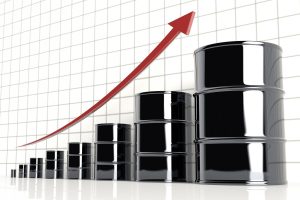
Rising tensions in Iran have caused oil to become more expensive and stocks to dip.

There was little trading due to holiday closures in South Korea, China, and Japan. Earlier, after a surge in crude oil that saw the global benchmark Brent rise above $115 per barrel, Wall Street gauges also slightly declined from their peak. Oil easing during the Asian session provided some respite.

Brent dropped by 1.4 percent to just under $113 per barrel. As a result, US equity-index futures increased by 0.2 percent, but contracts for European stocks showed a minor decline at the opening. In contrast to all of its Group of 10 counterparts, the dollar, which has been the preferred refuge during the Middle East crisis, grew stronger.

Investors continue to concentrate on the Strait of Hormuz, a crucial waterway that has been blocked for months. This keeps energy prices high and raises the possibility of increased inflation and slower economic growth. “We anticipate the aftershocks will stay with us for some time, even if the immediate conflict de-escalates,” stated Darrell Cronk of the Wells Fargo Investment Institute. The impacts on industrial activity, energy prices, and geopolitical risk premia are not expected to abate anytime soon.

Hundreds of ships were observed gathering close to Dubai on Tuesday as more ships moved away from the still-empty Strait of Hormuz in reaction to Iran’s attempts to expand its sphere of influence. Nevertheless, CBS reported two, and the US claimed to have opened a passage through the waterway.


China’s Yuan-for-Hormuz Fees Trigger Rally in China’s Payment Companies

Listed Chinese businesses that provide cross-border payments increased after the commerce ministry stated that the yuan is being used to pay tolls for passage through the Strait of Hormuz.

PBOC Holds MLF Steady, Injects More Liquidity Into Markets

China National Petroleum Corp.’s financial services division is called CNPC Capital. exceeded Shenzhen’s daily cap of ten percent. Lakala Payment Company. grew by up to 7.9 percent, and Shenzhen, a financial technology company, established Syntron Information Co., which increased by 9.4% before paring gains.

Although China has long aimed to internationalize the yuan, the Hormuz’s actual implementation offers a tangible use case that markets have been anticipating. The development, according to analysts, supports predictions that geopolitical disputes could direct more capital toward China.

According to a recent Lloyd’s List report cited in a post on the Ministry of Commerce website, ships are paying Iran $2 million to pass through the vital energy transportation waterway.

The yuan is emerging as a significant alternative for global capital because of China’s good relations with Iran, according to Shen Meng, a director at the Beijing-based investment bank Chanson. Capital flows to associated industries, such as electronic payment stocks and oil and gas capital firms, will therefore increase.

China’s drive for internationalization has been one of the main factors encouraging the use of the yuan in Hormuz. Iran has been imposing tolls, starting at about $1 per barrel, which are paid in yuan or stablecoins, to regulate shipping through the Strait of Hormuz.

China Drains Silver Supplies to Feed Booming Domestic Appetite

China’s insatiable appetite for silver drove overseas purchases to an eight-year high at the beginning of 2026 as importers fueled a spike in industrial and investment demand

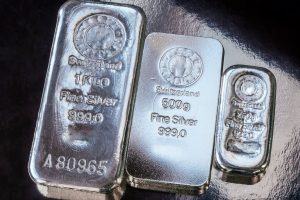
According to Chinese customs data released on Friday, the largest buyer in the world received over 790 tons in the first two months, including nearly 470 tons in February—the highest amount ever for that month. Due to strong demand, local prices have risen significantly above global benchmarks, reducing already low exchange reserves and prompting the acquisition of metal from overseas.

A wave of speculative buying from China and other countries drove silver prices up by roughly 70% at the beginning of the year, but by the end of January, they abruptly gave up their gains. This is the most volatile start to a year for silver prices.

The robust import numbers indicate that, despite changes in trade flows, physical consumption in China has continued. Demand has come from solar manufacturers front-loading production and retail investors hoarding silver bars as a substitute for the increasingly expensive gold.

A significant amount of the metal has traveled through Hong Kong, which acts as a gateway for precious metals traveling to the mainland, in an effort to seize an enticing arbitrage opportunity.

Stanley Cheung, AC Precious Metals Refinery Ltd.’s managing director, claimed that while large silver bars traded by banks normally trade at a discount to the benchmark in London, during the first two months, prices in the area have drawn a premium of up to $8 per ounce.

China’s massive imports haven’t yet disrupted the London market because of a record inflow of silver into the global trading hub following a historic squeeze last year.

The quantity of silver held in exchange-traded funds globally has dropped by more than 1,900 tons this year, making more metal available.

However, markets are breathing more easily for the time being. Yuan Zheng, an analyst at Henan Jinli Gold and Lead Group Co.’s Shanghai-based trading division, stated that as the rebate deadline approaches, the Chinese premium on silver has decreased and solar demand has slowed. “In the near future, there will be more supply than demand.

US Government Bars Anthropic From Federal Agencies and Contractors

President Donald Trump ordered US government agencies to cease using Anthropic PBC’s products, ending a dispute between the artificial intelligence behemoth and defense officials over technology safeguards


The Pentagon then deemed Anthropic PBC a supply-chain risk. Defense Secretary Pete Hegseth directed the Pentagon to prohibit any business dealings with Anthropic by its contractors and their associates.

Hegseth gave Anthropic six months to transfer AI services to another supplier in a post on X. Hegseth wrote, “The ideological caprices of Big Tech will never subjugate America’s warfighters.” “This choice is final.”

Hegseth had given the business until Friday to give the Pentagon permission to use the Claude chatbot for any legitimate purpose, free from Anthropic’s usage restrictions.

The company has demanded that Claude not be employed in fully autonomous weapons operations or for widespread surveillance against Americans. Anthropic said in a statement on Friday that it has not heard directly from the government regarding the status of negotiations and that it will contest any designation of supply chain risk in court.

Since its establishment, Anthropic has positioned itself as a business committed to the ethical application of AI to prevent disastrous consequences from the technology. Chief Executive Officer Dario Amodei and Hegseth, who has vowed to eradicate “woke” practices at the expansive agency he oversees, were in a high-stakes conflict over Amodei’s stance.

Gold Climbs as Dollar Slips Amid US Tariff Uncertainty and Middle East Tensions

Gold increased as traders considered the uncertainty of US import tariffs and Middle East tensions, as the dollar declined.


Gold has stabilized above $5,000 an ounce after more than half of the losses incurred during a historic two-day rout at the beginning of the month. “It appears that an upward breakout is imminent,” stated Yuxuan Tang, who is the head of macro strategy for Asia at JP Morgan Private Bank.

Iran risk and tariff uncertainty are two elements that “may prove sufficient to catalyze a more sustained shift,” according to her.

Donald Trump’s universal 10 percent import tax went into effect in the United States on Tuesday, following the Supreme Court’s decision to overturn his previous reciprocal tariff policy. The president has not formally issued this directive, even though he later threatened to increase the percentage to 15%.

The Trump administration is preparing a series of national security investigations into the effects of specific imports on goods like batteries and industrial chemicals, which could lead to more tariffs. In the meantime, some importers are asking the government to reimburse them for tariffs.

The so-called debasement trade, in which investors have shifted from bonds and currencies to hard assets like gold, is influenced by concerns about growing sovereign debt. Before the sharp decline at the end of January, this was a key factor in the multiyear gold bull run.

Gold, which doesn’t pay interest, may face challenges because of the possibility of a short-term hold on US interest rates. Fed Bank of Boston President Susan Collins stated on Tuesday that rates are likely to remain unchanged “for some time” due to recent economic data that indicates an improvement in the US labor market.

According to minutes released earlier this month from the Fed’s January policy meeting, the US central bank’s officials seemed hesitant to lower borrowing costs.

Silver’s Next Big Squeeze? Fundamentals Point to a 1980-Style Mega Rally Ahead

Fundamental action suggests that a larger  Silver rally, similar to the 1979–1980 event, might be coming. A significant gap between paper contracts and physical inventory has worsened the COMEX default, especially in the silver market.


The “default” scenario is based on a large difference between the amount of metal promised in future contracts and the actual metal in exchange vaults. Some analysts say silver prices could “reset,” possibly rising toward or above $200 per ounce, if the exchange cannot meet physical delivery demands.

COMEX is said to have between 103 and 120 million ounces of “registered” silver (metal ready for delivery) in stock. Open interest stands at about 429 million ounces.

The “Run” on the Bank indicates that the exchange could run out of silver if even 25% of contract holders demanded physical delivery instead of cash. Recent activity shows that in January 2026 alone, an unusual 40 million ounces were ordered for delivery.

The Bull Case (Robert Kiyosaki and Clive Thompson): Kiyosaki expected silver to hit $200 in 2026, citing a weakening fiat system and industrial demand from solar and AI. Clive Thompson warns that by March 2026, COMEX might run out of deliverable silver. Since gold is the ultimate “anti-dollar” hedge, a silver default could also impact gold,  influence credit markets, and the broader financial system, as suggested by Bill Holter’s Systemic Risk Case.

The Skeptical Case (CPM Group): Traditional analysts often say that exchange rules prevent a full collapse by allowing Force Majeure or cash-only settlements, making a true “default” impossible

China Signals Pullback: Banks Urged to Limit US Government Bond Holdings

Chinese regulators have recommended that financial institutions reduce their holdings of US Treasuries, citing worries about market volatility and concentration risks. According to people who asked not to be named to discuss private discussions, officials told banks to reduce their purchases of US government bonds and told those with significant exposure to reduce their holdings.


China’s state holdings of US Treasuries are exempt from the directive. According to the people, the guidance, which was verbally conveyed to some of the largest banks in the country in recent weeks, reflects officials’ growing concern that holdings of US government debt could expose banks to volatile fluctuations.

The concerns are similar to those expressed by governments and fund managers abroad, in the midst of a developing controversy regarding the dollar’s appeal and the safe-haven status of US debt

US treasuries fell in response to the news, with yields gradually rising across maturities. The dollar’s value declined marginally in relation to its major peers. As early as April, Donald Trump, who spoke with Xi Jinping over the phone last week, intends to meet the Chinese leader at a presidential summit in Beijing.

The regulatory guidance on Treasuries for Chinese banks was issued before last week’s call. The State Administration of Foreign Exchange reported that as of September, Chinese banks held approximately $298 billion in dollar-denominated bonds. How many of those were Treasuries is unknown.

Copper Blasts Past $14,000 as China’s Speculative Mania Fuels Rally

Copper surged by the most in over 16 years as metals continued their dramatic start to the year, driven by a wave of intense speculative trading in China.

Front Loading Sends Copper Prices to All-Time High

Investors are pouring money into base metals on the Shanghai Futures Exchange, expecting greater US growth and increased spending on data centers, robotics, and power infrastructure. Global prices are rising as a result, with copper hitting a record high of $14,125 per ton on the London Metal Exchange, up 7.9%.

China’s leading commodities trading platform is the Shanghai bourse, and sporadic periods of intense trading on the exchange have frequently sparked significant changes in international markets. As of last week, January was already the busiest month ever for the six base metals on the SHFE, and on Thursday, copper recorded its second-highest daily trading volumes ever.

A declining US dollar, increased demand for tangible assets, and heightened geopolitical tensions as the Trump administration pursues a more assertive foreign policy have all contributed to commodities’ eye-watering recent weeks. The rally has most recently been aided by conjecture that the next head of the Federal Reserve will be more dovish than Jerome Powell.

Precious metals, including copper, which is essential to the energy transition, have reached record highs. Even crude oil, which was hampered by worries about a global glut last year, has increased recently. According to Eric Liu, deputy general manager of ASK Resources Co., “commodities are taking turns to rally.”

The price of copper has been hovering around $13,000, and money has been accumulating over the metal for a while. As of 8:19 a.m., copper had increased by 6.4% to $13,922.50 per ton on the LME.

Silver Surge Crowns Hindustan Zinc India’s Top Metals Giant

Hindustan Zinc Ltd. has benefited from silver’s rally. to surpass some of its biggest competitors, including parent Vedanta Ltd., and become the largest metals company in India by market capitalization. One of the nation’s largest manufacturers of white metal, the company’s stock increased more than 6% on Friday, surpassing 15% in gains so far this year. The company’s market value increased to over $32 billion, marginally surpassing that of leading competitor JSW Steel Ltd.

Gold and silver reached all-time highs as concerns about a damaging trade war between the US and Europe grew, following President Donald Trump’s increasing push to annex Greenland. As the dollar was affected by Trump’s aggression and demand for safe havens increased, spot gold was trading near $4,670 per ounce, while silver rose by as much as 4.4%.

Gold Futures Top $3,993 – Safe Haven Demand and Central Bank Buying Drive Surge

The United States will impose tariffs on eight European nations that oppose the plan to acquire Greenland, including France, Germany, and the United Kingdom. In February, the 10% levy will take effect. 1 and rose to 25% in June.

European leaders will meet urgently in the coming days to discuss possible countermeasures. Member states are debating a variety of options for how to respond, including retaliatory levies on US goods valued at €93 billion ($108 billion), according to people familiar with the discussions.

The EU can respond to coercive trade measures in several ways thanks to the ACI, the bloc’s most potent retaliation tool. According to Charu Chanana, chief investment strategist at Saxo Markets in Singapore, the Greenland-inspired tensions are distinct from the Liberation Day tariffs of the previous year because they “point to a deeper geopolitical fault line.” Referring to NATO, she stated, “Using tariff threats inside the alliance is a kind of trust shock that can leave a stickier risk premium.”

Precious metals have risen sharply this year after the US detained Venezuela’s leader in 2025 and then escalated its threats to seize Greenland. Furthermore, the Trump administration has stepped up its criticism of the Federal Reserve, casting doubt on its independence and promoting the debasement trade, in which investors avoid government bonds and currencies because they are concerned about the amount of debt.


China’s Silver Squeeze Sparks Mayhem: $80 Breakthrough Fuels Bubble

Silver sank after breaking above $80 per ounce for the first time amid a historic rally driven by speculative trading and a persistent mismatch between supply and demand.

Increased central bank purchases, inflows into exchange-traded funds, and three consecutive rate cuts by the Federal Reserve have made precious metals hot in recent months.

The value of China’s only pure-play silver fund dropped by its daily maximum of 10%, ending a wild bull run that led the fund’s manager to issue rare warnings. The sudden decline in the UBS SDIC Silver Futures Fund LOF follows weeks of gains driven by increasing global interest in precious metals, which the manager called “unsustainable.” Spot silver is on track for its best annual performance since 1979 after reaching a record high of $72.70 per ounce on Wednesday.

UBS SDIC Fund Management Co. announced new restrictions after three consecutive days this week of exceeding the 10% upward limit. Starting in December, there will be a cap on new Class C share subscriptions, typically the best option for short-term investors, decreasing from 500 yuan to 26-100 yuan ($14.25), according to a statement on the fund manager’s website. Strong investor interest in precious metals has focused on silver, with a historic short squeeze in October fueling the notable global spot price rally.

Palladium, gold, and platinum have all surged, and other Chinese funds linked to these metals have also seen significant gains, as investors caution. This year, the silver fund has surged by nearly 220%, while Shanghai-traded silver futures have risen about 128%. The premium over the underlying asset jumped from 7% at the start of the month to nearly 62% by Wednesday. As the fund’s value declined and futures rose, this premium is expected to decrease on Thursday.

Commodities that do not pay interest benefit significantly from lower borrowing costs, with traders betting on additional rate reductions in 2026. Physical premiums have hit extreme levels due to relentless industrial demand from solar panels, EVs, AI data centers, and electronics, pushing against dwindling inventories. Elon Musk’s weekend remarks highlighting the growing investor frenzy around precious metals triggered Monday’s early momentum.

“This is not good,” Musk said on X in response to a tweet about Chinese export restrictions.

Many industrial processes rely on silver. The US’s blockade of oil tankers in Venezuela and Washington’s actions against the Islamic State in Nigeria over the past week have increased the appeal of these metals as safe havens. Silver inventories are at their lowest point ever, raising the risk of supply shortages that could impact several industries.