Crypto Missing From Trump’s National Security Strategy Despite Pro-Crypto Agenda
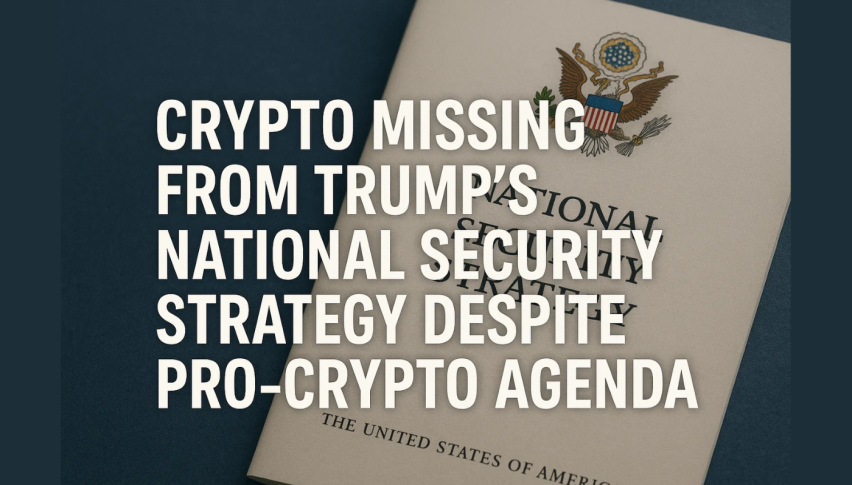
The Trump administration's recently announced 2025 National Security Strategy (NSS) lists all emerging technologies, but does not...
Quick overview
- The Trump administration's 2025 National Security Strategy omits Bitcoin and blockchain, despite their growing ties to the financial system.
- This exclusion is notable given Trump's previous claims of wanting to position the U.S. as a leader in cryptocurrency.
- The administration has taken steps to promote cryptocurrency, including passing regulations and establishing a Bitcoin reserve.
- Market reactions to the NSS have led to fluctuations in Bitcoin prices, with investors anticipating changes in Federal Reserve interest rates.
The Trump administration’s recently announced 2025 National Security Strategy (NSS) lists all emerging technologies, but does not mention Bitcoin or blockchain, despite the industry’s growing linkages to the financial system and President Donald Trump’s assertion of rising competition from outside.
For a president who ran on becoming the “crypto president” and proposed a strategic national Bitcoin reserve, this omission is difficult to overlook.
The National Security Strategy (NSS) represents one of the most significant legislative documents released by the White House. It describes how a U.S. president perceives global challenges and opportunities, as well as the means (military, economic, technological, and diplomatic) that America will deploy to defend its interests.
The exclusion of cryptocurrency from the national security policy comes despite Trump telling CBS’ 60 Minutes last month that he does not want “China to be number one in the world in crypto” and having previously stated that all Bitcoin mining should take place in the United States.
We want to ensure that US technology and standards, particularly in AI, biotech, and quantum computing, lead the world ahead, the administration stated.
In May, CIA Deputy Director Michael Ellis stated that cryptocurrency was another area of technological competition in which the United States must ensure its position against China and other rivals.
Interpreting the White House’s Silence on Cryptocurrency
There are multiple conceivable readings.
The omission is purposeful caution, with Bitcoin and cryptocurrency remaining in the economic and regulatory buckets (Treasury, SEC, CFTC) rather than being explicitly elevated to a national security issue.
🚨Breaking:
I’m confused… 🤨
President Trump repeatedly promised to make the U.S. the crypto hub of the world. We all bought into that idea. But in the National Security Strategy released today, there isn't a single word about $BTC, $ETH, or blockchain. Zero.
Isn't that a… pic.twitter.com/CstExZKosb
— VanDerLinde (@D_VanDerLinde_) December 8, 2025
Alternatively, the White House may just prefer (“digital finance”), which can subsequently include conventional fintech and tokenized systems without referring to details.
However, one section of the memo notes that Trump intends to protect and grow “America’s financial sector dominance” by leveraging the country’s “leadership in digital finance and innovation” to assure market liquidity and security, which could be a reference to cryptocurrency.
Trump’s Expanding Crypto Agenda and Market Reactions
The Trump administration has been encouraging cryptocurrency this year, implementing a number of promised measures that have resulted in increased use of the technology by financial institutions.
Trump helped pass the GENIUS Act, which regulates stablecoins, and he has signed executive orders establishing a crypto task force and prohibiting a central bank digital currency, as well as overseeing the abandonment of several crypto-related enforcement activities by federal agencies.
The administration additionally set up a Bitcoin reserve and crypto stockpile, which includes forfeited digital assets, and the government is looking into “budget-neutral” methods of collecting more.
Bitcoin fell below $90,000 over the weekend as investors absorbed the national security strategy document, which urged US allies to “contribute far more” to defense.
It wanted NATO members to allocate 5% of their GDP, up from 2% now, implying more government borrowing that would push up inflation, making it more difficult for central banks to decrease interest rates.
The Federal Reserve’s interest rate decision this week is driving crypto markets, with many expecting a decrease, which has historically encouraged investors to take riskier bets.
The market expects interest rates to fall when the Fed speaks on Tuesday and Wednesday, with CME’s FedWatch showing roughly 88.5% betting on a 25 basis point cut.
- Check out our free forex signals
- Follow the top economic events on FX Leaders economic calendar
- Trade better, discover more Forex Trading Strategies
- Open a FREE Trading Account
- Read our latest reviews on: Avatrade, Exness, HFM and XM

Related Articles


Sidebar rates

Related Posts
 Save
Save