Rivian Stock Tumbles 6% as In-House AI Chip Bids Farewell to Nvidia
Rivian revealed its own artificial intelligence chip designed to replace Nvidia technology as part of a broader effort
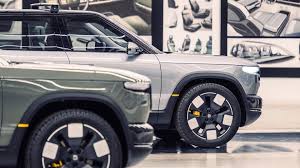
Quick overview
- Rivian has unveiled its own AI chip, the Rivian Autonomy Processor 1, to enhance automated driving features and reduce reliance on Nvidia technology.
- The new chips and lidar sensors will be integrated into Rivian's upcoming R2 SUVs, with production set to begin in the first half of 2026.
- Rivian aims to position itself as a higher-margin software company by gradually rolling out autonomous driving capabilities through software updates starting in 2027.
- Despite the challenges of reducing costs while improving performance, Rivian claims to have achieved significant cost savings and performance boosts with its new technology.
Rivian revealed its own artificial intelligence chip designed to replace Nvidia technology as part of a broader effort to improve automated-driving features in future vehicles, which caused its stock to lose 6% on Thursday.
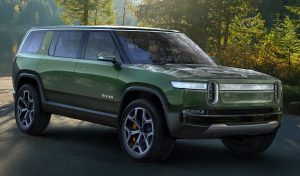
Rivian Autonomy Processor 1 chips and a new lidar sensor will be installed in the automaker’s upcoming R2 sport utility vehicles.
Taiwan Semiconductor Manufacturing Co. will produce the chips that will support Rivian’s goal of eventually offering autonomous driving capabilities when paired with the new sensor and AI model developments. In an interview, RJ Scaringe, Rivian’s CEO, stated, “This is not a bet one takes lightly; this is a huge commitment that has taken us years.”
Typically, reducing expenses while improving performance is difficult. However, here we lowered costs by hundreds of dollars per vehicle while also significantly boosting performance. Nvidia is currently the world’s most valuable company, leading in chips used in data centers to train AI models.
The company’s automotive chip division remains small, accounting for only about 1% of sales, but it aims to expand. By developing its own in-car chips and making them standard hardware to justify the investment, Tesla has defied the outsourcing trend.
The Elon Musk-led company has also adopted a camera-only strategy, claiming it more closely resembles human driving and that additional sensors like lidar are too costly. Rivian disagrees, supporting many robotaxi and automakers that emphasize lidar’s ability to monitor a vehicle’s environment and support other sensors.
Delivery of Rivian’s R2 will begin shortly after it enters production in the first half of 2026. Since the initial models won’t have the new chip or lidar, their automated driving features will be more limited. Rivian will gradually roll out software updates starting in 2027 that will enable its cars to travel from one place to another without drivers needing to keep their hands on the wheel or their eyes on the road.
Initially, this will apply only to highways before expanding to other types of roads. Rivian’s main goal is to convince customers and investors to see it as a higher-margin software company that can support autonomous driving of personal vehicles.
- Check out our free forex signals
- Follow the top economic events on FX Leaders economic calendar
- Trade better, discover more Forex Trading Strategies
- Open a FREE Trading Account
- Read our latest reviews on: Avatrade, Exness, HFM and XM

Related Articles
Sidebar rates

Related Posts
 Save
Save