Bitcoin Holds $92K Support: Technical Indicators Point to Prolonged Consolidation
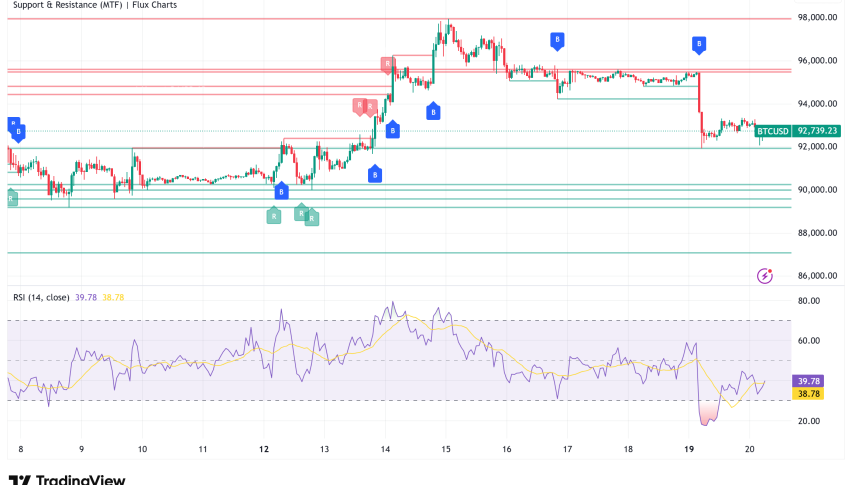
Bitcoin is still trading above the important $92,000 support level. In the last 24 hours, it has been quite stable, even though it dropped
Quick overview
- Bitcoin is currently trading above the $92,000 support level but has experienced a drop from $95,500 to $93,000 over the weekend.
- Rising trade tensions and poor economic data have led to significant liquidations in the crypto market, totaling $874 million.
- Institutional demand for Bitcoin remains low, as indicated by muted futures premiums and increased demand for put options.
- On-chain activity is declining, raising concerns about the long-term viability of mining and suggesting potential further downside for Bitcoin.
Bitcoin BTC/USD is still trading above the important $92,000 support level. In the last 24 hours, it has been quite stable, even though it dropped from $95,500 to $93,000 over the weekend. But underneath this quiet surface, derivative market indications and institutional flows show that the leading cryptocurrency may have to deal with more downward pressure before it finds a solid bottom.
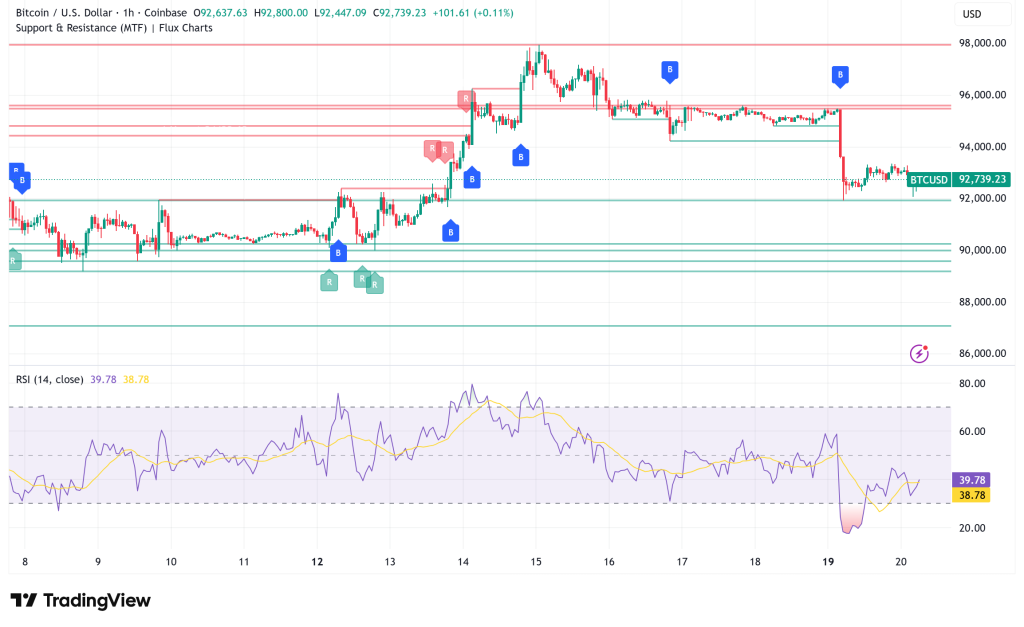
The weekend drop, which was caused by rising trade tensions between the US and the EU and dismal Chinese economic data, led to $233 million in Bitcoin liquidations. This was part of a larger $874 million wipeout across the crypto sector. President Trump’s imposition of extra 10% tariffs on eight European countries, which might go up to 25% if talks to buy Greenland stall, has added more uncertainty to risk asset markets.
BTC Futures Premium Signals Muted Institutional Appetite
Bitcoin has held up well at these levels, but the futures basis rate, which is close to 5%, shows that there isn’t much leveraged bullish conviction. This neutral-to-bearish reading shows that institutional demand for long bets is still low after the failed breakout attempt at $98,000 earlier this week. In bull markets, this number usually goes up to 10% or more as traders are keen to use leverage.
The big change in Bitcoin options markets is much more worrying. The delta skew at Deribit has risen to 8%, which is significantly outside the neutral -6% to +6% range. This shows that traders are paying high prices for put options to protect themselves from losses. This conservative stance shows that even smart market players don’t think the psychologically critical $100,000 level is going to be reached soon.
ETF Flows Turn Negative as Gold Reclaims Safe-Haven Premium
The story about Bitcoin as a macro hedge has lost a lot of strength. On Friday, spot ETFs saw $395 million in net withdrawals. This capital flight happened at the same time that gold prices hit new all-time highs above $4,650. This shows that institutional investors still choose traditional safe-haven assets over digital ones when there is geopolitical instability.
The hedge attraction is getting weaker, which is especially important given the current state of the economy. China’s GDP grew only 4.5% year over year in the fourth quarter of 2025, down from 4.8% in the third quarter. This was the worst growth since 2022. At the same time, European markets fell by 1.6% as the Euronext 100 Index showed worries about possible trade retaliation.
On-Chain Activity Flags Diminishing Network Demand
On-chain data shows that network engagement is going down, in addition to derivative indicators. According to Nansen statistics, the number of daily active addresses has dropped to 370,800, which is a 13% drop from two weeks ago. This drop in blockchain activity makes people worry about the long-term viability of mining because transaction fees add to the constant 3.125 BTC block reward.
When prices are stable, there is often less activity on the network before either capitulation or accumulation. The current situation, which includes macroeconomic problems and institutional caution, makes it more probable that the first option will happen soon.
Bitcoin Price Outlook: Further Downside Before Stabilization
Bitcoin is likely to test lower support levels before finding a stable bottom, according to both technical and fundamental criteria. The $90,000 psychological level is the next important support zone. If it is broken, it might cause further long liquidations and speed up the drop to $85,000-$87,000.
For bulls to become back in charge, Bitcoin would have to clearly get back to $98,000 while derivative metrics return to normal. Given the ongoing uncertainty about tariffs, slowing global economy, and the $788 million in liquidated long positions that traders still remember, this scenario doesn’t seem likely to happen anytime soon.
Conservative price estimates for the next two weeks put Bitcoin between $88,000 and $94,000. Until the economy becomes clearer and institutional flows change direction, the risks of going down are greater than the chances of going up.
- Check out our free forex signals
- Follow the top economic events on FX Leaders economic calendar
- Trade better, discover more Forex Trading Strategies
- Open a FREE Trading Account
- Read our latest reviews on: Avatrade, Exness, HFM and XM

Related Articles



Sidebar rates

Related Posts
 Save
Save