Europe to Use Anti-Coercion Tool Against U.S. Over Greenland
French President Emmanuel Macron and Valérie Hayer, leader of the liberal Renew group have urged the EU to activate the mechanism.
Quick overview
- The EU's Anti-Coercion Instrument, established in 2021, allows Europe to respond to economic coercion from third countries like the U.S.
- Calls for the activation of the instrument have intensified following U.S. tariffs imposed on several European countries over Greenland.
- The mechanism enables the EU to impose trade restrictions and limit U.S. companies' access to public contracts in Europe.
- Activation requires approval from at least 55% of member states, and implementation can take several months.
Created in 2021, the instrument allows Europe to condition trade with the United States, although it can take months to take effect.
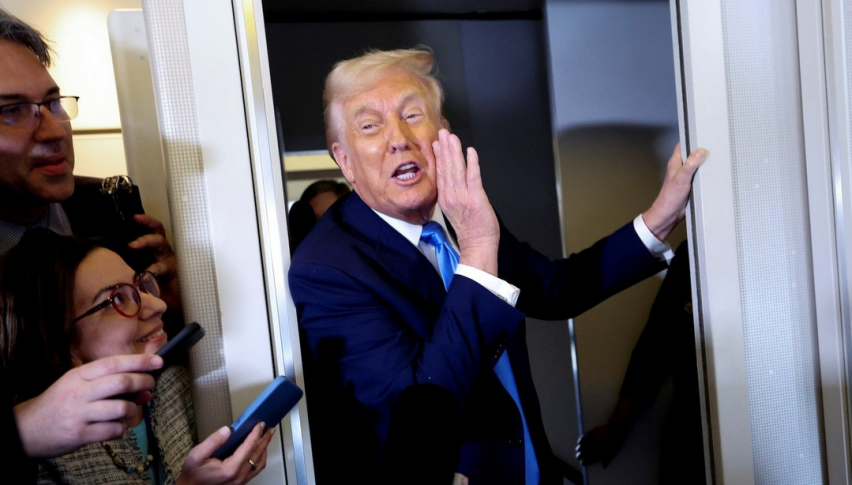
Amid repeated threats by U.S. President Donald Trump to take control of Greenland, calls are growing for the European Union to deploy its so-called Anti-Coercion Instrument.
Tensions escalated after Trump announced tariffs of up to 25% on Denmark, Finland, France, Germany, the Netherlands, and Sweden—along with non-EU countries the United Kingdom and Norway—unless the autonomous Danish territory of Greenland is ceded to the United States.
The instrument is designed to deter economic coercion against any of the EU’s 27 member states. Such coercion is defined as the “application or threat of application by a third country of measures affecting trade or investment” that interfere with the bloc’s and its members’ “legitimate sovereign decisions.”
Political figures including French President Emmanuel Macron and Valérie Hayer, leader of the liberal Renew group in the European Parliament, have urged the EU to activate the mechanism. “The United States is making a miscalculation that is not only dangerous, but could also be painful. The Anti-Coercion Instrument is our economic nuclear weapon,” Hayer said.
How the EU’s Anti-Coercion Instrument Works
The tool allows the EU to impose measures such as restrictions on imports and exports of goods and services within its single market of 450 million consumers. It also gives Brussels the authority to limit U.S. companies’ access to public procurement contracts across Europe.
EU officials have previously drawn up a list of U.S. services that could be targeted, potentially including major American technology firms, given that the United States runs a services trade surplus with the EU.
Both the European Commission and member states can request activation of the instrument. Approval would require the backing of at least 55% of member states, representing 65% of the EU’s population. Even then, implementation could take several months.
The Commission has up to four months to investigate the third country accused of harmful trade practices. Member states would then have eight to ten weeks to endorse any proposed response. Only after that would the Commission be authorized to prepare measures, which could enter into force roughly six months later.
The Anti-Coercion Instrument was created after Lithuania accused China in 2021 of blocking its exports in retaliation for Vilnius allowing the opening of a Taiwanese diplomatic representation in the country.
- Check out our free forex signals
- Follow the top economic events on FX Leaders economic calendar
- Trade better, discover more Forex Trading Strategies
- Open a FREE Trading Account
- Read our latest reviews on: Avatrade, Exness, HFM and XM

Related Articles
Sidebar rates

