Gold Surges Toward $5,000 as Weak Dollar Fuels Record Rally
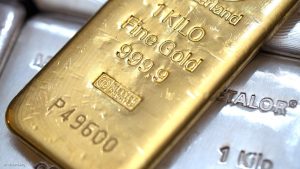
Gains in precious metals fueled by the weak dollar; gold reached a record price of over $4,965 per ounce.

Quick overview
- Foreign investors are shifting away from US assets due to unpredictable policy and geopolitical risks, leading to a decline in the dollar.
- Precious metals have reached record highs, with gold surpassing $4,965 per ounce and silver nearing $100 per ounce, driven by the weak dollar.
- There is a notable trend of investors withdrawing from US assets, with emerging-market funds seeing record inflows as countries like India reduce their US Treasury holdings.
- The S&P 500 Index has risen by 1% this year, while the MSCI Asia Pacific Index has increased by 5.5%, highlighting the appeal of Asian markets amid lower valuations.
Foreign investors preferred non-US assets with unpredictable policy and geopolitical risks, which caused the dollar to hold its losses.
Additionally, precious metals reached new all-time highs. China’s central bank set the yuan’s daily reference rate higher than the closely watched 7-per-dollar level, drawing attention to currencies. The dollar held its losses after its biggest decline in a month.
Gains in precious metals fueled by the weak dollar; gold reached a record price of over $4,965 per ounce. The price of an ounce of silver was close to $100. Due to their more appealing valuations and more promising growth prospects, the moves suggested a gradual unwinding of dollar exposure in favor of regional stocks.
The change occurs in the context of growing policy uncertainty, including threats to the independence of the Federal Reserve and rekindled tariff worries related to US-European tensions.
There are increasing indications that investors are withdrawing from US assets. The dollar is weakening as investors pour money into emerging-market funds at a record rate in anticipation of a rotation away from US assets. Additionally, India’s holdings of US Treasuries have dropped to a five-year low as the country works to diversify its reserves and support its currency. This is part of a larger trend by some major economies to withdraw from the world’s largest bond market.
Emerging-market assets have generally increased amid growing risk appetite. Asia also benefits from lower valuations and robust economic growth.
The S&P 500 Index has advanced by 1% so far this year, while the MSCI Asia Pacific Index has increased by 5.5%. Despite this, the Asian gauge is currently trading at a forward price-to-earnings multiple of 15 times, while the US benchmark is trading at roughly 22 times.
In the meantime, the BOJ kept its benchmark rate and released higher inflation forecasts, which leave room for its next hike to occur sooner than anticipated.
- Check out our free forex signals
- Follow the top economic events on FX Leaders economic calendar
- Trade better, discover more Forex Trading Strategies
- Open a FREE Trading Account
- Read our latest reviews on: Avatrade, Exness, HFM and XM

Related Articles

Sidebar rates

Related Posts
 Save
Save