Wall Street Ends Higher Despite Volatility in Japan
The yen climbed on Monday to its highest level in more than two months, amid growing speculation of interventions.

Quick overview
- The yen is under pressure due to Japan's public debt exceeding twice its GDP and rising market interest rates.
- Major Wall Street indexes closed higher as investors prepare for the Federal Reserve's monetary policy meeting and corporate earnings.
- Speculation about a potential U.S. intervention in the yen market has resurfaced, marking the first such discussion in 15 years.
- Attention is focused on the upcoming announcement of the new Federal Reserve chair, with Rick Rieder being a leading contender.
The yen remains under pressure, partly due to concerns over Japan’s public debt, which exceeds twice its GDP.
Markets are also awaiting a potential announcement from the Donald Trump administration regarding the next Federal Reserve chair.
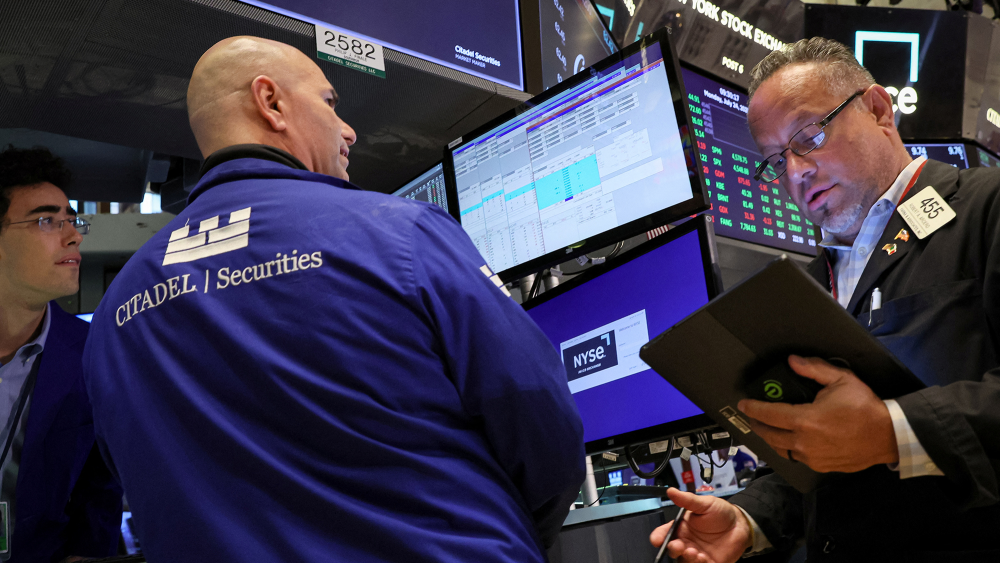
Major Wall Street indexes closed higher on Monday, January 26, as investors brace for a pivotal week featuring the Federal Reserve’s monetary policy meeting and a wave of corporate earnings, all amid rising geopolitical tensions. Adding to market uncertainty, speculation resurfaced over a possible U.S. intervention in the Japanese yen, a move not seen in the past 15 years.
In this context, the Dow Jones Industrial Average rose 0.6% to 49,412.40, the S&P 500 gained 0.5% to 6,950.42, and the Nasdaq Composite advanced 0.4% to 23,601.36.
Yen under pressure
The yen climbed on Monday to its highest level in more than two months, amid growing speculation about a coordinated intervention by U.S. authorities in Japan’s foreign-exchange market, following comments by Prime Minister Sanae Takaichi and Japan’s top currency diplomat.
Despite the rebound, the yen remains under pressure, in part due to concerns over Japan’s public debt, which exceeds twice the size of its economy. In addition, the historic rise in market interest rates has fueled fears about Japan’s ability to service its debt. However, Takaichi said she plans to cut taxes as part of her campaign ahead of the snap election scheduled for February 8.
The United States last took part in a coordinated intervention in the yen market in March 2011, when it sold yen following the Fukushima earthquake.
Fed leadership in focus ahead of key meeting
The main event of the week is the Federal Reserve’s two-day policy meeting, which concludes on Wednesday. Markets expect the central bank to keep interest rates unchanged, while policymakers are widely anticipated to signal future rate cuts, with roughly 50 basis points of easing expected over the year.
As last year, the Fed is expected to enter a prolonged pause following a series of cuts late in 2024, with markets now anticipating that the policy rate will remain unchanged until June. The Fed’s tone has turned relatively more hawkish since the December meeting, as economic growth remains solid and the unemployment rate has stabilized.
Attention is also focused on the dispute between U.S. President Donald Trump and Fed Chair Jerome Powell, which has raised concerns about the central bank’s independence from political interference. Earlier this month, Powell said the Department of Justice had opened a criminal investigation into him—a move he described as politically motivated.
Powell is set to step down as Fed chair in May, and Trump is expected to announce his replacement soon. Rick Rieder of BlackRock has emerged as the leading contender on the Polymarket betting platform, with a 48% implied probability.
- Check out our free forex signals
- Follow the top economic events on FX Leaders economic calendar
- Trade better, discover more Forex Trading Strategies
- Open a FREE Trading Account
- Read our latest reviews on: Avatrade, Exness, HFM and XM

Related Articles
Sidebar rates

