Intel Stock Surges 5% as SoftBank Partnership and Xeon 600 Launch Signal AI Pivot
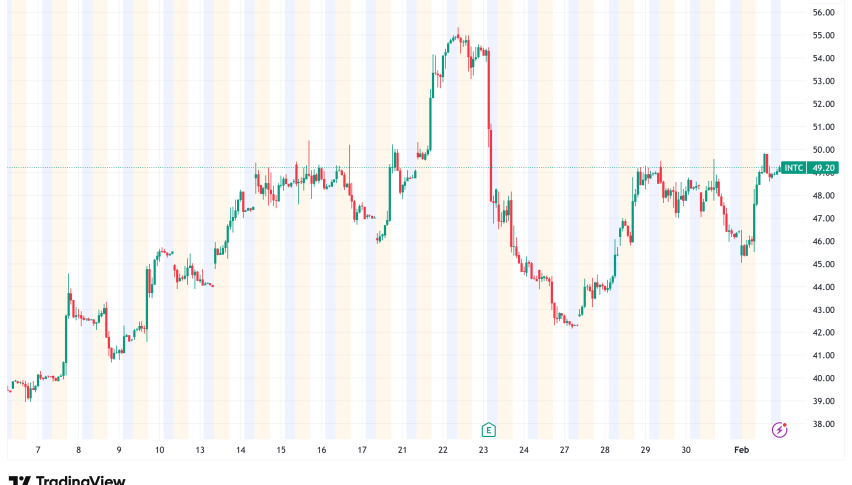
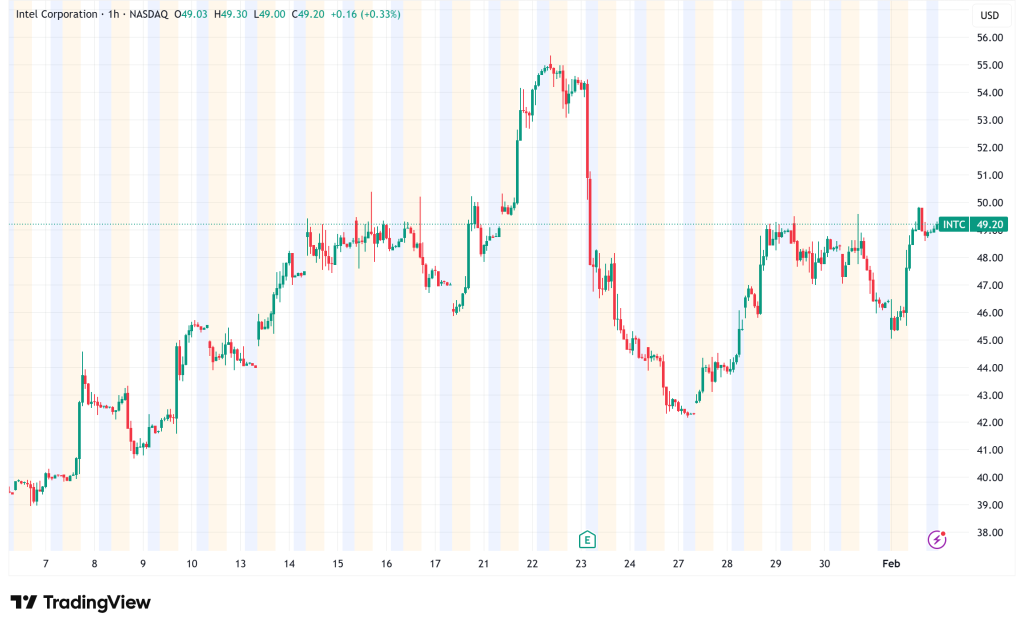
Intel Corporation (NASDAQ: INTC) completed Monday's trading session up approximately 5%, ending the day at $48.81 per share - a rise fueled
Quick overview
- Intel's stock rose approximately 5% to $48.81, driven by positive news including a partnership with SoftBank and a new product launch.
- The collaboration with SoftBank aims to develop next-generation memory technology for AI and high-performance computing, with prototypes expected by 2028.
- Intel launched its Xeon 600 series CPUs, featuring significant performance improvements and AI capabilities, set to be available in March 2026.
- Investor confidence was bolstered by rumors of a potential deal with Apple and insider buying by Intel's CFO, indicating optimism about the company's future.
Intel Corporation (NASDAQ: INTC) completed Monday’s trading session up approximately 5%, ending the day at $48.81 per share – a rise fueled by a convergence of good headlines encompassing new technological collaborations, a significant product launch, and a vote of confidence from one of its own senior executives.
Intel’s SoftBank Partnership Targets Next-Gen AI Memory
Perhaps the most forward-looking piece of news came from Tokyo. Saimemory, a subsidiary of Japanese investment giant SoftBank, announced a collaborative deal with Intel to create next-generation memory technology tailored to satisfy the fast growing demands of artificial intelligence and high-performance computing. The project, internally referred to as the “Z-Angle Memory program,” or ZAM, intends to fully commercialize by fiscal year 2029 after producing prototypes by fiscal year 2028.
The collaboration will benefit from Intel’s experience working on the Advanced Memory Technology program of the U.S. Department of Energy, which aimed to enhance the efficiency and performance of next-generation dynamic random-access memory (DRAM). Dr. Joshua Fryman, Intel Fellow and CTO of Intel Government Technologies, emphasized that current memory designs are falling short of what AI workloads require, and that Intel has developed a new memory architecture capable of enhancing DRAM performance while lowering power consumption and prices.
The agreement is made at a crucial moment. There are shortages in the sector as a result of the growing demand for AI-related memory, which has greatly exceeded worldwide supply. The ZAM program’s emphasis on energy efficiency also reflects broader worries about the high power requirements of AI computing infrastructure.
Xeon 600 Workstation Processors Set a New Standard
On the product front, Intel announced the debut of its new Xeon 600 series CPUs for client workstations – a full-stack platform update built on Intel 3 process technology. The new lineup has up to 86 performance cores with a turbo frequency of 4.8 GHz, giving up to 61% better multi-thread performance compared to the last generation at the same power targets.
The processors also provide important AI capabilities to the workstation market, including FP16 datatype support in Intel’s AMX technology, which the firm claims equates to up to 17% faster performance in AI and machine learning applications. With up to 128 PCIe Gen 5.0 lanes and support for DDR5 memory speeds up to 8,000 megatransfers per second, the platform is obviously built for professionals pushing the boundaries of data research, engineering simulation, and media production. Retail availability is projected beginning in late March 2026.
Apple Manufacturing Rumors and Insider Buying Add Fuel
Investors were also enthused by news that Apple may be pursuing a deal with Intel to build its custom-designed chips. If confirmed, such a transaction would constitute a big triumph for Intel’s foundry business, adding instant legitimacy and financial scale to an operation that has struggled to attract top-tier clients.
Adding to the euphoric feeling, Intel CFO David Zinsner was disclosed to have purchased roughly 5,900 shares of the business at an average price of $42.50 on January 26 – a move commonly perceived by market watchers as a sign of internal confidence that the stock is undervalued.
Taken together, Monday’s announcements offered a picture of an Intel that is actively restoring its competitive position across memory innovation, high-performance computing, and advanced manufacturing — all while the broader AI boom continues to alter the semiconductor industry.
- Check out our free forex signals
- Follow the top economic events on FX Leaders economic calendar
- Trade better, discover more Forex Trading Strategies
- Open a FREE Trading Account
- Read our latest reviews on: Avatrade, Exness, HFM and XM

Related Articles

Sidebar rates

Related Posts
 Save
Save