Wall Street Closes Mixed, With Dow at Record Highs and Banks Down
Data released today also showed that delinquency rates on personal loans in the U.S. climbed to 4.8% in the fourth quarter of 2025.

Quick overview
- Concerns about slowing retail sales and rising loan delinquencies are raising questions about the U.S. economy's strength.
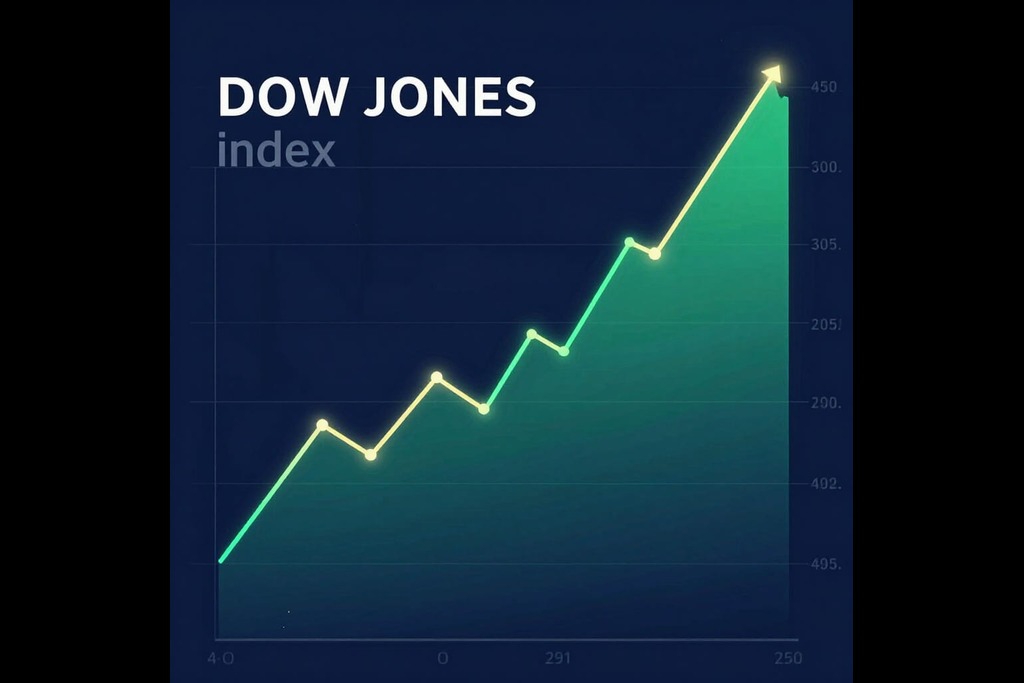
- Despite these concerns, the Dow Jones Industrial Average reached a new all-time high, closing at 50,188.14 points.
- Key economic indicators, including retail sales and employment data, are set to be released this week, with expectations of slower consumer spending.
- In Asia, Japan's Nikkei 225 also hit a new all-time high, reflecting investor optimism following recent political developments.
Concerns over slowing retail sales and rising loan delinquencies raised new questions about the strength of the U.S. economy. Even so, the Dow Jones Industrial Average broke to a fresh all-time high.
Wall Street closed mixed on Tuesday, with the Dow reaching record levels. Several key economic indicators are set to be released in the U.S. this week, including December retail sales, which showed an unexpected decline. Markets are also awaiting January employment data—delayed from last week—as well as fresh inflation figures.
In this context, the S&P 500 slipped 0.3% to 6,941.81 points, while the tech-heavy Nasdaq Composite fell 0.6% to 23,102.47. The Dow Jones Industrial Average, however, gained 0.1%, hitting a new all-time closing high at 50,188.14 points, after briefly surpassing 50,500 during intraday trading.
The Dow’s third consecutive advance was driven by gains in stocks such as Walt Disney, which rose 2.66%, and insurer Travelers, up 2%.
Bank stocks weighed on the broader market. Bank of America and Wells Fargo fell 1.7% and 2.8%, respectively, while Morgan Stanley declined 2.4%, reflecting renewed pressure on the financial sector.
Spotify shares surged after the audio streaming platform forecast first-quarter profits above market expectations, supported by strong user growth and recent price increases.
Key Economic Data
Retail sales unexpectedly remained flat in December, pointing to slower consumer spending momentum heading into the new year. Market expectations had forecast a 0.4% monthly increase, following November’s 0.6% gain. On a year-over-year basis, sales rose 2.43%, down from 3.26% in the previous month.
Data released today also showed that delinquency rates on personal loans in the U.S. climbed to 4.8% in the fourth quarter of 2025—the highest level since 2017—driven by rising defaults among younger and lower-income borrowers.
The delayed U.S. employment report is scheduled for release tomorrow, after last week’s brief government shutdown.
White House economic adviser Kevin Hassett said on Monday that job growth could slow in coming months, as Trump administration immigration policies restrain labor force growth and new artificial intelligence tools boost productivity.
While framed as a broader trend, the comment puts added focus on Wednesday’s employment data. A weaker labor market could make it easier for the Federal Reserve to cut interest rates, with direct implications for the U.S. dollar.
Japan Leads Global Markets
In Asia, Japan’s Nikkei 225 led global gains, rising 2.2% on Tuesday to post its third consecutive advance and reach a new all-time high, driven by investor optimism following Prime Minister Sanae Takaichi’s electoral victory.
In China, Hong Kong’s Hang Seng climbed 0.58%, Shanghai rose 0.13%, and South Korea’s Kospi advanced 0.07%.
- Check out our free forex signals
- Follow the top economic events on FX Leaders economic calendar
- Trade better, discover more Forex Trading Strategies
- Open a FREE Trading Account
- Read our latest reviews on: Avatrade, Exness, HFM and XM

Related Articles



Sidebar rates

Related Posts
 Save
Save