Mexican Peso Posts Marginal Decline Against the Dollar After U.S. Jobs Data
The local currency closed the session practically flat, as market participants absorbed U.S. labor market figures that came in.

Quick overview
- The Mexican peso ended the session nearly unchanged against the dollar, closing at 17.1856 pesos per dollar.
- Traders reacted to stronger-than-expected U.S. employment data, which showed a rise of 130,000 jobs last month.
- Despite initial support from domestic industrial activity, the peso experienced a slight decline of 0.03% due to concerns over potential U.S. withdrawal from the USMCA trade agreement.
- Analysts expect the peso to remain stable within a 17.10–17.25 range as the market digests the recent labor data.
The peso ended the session virtually unchanged, as traders digested stronger-than-expected U.S. employment data.
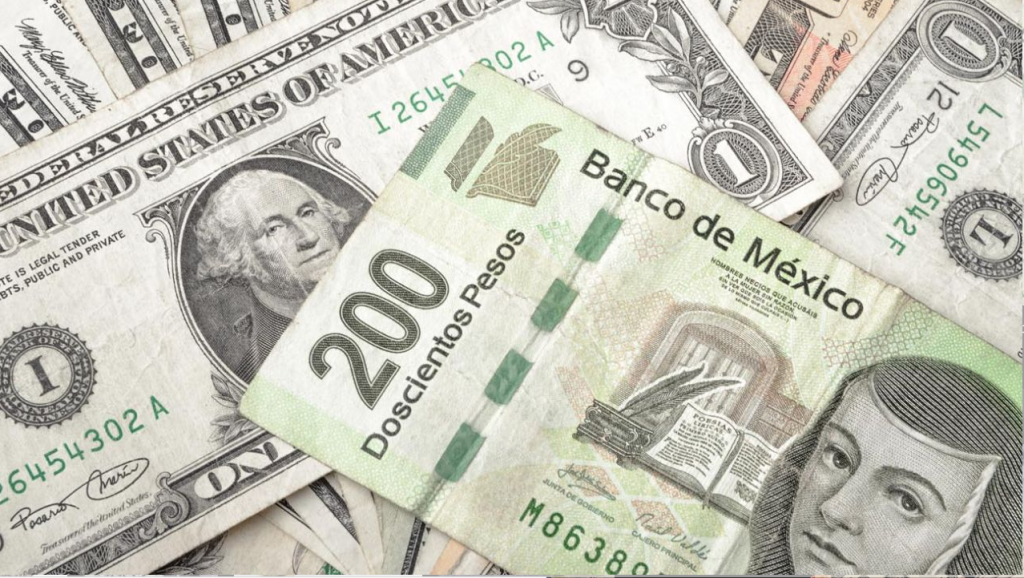
The Mexican peso edged marginally lower against the dollar in midweek trading. The local currency closed the session practically flat, as market participants absorbed U.S. labor market figures that came in well above expectations.
The exchange rate ended the day at 17.1856 pesos per dollar. Compared with yesterday’s close of 17.1804, according to official Banco de México (Banxico) data, this represented a marginal loss of 0.03% for the peso—less than one cent.
The dollar traded within a range between a high of 17.2690 and a low of 17.1307 pesos. The U.S. Dollar Index (DXY) from the Intercontinental Exchange, which measures the greenback against a basket of six major currencies, was flat at 96.86 points.
Intraday volatility
At the open, the exchange rate reached a low of 17.1307. Analysts linked this initial move to domestic data, as industrial activity showed an unexpected increase in December, providing short-term support for the peso.
However, this trend reversed after reports emerged that U.S. President Donald Trump had privately said he was considering whether the United States should withdraw from the USMCA (T-MEC) trade agreement. In addition, the U.S. nonfarm payrolls report released this morning came in much stronger than expected. The initial reaction in the exchange rate was a strengthening of the U.S. dollar, which was reflected in the upper end of the day’s trading range.
U.S. rate expectations
U.S. nonfarm payrolls rose by 130,000 jobs last month, far above the 70,000 expected by analysts. At the same time, the unemployment rate fell to 4.3% from 4.4%, reinforcing signals of economic strength.
The solid labor data follow figures showing that U.S. retail sales were flat in December. In this context, the market now expects the Federal Reserve to resume interest rate adjustments in June, according to FedWatch.
Weak retail sales may be interpreted as temporary noise, while wage pressures continue to sustain the Fed’s cautious stance. A strong labor market reinforces the idea that lower interest rates may take longer to arrive.
Resilience of the Mexican peso
At the start of the year, the peso has shown notable resilience, appreciating to levels as strong as 17.10 per dollar and holding within a relatively narrow range, despite expectations that the dollar could find some support from a more measured Fed policy amid persistent risks.
A scenario of stability within a 17.10–17.25 range appears most likely, provided the market fully digests the strength of U.S. employment data and Friday’s inflation report does not deliver upside surprises.
- Check out our free forex signals
- Follow the top economic events on FX Leaders economic calendar
- Trade better, discover more Forex Trading Strategies
- Open a FREE Trading Account
- Read our latest reviews on: Avatrade, Exness, HFM and XM

Related Articles
Sidebar rates

Related Posts
 Save
Save