Micron Ignites Global Semiconductor Rally with Early HBM4 Shipments and Sold-Out 2026 Supply
Micron Technology gave the world's semiconductor investors exactly what they had been waiting for on Wednesday, February 12, 2026. The stock
Quick overview
- Micron Technology's stock surged 10% on February 12, 2026, following news of mass production and shipment of its next-generation high-bandwidth memory, HBM4.
- The company's market capitalization exceeded $461.8 billion, with significant after-hours trading activity pushing the stock price even higher.
- The rally in Micron's stock triggered positive movements in semiconductor stocks across Asia and the US, despite a generally declining market.
- Analysts predict strong growth for Micron and the semiconductor industry, driven by increasing demand for AI technology and a projected expansion of the HBM market.
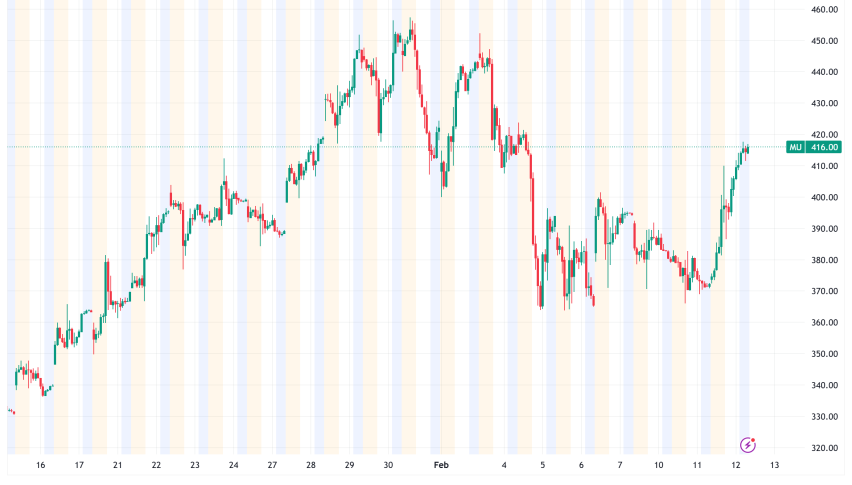
Micron Technology gave the world’s semiconductor investors exactly what they had been waiting for on Wednesday, February 12, 2026. The stock of the memory behemoth based in Idaho jumped $37.09, or about 10%, in a single trading session, finishing at $410.34 on 47.4 million shares, or about 47% more than its three-month average. The market capitalization of the corporation surpassed $461.8 billion, and the stock price increased to $415.39 after hours trading.9.94%.
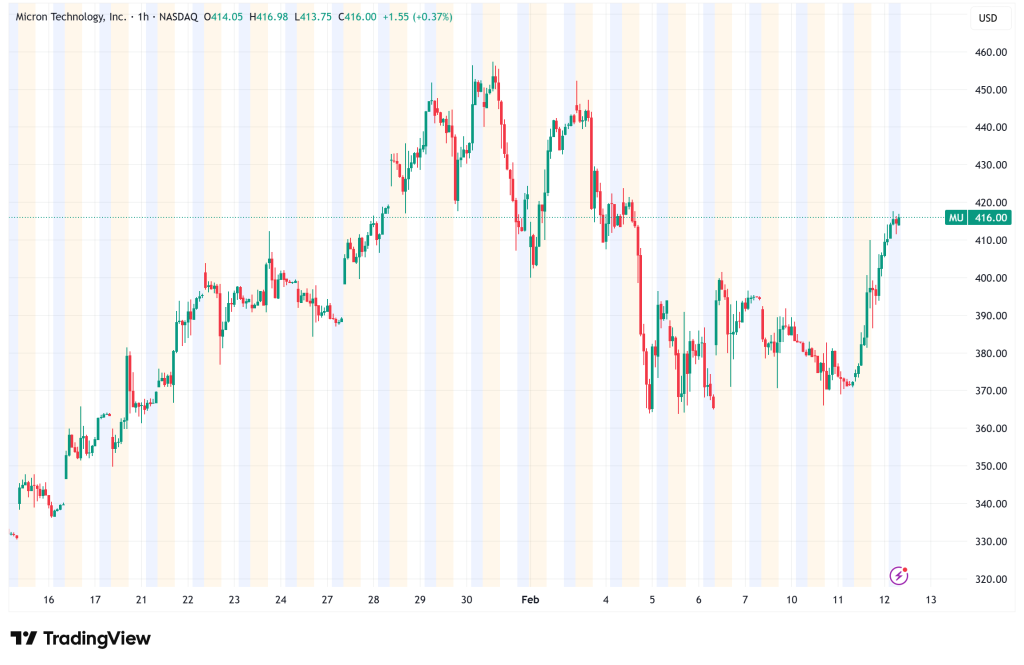
Micron’s Largest Single-Session Gain of 9.94% Driven by HBM4 Shipment News
Chief Financial Officer Mark Murphy’s presentation at the Wolfe Research Conference the day before served as the impetus. A full year ahead of the timeline that many experts had projected, Murphy said that Micron has started mass production and shipping its next-generation high-bandwidth memory, HBM4. Additionally, he acted quickly to dispel weeks-old market rumors: “Reports claiming exclusion from Nvidia’s next-gen supply chain were inaccurate,” he added, a statement that carried a great deal of weight considering Nvidia’s pivotal role in the ecosystem of AI technology.
Micron (MU) Stock: A Rally Without Borders
In Asia, the aftershocks were felt nearly immediately. SK Hynix surged 2.67% to 883,000 KRW during the pre-market session in Seoul on February 12, while Samsung Electronics surged 1.97% through the symbolic 170,000 KRW threshold, thus gaining the moniker “17man Jeonja” among Korean retail traders. Equipment and component suppliers came next: Mico rose 3.04%, DI jumped 9.37%, and Hanmi Semiconductor increased 5.25%. Gaining 3.77% was SK Square, which owns a sizable portion of SK Hynix.
The larger market back home in the US presented a more nuanced picture. A shockingly strong January jobs report—130,000 nonfarm payrolls were added, nearly twice analyst forecasts—and a corresponding increase in Treasury yields that made stocks appear less appealing caused the S&P 500 and the Nasdaq to decline. However, semiconductor stocks significantly deviated from that trend.
The Philadelphia Semiconductor Index increased 2.28%, the VanEck Semiconductor ETF increased 2.71%, and Nvidia, which continues to be the hub of most of the AI hardware industry, increased 1.56%. Both Seagate and Western Digital, which benefited from the need for AI storage, closed up 2.78% and 4.36%, respectively.
The AI Demand Machine
The most obvious explanation for why this rally felt different from earlier bounces was provided by the AI Demand Machine Analysts at Hana Securities: it was structural rather than just cyclical. In addition to highlighting a particularly noteworthy fact—ByteDance, the Chinese parent company of TikTok, is presently in active talks with Samsung Electronics to co-develop dedicated AI chips, with plans to manufacture at least 100,000 units this year alone—the firm cited the world’s largest technology companies’ relentless capital expenditure as a durable floor under chip demand. If the deal goes through, it will demonstrate how demand is being generated at every stage of the semiconductor stack by the AI arms race.
Hana increased its DRAM and NAND flash price projections for the first quarter of 2026, which bolstered optimism and had a direct impact on the financial trajectory of Micron, SK Hynix, and Samsung. Despite its restrained wording, the research firm insisted that “the positive earnings expectations for semiconductor stocks remain valid”—a resounding endorsement of the industry’s short-term prospects.
Micron’s Longer Arc
Bullish analysts have been developing a thesis for months, and Wednesday’s session solidified it for Micron. The company’s full fiscal 2026 HBM allocation has already been sold out, and it estimates that the HBM market, which was valued at about $35 billion in 2025, may grow to $100 billion by 2028. A street-high price target of $600 was set by one analyst in response to the company’s impressive first-quarter earnings, which included growing margins and revenues. With its commitment to a $100 billion semiconductor megafab in New York and other facilities in Singapore and Taiwan, the corporation is also placing a significant investment on long-term capacity.
With a price-to-book ratio of 7.86 and a price-to-earnings ratio of 38.73, Micron is positioned for growth, and Wednesday’s action indicated that the market thinks growth is coming sooner rather than later. The business, which has increased by almost 29,000% since going public in 1984, is no longer just a provider of cyclical memory. Investors from both sides of the Pacific seem to be paying attention as it has rebranded itself as essential AI infrastructure.
- Check out our free forex signals
- Follow the top economic events on FX Leaders economic calendar
- Trade better, discover more Forex Trading Strategies
- Open a FREE Trading Account
- Read our latest reviews on: Avatrade, Exness, HFM and XM

Related Articles



Sidebar rates

Related Posts
 Save
Save