The U.S. Supreme Court Strikes Down Donald Trump’s Tariffs
The tariff regime was projected to generate trillions of dollars in revenue for the United States over the coming decade.

Quick overview
- The U.S. Supreme Court struck down broad tariffs imposed by President Trump, marking a significant setback for the White House's trade policy.
- The ruling limits executive power and could force the government to revise its tariff framework, impacting financial markets and supply chains.
- Projected revenue from the tariffs, which was expected to strengthen public finances, is now under review, potentially easing pressure on consumers.
- The decision reshapes the global economic landscape, introducing uncertainty and prompting recalibration of trade flows among international partners.
The ruling by the nation’s highest court marks a major setback for the White House, which had relied on that legal mechanism to justify sweeping tariffs on imported goods.
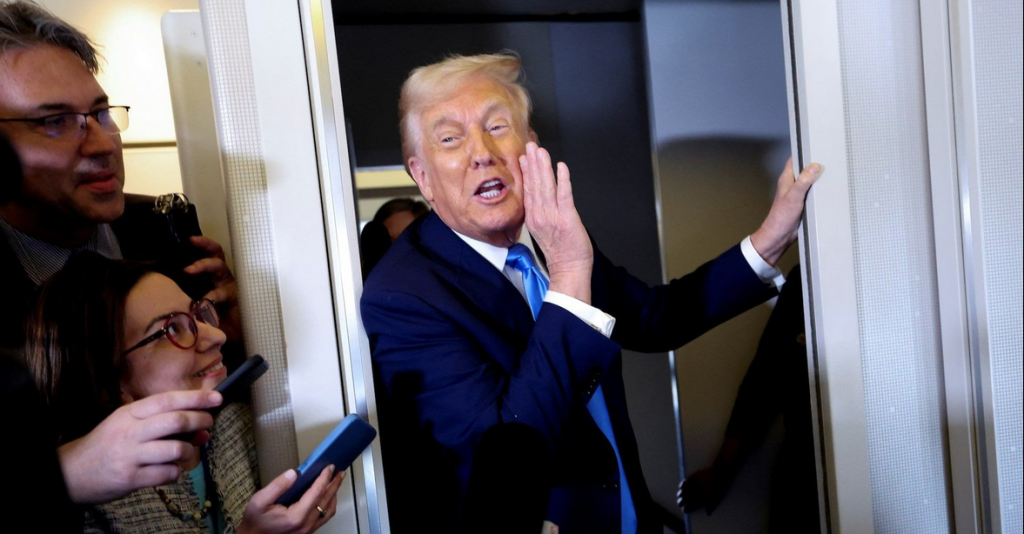
The U.S. Supreme Court on Friday struck down the broad tariffs imposed by President Donald Trump under a law originally designed for national emergencies, in a decision that curbs the scope of executive power and is set to have direct repercussions on the global economy.
The ruling represents a significant blow to the administration, which had used emergency powers as the legal foundation for large-scale import levies. The statute was intended for exceptional situations tied to national security, but was repurposed by the Trump administration as a central pillar of its trade policy.
A blow to the trade war
Since the start of his second term, Trump had made tariffs a strategic tool of both economic policy and international negotiation. They became the backbone of a renewed phase of the trade war, straining relations with traditional allies and deepening fragmentation in global trade.
The Court’s decision challenges one of the broadest interpretations the White House had made of its commercial authority. In practical terms, it could force the government to dismantle part of the existing tariff framework or redesign it using alternative legal instruments.
Over recent months, the tariffs had weighed on financial markets, disrupted supply chains, and influenced investment decisions worldwide. They also created uncertainty for U.S. companies dependent on imported inputs, many of which passed higher costs on to consumers.
Fiscal and economic impact
The tariff regime was projected to generate trillions of dollars in revenue for the United States over the coming decade—funds the administration framed as a way to strengthen public finances and reduce debt.
That outlook is now under review. Beyond the legal debate, the ruling introduces a broader economic reset: it could ease pressure on importers and consumers, while opening a period of regulatory transition if the executive branch seeks to replace the tariffs with other trade instruments.
Global repercussions
The decision extends far beyond U.S. domestic policy. The global economy had already adjusted expectations around Washington’s hardening trade stance, with strategic partners, emerging markets, and major industrial exporters recalibrating trade flows in response to the tariff structure.
Now, the Supreme Court’s ruling reshapes that landscape. While it does not necessarily signal the end of protectionist policy, it draws a clear institutional boundary on the use of extraordinary powers to redefine trade policy—introducing a new phase of uncertainty and potential realignment in global commerce.
- Check out our free forex signals
- Follow the top economic events on FX Leaders economic calendar
- Trade better, discover more Forex Trading Strategies
- Open a FREE Trading Account
- Read our latest reviews on: Avatrade, Exness, HFM and XM

Related Articles
Sidebar rates

