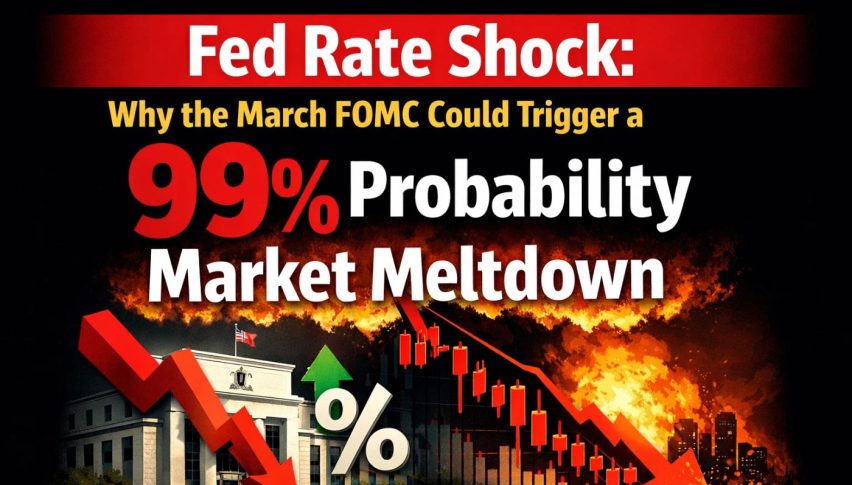
Fed Rate Shock: Why the March FOMC Could Trigger a 99% Probability Market Meltdown
The Federal Reserve’s upcoming Federal Open Market Committee (FOMC) meeting on March 17–18, 2026, is shaping up to be one...
Quick overview
- The upcoming FOMC meeting on March 17-18, 2026, is critical due to escalating geopolitical tensions affecting market expectations for interest rate cuts.
- The conflict in the Middle East has caused a significant oil supply shock, pushing Brent crude prices above $100–$120 per barrel and complicating the Fed's inflation strategy.
- Market sentiment has shifted from hopes for multiple rate cuts to expectations of zero to one cut for the year, with the first potential cut now pushed to June 2026.
- Bitcoin has emerged as a 'digital safe haven' during the turmoil, while traditional safe havens like gold have faced pressure amid a strengthening US Dollar.
The Federal Reserve’s upcoming Federal Open Market Committee (FOMC) meeting on March 17–18, 2026, is shaping up to be one of the most consequential sessions in recent years. While the market had entered 2026 hopeful for a “pivot” toward lower interest rates, a dramatic escalation in geopolitical tensions between the US and Iran has effectively derailed those expectations.
The New Reality: “Higher for Longer” Re-Ignited
The sudden conflict in the Middle East has triggered what analysts are calling the largest oil supply shock in market history. With the Strait of Hormuz—a chokepoint for 20% of the world’s petroleum—facing severe disruptions, Brent crude has surged above $100–$120 per barrel.
This energy spike is a direct threat to the Fed’s inflation-fighting progress. Policymakers are now forced to confront a “stagflationary” threat: rising costs paired with cooling economic growth.
Key Inflation and Rate Data
Recent data confirms that inflation remains “sticky” and well above the Fed’s 2% mandate:
- PCE Index (February): 2.8% YoY
- Core PCE: 3.1% YoY (Surpassing the 2% target)
- Current Fed Funds Rate: 3.50% – 3.75%
- CME FedWatch Probability (March 18): 99.7% chance of no change.
https://www.cmegroup.com/markets/interest-rates/cme-fedwatch-tool.html
Market Sentiment: From Pivot to Pause
Market participants have drastically repriced their expectations for the remainder of 2026. The optimism for three or more rate cuts has vanished, replaced by a cautious consensus:
- 40% of Economists: Now forecast zero to one rate cut for the entire year.
- The June Delay: Markets are now pricing the first potential cut as late as June 2026, though even this remains contingent on a de-escalation of the Iran conflict.
- Nomura Perspective: Senior economist Jeremy Schwartz notes that the Fed is unlikely to be reactive, as the labor market remains relatively stable despite the energy shock.
Asset Class Outlook: Crypto vs. Gold
The FOMC’s decision and Chair Jerome Powell’s subsequent press conference will likely trigger a “volatility spike” across all asset classes:
- Bitcoin (BTC): Despite the tension, BTC has outperformed, gaining roughly 9% since the hostilities began as it increasingly trades as a “digital safe haven.”
- Gold and Silver: Surprisingly, these traditional havens have faced pressure, with gold falling roughly 5% as the US Dollar Index (DXY) regained the 100 level, making bullion more expensive for foreign buyers.
- Equities: Technology and AI-related stocks are facing high sensitivity to the “higher for longer” narrative, as high interest rates compress valuations.
As the FOMC prepares to release its new “Dot Plot” (projections) on Wednesday, investors are braced for a hawkish tone. Even if rates remain steady, a shift in the Dot Plot toward fewer cuts in late 2026 could trigger a significant sell-off in risk assets.
- Check out our free forex signals
- Follow the top economic events on FX Leaders economic calendar
- Trade better, discover more Forex Trading Strategies
- Open a FREE Trading Account
- Read our latest reviews on: Avatrade, Exness, HFM and XM

Related Articles
Sidebar rates

Related Posts
 Save
Save