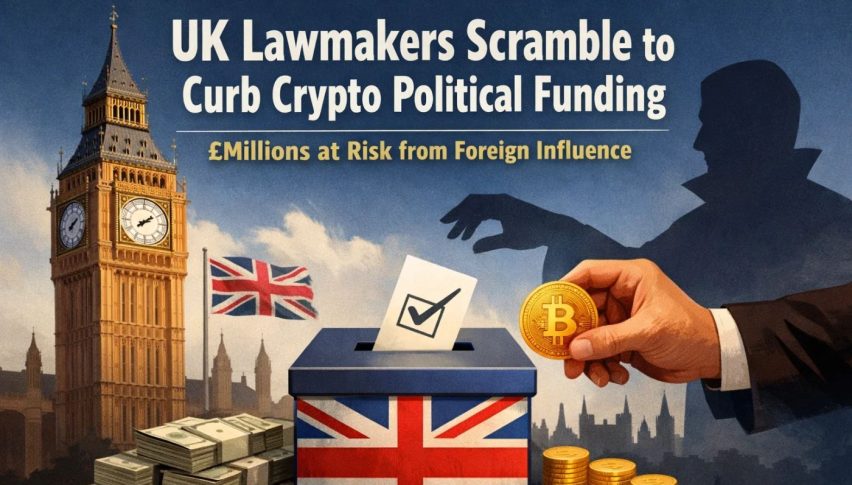
UK Lawmakers Scramble to Curb Crypto Political Funding As British Democracy Faces £Millions Risk From Foreign
The UK political landscape is on high alert after a cross-party parliamentary committee sounded the alarm that the country's election...
Quick overview
- The UK parliamentary committee warns that untraceable cryptocurrency donations threaten election integrity and calls for a moratorium on such contributions.
- Lawmakers are pushing to amend the Representation of the People Bill to address concerns over foreign influence and financial interference ahead of the 2029 general election.
- The JCNSS report highlights specific digital loopholes, including crypto mixers and AI-enabled micro-donations, that could be exploited by foreign actors.
- While some advocate for a total ban on crypto donations, others suggest clearer regulations and transparency requirements to balance innovation with election integrity.
The UK political landscape is on high alert after a cross-party parliamentary committee sounded the alarm that the country’s election integrity is being put at risk by “untraceable” cryptocurrency donations. In a strongly worded report published in march 2026, the Joint Committee on the National Security Strategy (JCNSS) called on the government to put an immediate moratorium on all crypto-linked political contributions before its too late.
Lawmakers are getting increasingly anxious about the potential for hostile foreign states to buy influence within the UK and are pushing hard to amend the Representation of the People Bill with an eye on the next general election deadline set for August 2029. The committee, led by Chair Matt Western MP, knows all too well that the current system has got an open door for financial interference and is using the JCNSS report to heap pressure on the government to act.
Why Cryptocurrency is Sparking Red Flags in the corridors of Westminster
At the heart of the concern is the fact that digital assets are notoriously hard to track. While some people will tell you that the blockchain is a transparent ledger, security experts are pointing out that with the right tools, a donor’s true identity can be well and truly hidden. The JCNSS report made it clear that the “unnecessarily high risk” of getting caught out is due to the use of privacy-enhancing technologies that allow funds to bypass traditional banking checks.
The committee has highlighted several specific digital loopholes that foreign actors could exploit:
- Crypto Mixers and Tumblers: These services can “mix” transactions making it almost impossible for the Electoral Commission to figure out where the original cash came from.
- AI-Enabled Micro-Donations: There’s a growing fear that large sums could be broken down into thousands of tiny transfers using artificial intelligence, each one well below the £500 reporting threshold and so dodging detection.
- Privacy Coins and Cross-Chain Swaps: Technologies that let users jump between different blockchains can totally wipe out the audit trail needed by UK law.
🚨🇬🇧 UK LAWMAKERS TO BAN CRYPTO POLITICAL DONATIONS
British lawmakers are urging an "immediate ban" on crypto donations to political parties to keep UK politics safe from illicit finance.
They warn crypto poses “unacceptably high risk” to election integrity due to anonymity and… pic.twitter.com/cXpuNLALm1
— Coin Bureau (@coinbureau) March 18, 2026
The Battle to Protect the Representation of the People Bill
The debate is now all about the Representation of the People Bill, which had its second reading in early march 2026. Lawmakers are now pushing for a “temporary suspension” of all crypto donations until the Electoral Commission can provide foolproof statutory guidance. The JCNSS even proposes upping custodial sentences to three years for those found guilty of foreign financing through digital means.
While the government had previously resisted a total ban, the pressure is mounting fast. The Secretary of State for Housing, Communities and Local Government, Steve Reed, suggested that new reforms could be added to the bill in the wake of the Rycroft review, which is currently checking out the effectiveness of political finance laws.
Balancing Innovation with the Need to Protect Election Integrity
Not everyone in Westminster is in favour of a total freeze. Some industry experts and political figures, including those from Reform UK (who have already accepted significant crypto-linked donations) are arguing that a blanket ban is a “disproportionate approach”. Instead they think the UK should make the rules clearer and require all crypto donations to flow through platforms registered with the Financial Conduct Authority (FCA).
The proposed compromise involves several strict transparency requirements:
- Mandatory Conversion: Requiring political parties to turn any received crypto into British pounds (sterling) within 48 hours of receiving it.
- FCA-Only Channels: Limiting donations to virtual asset service providers that are fully regulated and compliant with UK anti-money laundering laws.
- Enhanced Source-of-Wealth Checks: Forcing parties to do deep-dive background checks on any donor using digital assets, regardless of the amount they give.
As the UK navigates this digital frontier, its clear that the goal is to ensure that the “corrosive” idea of politicians being bought by foreign money doesn’t become a reality in the crypto age.
- Check out our free forex signals
- Follow the top economic events on FX Leaders economic calendar
- Trade better, discover more Forex Trading Strategies
- Open a FREE Trading Account
- Read our latest reviews on: Avatrade, Exness, HFM and XM

Related Articles



Sidebar rates

Related Posts
 Save
Save