Complete Bitcoin Scammers List

We have compiled the Complete Bitcoin Scammers List to help users identify fraudulent platforms, fake investment schemes, and impersonators. This list highlights warning signs, common tactics, and verified reports, enabling beginners and experienced investors to protect their funds, avoid scams, and navigate the cryptocurrency space with greater confidence safely.
- How to identify common Bitcoin scams
- List of known Bitcoin scammers and fraudulent brokers
- Warning signs of suspicious Bitcoin platforms
- How to protect yourself from Bitcoin investment fraud
- Tips for verifying legitimate Bitcoin services
Top 10 Forex Brokers (Globally)
10 BEST FOREX BROKERS
  | MIN DEPOSIT $100 | SIGN-UP BONUS Yes | Visit Now |
  | MIN DEPOSIT $10 | SIGN-UP BONUS No | Visit Now |
  | MIN DEPOSIT $25 | SIGN-UP BONUS Yes | Visit Now |
  | MIN DEPOSIT $10 | SIGN-UP BONUS Yes | Visit Now |
  | MIN DEPOSIT $5 | SIGN-UP BONUS Yes | Visit Now |
  | MIN DEPOSIT $10 | SIGN-UP BONUS No | Visit Now |
  | MIN DEPOSIT $0 | SIGN-UP BONUS Yes | Visit Now |
  | MIN DEPOSIT $20 | SIGN-UP BONUS Yes | Visit Now |
  | MIN DEPOSIT $10 | SIGN-UP BONUS No | Visit Now |
  | MIN DEPOSIT $4 | SIGN-UP BONUS No | Visit Now |
The Most Common Bitcoin Scams to Watch Out For!
As cryptocurrency continues to grow in popularity, so do the scams targeting unsuspecting investors. Stay informed and learn how to spot the most common crypto scams to protect yourself from falling victim.
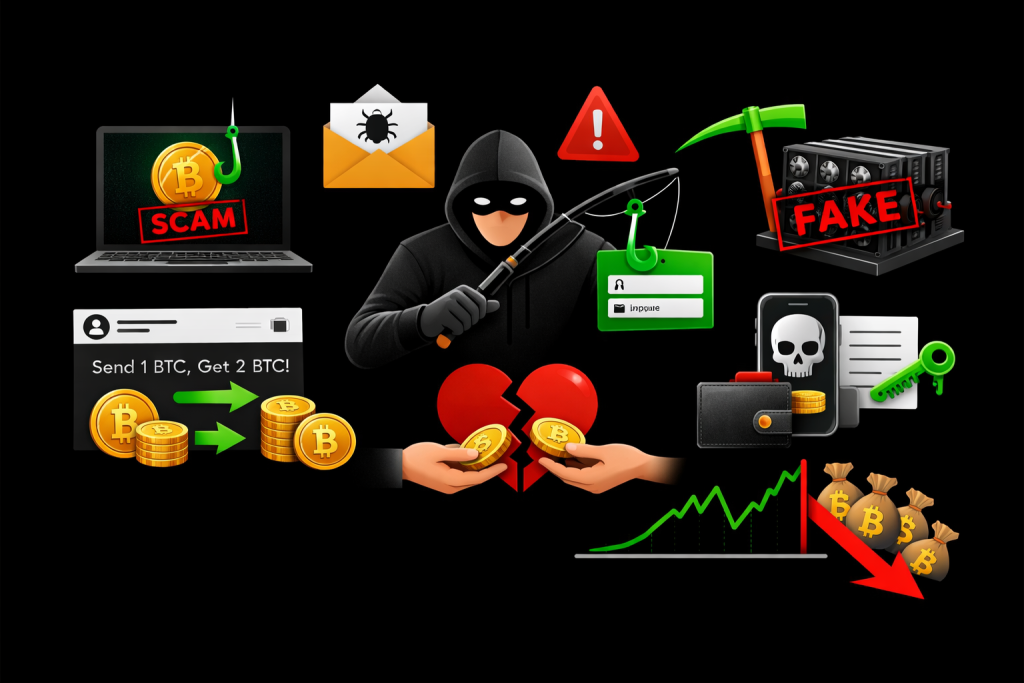
| Bitcoin Scam Type | How the Scam Works | Key Warning Signs |
| Fake Investment Platforms | Scammers promise guaranteed Bitcoin profits through fake trading or mining websites. | Guaranteed returns, no verifiable company details |
| Giveaway Scams | Fraudsters impersonate celebrities or companies, asking users to send Bitcoin to receive more back. | “Send 1 BTC, get 2 BTC back” messages |
| Phishing Scams | Fake emails or websites steal login details for wallets or exchanges. | Suspicious links, urgent security warnings |
| Romance Scams | Scammers build online relationships, then request Bitcoin investments or transfers. | Requests for crypto from online-only partners |
| Mining Scams | Fake cloud mining services collect fees but never generate returns. | No proof of mining activity or payouts |
| Wallet Scams | Fraudulent wallets steal private keys or funds after installation. | Unknown apps, poor reviews, no support |
| Pump-and-Dump Schemes | Groups artificially inflate a coin’s price before selling off. | Sudden hype, coordinated buying signals |
| Impersonation Scams | Scammers pose as support staff or crypto influencers. | Requests for private keys or seed phrases |
| Fake ICOs / Token Sales | Fake projects raise funds, then disappear after launch. | No whitepaper, anonymous developers |
| Malware & Clipboard Hijacking | Malicious software changes wallet addresses during transactions. | Unexpected address changes, device slowdowns |
Bitcoin Scams on Dating Apps
Bitcoin Scammers are increasingly targeting dating platforms, preying on emotions to build trust. After a few exchanges, they start recommending investment opportunities in crypto, luring victims to send money or invest in fake projects.
Red Flag: Beware of strangers pushing unsolicited crypto advice or urging you to make investments. Genuine connections won’t focus on crypto.
Bitcoin Investment Schemes
Some online ads or emails promise huge returns on Bitcoin investments, tempting you to put in your money. These often turn out to be Ponzi schemes, where earlier investors are paid with funds from newer investors.
Red Flag: Be cautious of offers that promise “guaranteed” returns or require you to recruit others to earn more.
AI-Driven Crypto Scams
Bitcoin Scammers are now using artificial intelligence to create fake testimonials and market predictions, making their schemes look legitimate. These platforms often promise perfect, risk-free crypto trading results.
Red Flag: If a platform guarantees flawless predictions or shows overly polished endorsements, it’s likely a scam.
Rug Pull and Crypto MLM Scams
You’re invited to join an exciting new crypto project that promises huge returns. But as soon as enough people invest, the creators vanish, taking the funds with them. This is often combined with Multi-Level Marketing (MLM) tactics.
Red Flag: Be wary of any crypto opportunity that asks you to recruit others for a chance to earn.
Social Media Giveaway Scams
A well-known figure or crypto account promises a giveaway where you send a small amount of cryptocurrency to receive a larger sum in return. These “giveaways” are typically fake.
Red Flag: Legitimate giveaways don’t ask for upfront payments. If it sounds too good to be true, it probably is.
Telegram Scams
Scammers often create fake Telegram groups or channels that pose as official representatives of crypto projects, luring users with fake offers or emergency alerts. They may ask for private keys or funds.
Red Flag: Always verify the authenticity of any group or offer. Never share your private keys or send funds based on Telegram messages.
Phishing Scams
Phishing attempts come in the form of emails or websites designed to look like they belong to legitimate crypto exchanges or wallet services. Their goal is to steal your personal information and funds.
Red Flag: Check for suspicious email addresses, grammar mistakes, and unsolicited requests for sensitive information.
Crypto Mining Scams
These scams promise you returns from crypto mining operations that sound too good to be true. The reality? They’re often Ponzi schemes, using new investments to pay off old ones until they collapse.
Red Flag: Be skeptical of any “mining” offer that promises unrealistic returns or shows fake equipment and testimonials.
Frequently Asked Questions
How can I tell if a crypto project is a scam?
Look for signs such as promises of guaranteed returns, pressure to recruit others, or a lack of transparency about the project’s leadership and operations. Always do your research and avoid investments that sound too good to be true.
Can AI help me make profitable crypto trades?
While AI can be a useful tool in crypto trading, scams are now using AI-generated content to mislead investors. Be wary of platforms that promise perfect predictions or show fake endorsements using AI.
Our Insights
Each year brings more sophisticated crypto scams, with scammers leveraging everything from AI to dating apps to deceive investors. To stay safe, always be skeptical of high returns, pressure to recruit others, or requests for personal information. The best way to avoid falling victim is to educate yourself and trust your instincts. If something sounds too good to be true, it probably is. Stay vigilant, and protect your investments.
How to Spot a Crypto Scam
As you explore the world of cryptocurrency, it’s essential to know how to separate legitimate opportunities from potential scams. Identifying these scams isn’t just about avoiding financial loss—it’s about securing your digital assets and protecting your journey in the crypto space. Here are the key red flags that should raise your suspicion:
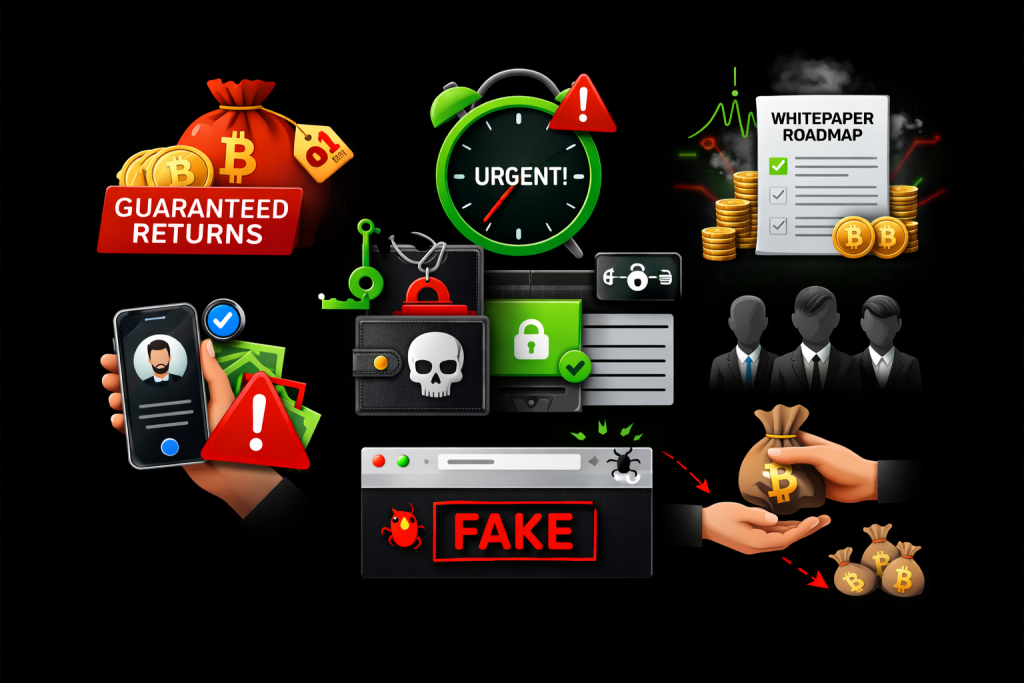
| Red Flag | What It Means | How to Protect Yourself |
| Guaranteed profits | Legitimate crypto investments never promise fixed or risk free returns | Be skeptical of “guaranteed” or “no risk” claims |
| Pressure to act fast | Scammers create urgency to stop you from thinking | Take time to research before investing |
| Requests for private keys | No real company will ever ask for wallet keys or seed phrases | Never share private information |
| Unverified platforms | Fake exchanges or wallets lack regulation or transparency | Check company registration and reviews |
| Impersonation of celebrities | Scammers use fake endorsements to build trust | Verify accounts through official websites |
| Poor website quality | Scam sites often have errors and copied content | Look for professional design and clear details |
| Upfront fees to unlock funds | Scammers ask for extra payments before withdrawals | Avoid platforms that block withdrawals |
| Fake social media giveaways | “Send crypto to receive more back” offers | Remember: giveaways never require payments |
| No clear whitepaper or roadmap | Real projects explain their purpose and future plans | Read documentation carefully |
| Anonymous or fake team members | Hidden identities reduce accountability | Research founders and developers |
| Unrealistic returns in short time | High rewards with low effort signal fraud | Compare claims with market realities |
| Direct messages from “support” | Real support doesn’t contact users first | Use official support channels only |
Unrealistic Promises
If a crypto opportunity promises guaranteed returns or sounds too good to be true, it probably is. The crypto market is highly volatile, and any scheme that claims otherwise is a red flag. Remember: high returns come with high risks.
Lack of Transparency
Legitimate crypto projects are open about their team, technology, and roadmap. If you come across a project that lacks clear information, proceed with caution. Transparency is vital to trust in the crypto world.
Over-reliance on Recruitment
If a crypto project focuses more on recruiting new participants than providing a valuable product or service, beware. This is a classic sign of a pyramid or MLM scheme, not a legitimate crypto venture. Genuine projects add value through technology, not by expanding a recruitment network.
Unsolicited Offers and Pressure Tactics
Be wary of unsolicited offers that come via email, social media, or even phone calls, especially if they pressure you to make quick decisions. Scammers often use urgency to push you into hasty, uninformed investments. Always take a step back and verify before acting.
10 BEST FOREX BROKERS
| MIN DEPOSIT $100 | SIGN-UP BONUS Yes | Visit Now |
| MIN DEPOSIT $10 | SIGN-UP BONUS No | Visit Now |
| MIN DEPOSIT $25 | SIGN-UP BONUS Yes | Visit Now |
| MIN DEPOSIT $10 | SIGN-UP BONUS Yes | Visit Now |
| MIN DEPOSIT $5 | SIGN-UP BONUS Yes | Visit Now |
| MIN DEPOSIT $10 | SIGN-UP BONUS No | Visit Now |
| MIN DEPOSIT $0 | SIGN-UP BONUS Yes | Visit Now |
| MIN DEPOSIT $20 | SIGN-UP BONUS Yes | Visit Now |
| MIN DEPOSIT $10 | SIGN-UP BONUS No | Visit Now |
| MIN DEPOSIT $4 | SIGN-UP BONUS No | Visit Now |
Check the Source
Scammers often create fake websites or social media accounts that mimic real crypto projects. Always verify the legitimacy of the source. A quick online search or checking community feedback can help you confirm if an opportunity is genuine.
Ask for Proof
A legitimate crypto project should be able to provide verifiable proof of its performance, technology, or product. Don’t hesitate to ask for evidence. If they can’t offer solid proof or offer vague answers, it’s likely a scam.
Smart Contract Audits
Unaudited contracts may signal poor security and are often associated with fraudulent projects. An audit provides an extra layer of trust and credibility.
Frequently Asked Questions
How can I tell if a crypto opportunity is legitimate?
Look for transparency, verifiable proof of performance, and a focus on product or service value rather than recruitment. Be wary of unrealistic promises and unsolicited offers.
How do I check if a crypto project has been audited?
For DeFi projects, check their official website or trusted crypto forums for information about smart contract audits. If they have been audited, it will be mentioned in the project’s documentation or by reputable auditors.
Our Insights
With Bitcoin Scammers becoming more sophisticated, staying vigilant is key to protecting your digital assets. Look out for signs like unrealistic returns, secrecy, and recruitment-heavy tactics. Always verify the legitimacy of any crypto project and demand proof of its claims.
How do I report a Crypto Scam?
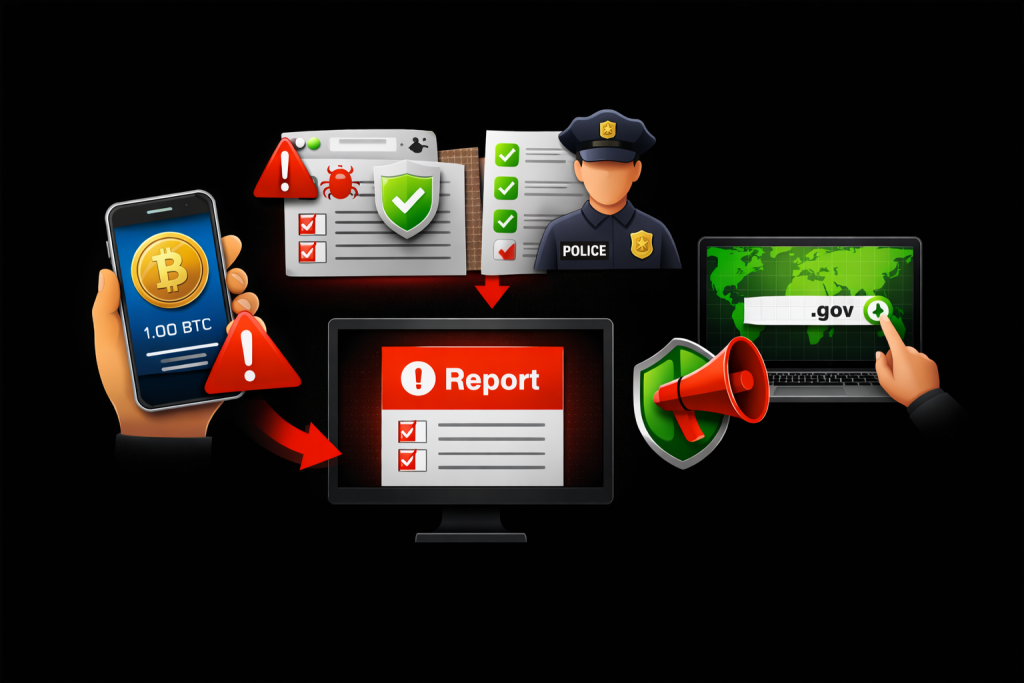
If you’ve encountered or fallen victim to a crypto scam, it’s crucial to act quickly and report it to help prevent further damage to yourself and others. Here’s a step-by-step guide on how to report a crypto scam:
Report to the Platform or Exchange
If you were scammed through a specific exchange or platform (such as Binance, Coinbase, or any other trading platform), the first step is to report the incident directly to them. Many exchanges have dedicated support teams to handle fraud or scam reports. They may be able to help recover funds or block the scammer’s account.
Example: Go to the support section of the platform’s website and submit a fraud report, including details of the scam and any transaction records you have.
Notify Your Local Authorities
Report the scam to your country’s law enforcement or financial regulatory body. Many countries have cybercrime units dedicated to investigating online fraud and cryptocurrency-related scams.
Alert the Crypto Community
Many Bitcoin Scammers have a widespread reach, and alerting the wider community can help others avoid the same trap. Report the scam to platforms like Reddit, Twitter, or BitcoinTalk, and share your experience with trusted forums or online crypto communities.
Example: Use hashtags like #cryptoscam or post in dedicated scam-reporting subreddits such as r/CryptoScams.
Notify the Scam’s Payment Processor or Blockchain Network
If you send cryptocurrency to a scam address, it can be helpful to report it to the blockchain network. While it may not guarantee recovery of funds, reporting a scam transaction to the network or a payment processor (like Chainalysis, CipherTrace, or Elliptic) might prevent future scams or provide tracking information.
File a Complaint with Consumer Protection Agencies
In some countries, consumer protection agencies also deal with online scams. In the U.S., the Better Business Bureau (BBB) or the Consumer Financial Protection Bureau (CFPB) can assist with fraud reports.
Report the Scam to Social Media Platforms
If the scam took place via social media (for example, a fake giveaway scam on Instagram or Twitter), report the fraudulent account to the platform. Major social media networks have processes for flagging fraudulent activity.
Example: Report the scam account on Twitter or Instagram using their “Report” feature.
By taking these steps, you help protect yourself and others from falling prey to Bitcoin Scammers. Reporting scams is essential for creating a safer crypto environment for everyone.
Frequently Asked Questions
How do I report a crypto scam if I’ve already sent funds?
You should immediately contact your crypto exchange or wallet provider, report the incident to local law enforcement, and submit a report to your country’s financial crime or consumer protection authority.
Where can I report a crypto scam if no money was lost?
Even without financial loss, you can report crypto scams to consumer protection agencies, cybersecurity reporting platforms, and online fraud watchdogs to help prevent others from being targeted.
Our Insights
Reporting a crypto scam promptly helps protect others and supports investigations. Gather evidence, notify your exchange, and report the incident to relevant authorities to improve awareness, track fraud patterns, and reduce the impact of cryptocurrency scams.
Top 10 Best and TRUSTED Forex Brokers – A Direct Comparison
 | Extensive Regulation AvaProtect™ Risk Management Diverse Platform Selection |  |  |
 | Fund Security Social & Copy Trading 24/7 Multilingual Support | | |
 | Cost-Effective Trading 100% Swap-Free Accounts Integrated Copy Trading | | |
 | Strong Regulation and Trust Platform Variety Client Support | | |
 | Robust Regulation Fast Withdrawals & Deposits Swap-Free Accounts | | |
 | Strong Regulation & Security Flexible Trading Conditions Zero Fees on Funding | | |
 | Multiple Account Types Robust Regulation and Security Innovative Mobile App | | |
 | Flexible Account Types High Leverage Options $0 Non-Trading Fees | | |
 | Exceptional Execution Speed Highly Competitive Pricing Flexible and Low Minimum Deposit | | |
 | Low Minimum Deposit High Leverage Zero Commission | | |
What Real Traders Want to Know!
Q: How can I tell if a crypto exchange is legitimate or a scam? – Alex M
A: Check for proper registration, regulatory licenses, clear contact details, reviews from verified users, and avoid platforms that promise guaranteed returns.
Q: I received a message claiming I won a Bitcoin giveaway. Should I respond? – Priya S.
A: No. Legitimate giveaways never require sending crypto first. Do not send any funds or share private keys, and report the message if possible.
Q: What should I do if I accidentally sent Bitcoin to a scam address? – Daniel K.
A: Immediately contact your exchange or wallet provider, report the fraud to local authorities, and submit a report to relevant financial crime agencies. Recovery is rare but reporting is crucial.
Q: Are phishing emails from “crypto support” common, and how can I avoid them? – Fatima R.
A: Yes, phishing is very common. Always verify official websites, never click suspicious links, and never share private keys or passwords. Enable two-factor authentication.
Q: How do scammers use social media to trick traders? – John L.
A: Scammers impersonate influencers or celebrities, promote fake ICOs, or create fraudulent “investment groups.” Always verify accounts, avoid “too good to be true” offers, and report suspicious profiles.
You might also like:
- Best Bitcoin Brokers
- What is Bitcoin Currency?
- Best Ripple Trading Brokers
- Best Litecoin Trading Brokers
In Conclusion
Bitcoin scammers are becoming increasingly sophisticated, but by staying informed and recognizing the warning signs, you can protect yourself from falling victim. Whether it’s unrealistic promises, lack of transparency, or phishing attempts, being vigilant is your best defense.
Always verify information, question too-good-to-be-true offers, and report scams when they occur. With the right knowledge, you can confidently navigate the crypto world while safeguarding your digital assets.
Look for unrealistic promises, lack of transparency, heavy recruitment focus, unsolicited offers, and pressure tactics. If something feels off, trust your instincts.
Check for transparency, read the project’s whitepaper, and ensure they have audited smart contracts. A legitimate project should provide clear information and verifiable proof.
Immediately report it to the platform or exchange, alert local authorities, and notify the crypto community. Gather all evidence and refrain from further communication with the scammer.
Unfortunately, recovery is often difficult, but reporting to platforms, regulators, and law enforcement may help track and prevent future fraud. Always act fast and follow the proper channels.
Stay informed about common scams, always verify the legitimacy of projects before investing, and be cautious about unsolicited offers or high-return promises. Never share your private keys or passwords.
No, scams can appear in many forms – through emails (phishing), fake websites, unsolicited calls, and even through popular messaging apps like Telegram. Always verify the source before making any decisions.
Be wary of any crypto giveaway that requires you to send cryptocurrency upfront to receive a larger amount in return. Legitimate giveaways don’t ask for money or crypto to participate.
It can be extremely difficult to recover funds, as cryptocurrency transactions are irreversible. However, reporting the scam to the platform, law enforcement, and blockchain tracking services increases the chances of identifying and potentially halting the bitcoin scammers.
A smart contract audit reviews the code behind decentralized finance (DeFi) projects to identify vulnerabilities or fraudulent elements. Audited contracts offer more security and credibility, reducing the chances of a scam or hack.
Yes, pyramid schemes disguised as “Bitcoin investment opportunities” are still common. These schemes focus on recruiting new members to invest and promise high returns based on the recruitment of others, not the value of the product or technology itself. Always be cautious of projects with a strong emphasis on recruitment.

Sidebar rates

Ava

