5 Best CMA Regulated Forex Brokers

We’ve listed the 5 Best CMA Regulated Forex Brokers in Kenya that provide secure and regulated access to global forex markets. In Kenya, forex trading is legal and overseen by the Capital Markets Authority (🇰🇪 CMA), a reputable financial authority. As a result, CMA regulation ensures Kenyan traders benefit from strong investor protection, transparent operations, and reliable trading conditions. Moreover, traders in Kenya can access a wide range of financial instruments, including major and minor currency pairs, commodities, indices, stocks, and cryptocurrencies, through platforms that offer competitive spreads, fast execution, and robust account security.
5 Best CMA Regulated Forex Brokers (2026)
- HFM – Overall, the Best CMA Regulated Forex Broker in Kenya.
- Exness – Accepts local deposits and withdrawals via M-Pesa/Kenyan bank accounts.
- Pepperstone – Offers extremely low trading costs and tight spreads.
- FP Markets – Educational content and trading support tailored for Kenyan users.
- IC Markets – Advanced trading platforms (MT4, MT5, cTrader) fully accessible in Kenya.
10 Best Forex Brokers – Globally
Pros and Cons of CMA-Regulated Forex Brokers in Kenya – Immediate Advantages and Disadvantages
| ✓ Pros | ✕ Cons |
| Legal and regulated access for Kenyan traders under 🇰🇪 CMA oversight. | Some international brokers may have limited local deposit options. |
| Enhanced investor protection with transparent operations. | Certain brokers may not support M-Pesa or other local payment methods. |
| Client funds often held in segregated accounts for safety. | Leverage may be lower compared to unregulated offshore brokers. |
| Access to dispute resolution and CMA oversight in case of broker issues. | Fewer high-risk instruments or promotions available. |
| Promotes safer and more reliable trading conditions for Kenyan users. | Account verification can take longer due to regulatory compliance. |
The Capital Markets Authority (CMA) safeguards Kenyan traders by enforcing strict financial and operational standards. This ensures CMA-regulated forex brokers provide a secure, transparent, and legally compliant trading environment while allowing Kenyan traders access to global markets with investor protection.
1. HFM
HFM (HF Markets) operates in Kenya through HFM Investments Limited, a 🇰🇪 CMA-licensed non-dealing online forex broker. As a result, Kenyan traders gain legal, regulated access to forex and CFD trading with local oversight, strong fund protections, and full compliance under Kenyan financial laws.
| Broker | HFM |
| Local Regulation | CMA regulated (licensed as a non dealing forex broker) |
| Legal Access | Accepts Kenyan traders under Kenyan law |
| Local Funding | Supports M-Pesa and bank transfers |
| Platforms | MT4 and MT5 available |
| Low Minimum Deposit | Low entry barrier from around $5 |
| Open an Account |  |
 | Minimum Deposit: $0 Regulated by: FSCA, FSA, FCA, FSC, CMA Crypto: Yes |
Frequently Asked Questions
Is HFM regulated and authorized to accept traders from Kenya?
Yes. HFM is licensed by the 🇰🇪 Capital Markets Authority (CMA) as a non-dealing online forex broker under License No. 155. As a result, this authorization allows HFM to legally offer forex and CFD trading services to Kenyan clients.
Can Kenyan traders open accounts and fund them locally with HFM?
Yes. Kenyan traders can open accounts with HFM, complete the required identity verification, and fund their accounts. Additionally, HFM supports deposits and withdrawals through M-Pesa and local bank transfers, making account funding convenient for Kenyan clients.
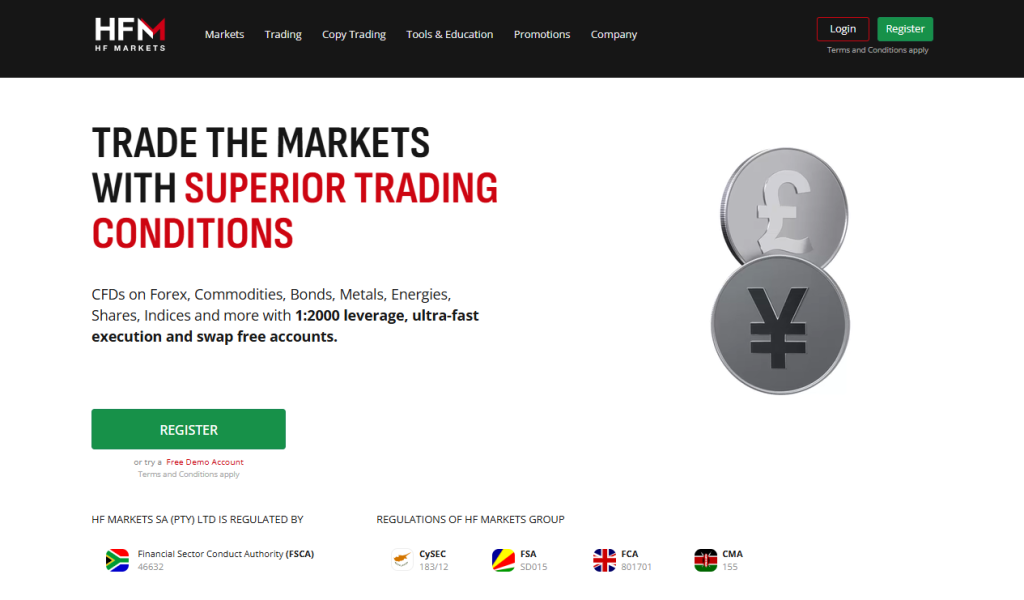
| Minimum Deposit: $0 Regulated by: FSCA, FSA, FCA, FSC, CMA Crypto: Yes |
Pros and Cons
| ✓ Pros | ✕ Cons |
| Licensed by 🇰🇪 CMA for legal Kenyan trading | Local support quality may vary |
| Accepts M-Pesa deposits and withdrawals | Spread and fees vary by account |
| Offers popular MT4 and MT5 platforms | Higher leverage restrictions than offshore versions |
| Low minimum deposit options | Requires full KYC before trading |
| Provides negative balance protection locally | Some advanced tools may need study |
Our Insights
HFM legally serves Kenya’s trading community under 🇰🇪 CMA regulation. As a result, it delivers local compliance and investor protections while allowing Kenyan traders to access global forex and CFD markets through MetaTrader platforms and convenient local funding methods.
| # | Criteria | Score |
| 1 | Overall Rating and Trust Score | ⭐⭐⭐⭐☆ |
| 2 | Range of Investments, Platforms and Tools | ⭐⭐⭐⭐☆ |
| 3 | Commissions, Fees, and Bonus Offers | ⭐⭐⭐⭐☆ |
| 4 | Research and Education | ⭐⭐⭐⭐☆ |
| 5 | Mobile Trading and User Experience | ⭐⭐⭐⭐☆ |
| 6 | Customer Support and Regulatory Compliance | ⭐⭐⭐☆☆ |
| 7 | Deposit and Withdrawal Option | ⭐⭐⭐⭐⭐ |
| 8 | Execution Speed and Order Types | ⭐⭐⭐⭐☆ |
| 9 | Risk Management and Safety Measures | ⭐⭐⭐⭐☆ |
| 10 | Markets Analysis and Trading Tools | ⭐⭐⭐⭐☆ |
2. Exness
Exness operates in Kenya through Exness (KE) Limited, a 🇰🇪 CMA-licensed non-dealing online forex broker. As a result, Kenyan traders gain legal and regulated access to forex and CFD markets while benefiting from local oversight, investor protections, and integrated payment methods designed specifically for Kenya.
| Broker | Exness |
| Local Regulation | Regulated by 🇰🇪 CMA as a non-dealing online forex broker |
| Legal Access | Accepts Kenyan traders under Kenyan regulation |
| Funding Options | Supports M-Pesa and local bank deposits |
| Trading Platforms | MetaTrader 4 MetaTrader 5 Exness Terminal |
| Low Minimum Deposit | $10 typical minimum deposit |
| Open an Account | |
 | Minimum Deposit: $1 Regulated by: CBCS, CySEC, FCA, FSA, FSC, FSCA, CMA Crypto: Yes |
Frequently Asked Questions
Is Exness regulated and authorized to accept traders from Kenya?
Yes. Exness (KE) Limited holds a valid license from the 🇰🇪 Capital Markets Authority (CMA). As a result, it can legally offer forex and CFD trading services within Kenya under local financial laws and regulatory oversight.
Can Kenyan traders open accounts and fund them locally with Exness?
Yes. Kenyan traders can open live trading accounts and fund them easily. In particular, Exness supports local deposit options such as M-Pesa and bank transfers, making the platform accessible and convenient for users based in Kenya.
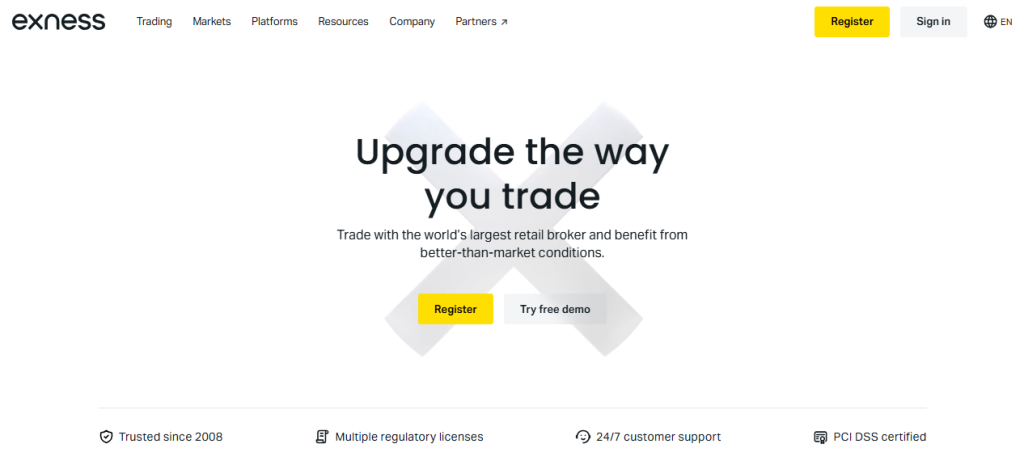
| Minimum Deposit: $1 Regulated by: CBCS, CySEC, FCA, FSA, FSC, FSCA, CMA Crypto: Yes |
Pros and Cons
| ✓ Pros | ✕ Cons |
| Licensed by 🇰🇪 CMA for legal trading | Some account features vary by region |
| Local deposits via M-Pesa available | Leverage may be restricted under CMA rules |
| Offers MT4 and MT5 platforms | Traders must complete KYC verification |
| Negative balance protection available | Spread and costs depend on account type |
| Fast deposits and withdrawals | Not all global features available locally |
Our Insights
Exness is fully regulated in Kenya under 🇰🇪 CMA. Consequently, it provides legal access for Kenyan forex traders while offering investor protections, transparent trading conditions, and popular funding options tailored to local preferences.
| # | Criteria | Score |
| 1 | Overall Rating and Trust Score | ⭐⭐⭐⭐⭐ |
| 2 | Range of Investments, Platforms and Tools | ⭐⭐⭐⭐☆ |
| 3 | Commissions, Fees, and Bonus Offers | ⭐⭐⭐⭐☆ |
| 4 | Research and Education | ⭐⭐⭐☆☆ |
| 5 | Mobile Trading and User Experience | ⭐⭐⭐⭐⭐ |
| 6 | Customer Support and Regulatory Compliance | ⭐⭐⭐⭐⭐ |
| 7 | Deposit and Withdrawal Option | ⭐⭐⭐⭐⭐ |
| 8 | Execution Speed and Order Types | ⭐⭐⭐⭐⭐ |
| 9 | Risk Management and Safety Measures | ⭐⭐⭐⭐⭐ |
| 10 | Markets Analysis and Trading Tools | ⭐⭐⭐⭐☆ |
3. Pepperstone
Pepperstone operates in Kenya through Pepperstone Markets Kenya Limited, which holds a 🇰🇪 CMA licence, allowing it to legally offer forex and CFD trading services to Kenyan traders. The broker combines local regulation with global oversight from top financial authorities for secure trading conditions.
| Broker | Pepperstone |
| Local Regulation | Regulated by 🇰🇪 CMA |
| Global Regulation | FCA ASIC CySEC DFSA BaFin |
| Funding Options | M-Pesa and local bank transfers |
| Trading Platforms | MT4 MT5 cTrader |
| Low Minimum Deposit | Low starting deposit options |
| Open an Account | |
 | Minimum Deposit: $200 Regulated by: ASIC, BaFin, CMA, CySEC, DFSA, FCA, SCB Crypto: Yes |
Frequently Asked Questions
Is Pepperstone regulated and authorized to accept traders from Kenya?
Yes. Pepperstone is regulated in Kenya by the 🇰🇪 Capital Markets Authority (CMA) under the local entity Pepperstone Markets Kenya Limited, giving Kenyan traders regulated access to markets under Kenyan law.
Can Kenyan traders open accounts and fund them locally with Pepperstone?
Yes. Kenyan traders can open live accounts with Pepperstone and use local methods, including M-Pesa and bank transfers, for deposits and withdrawals, offering convenience for Kenya-based traders.
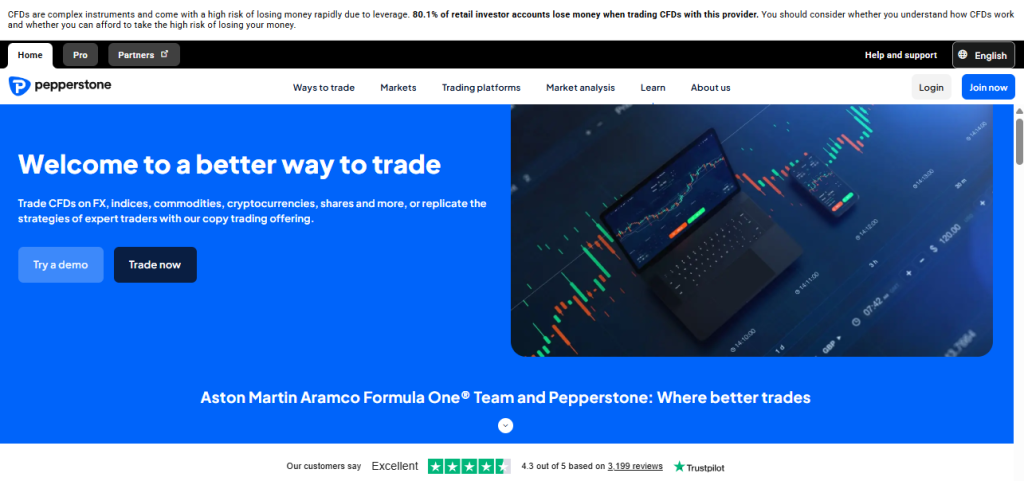
| Minimum Deposit: $200 Regulated by: ASIC, BaFin, CMA, CySEC, DFSA, FCA, SCB Crypto: Yes |
Pros and Cons
| ✓ Pros | ✕ Cons |
| Licensed by 🇰🇪 CMA for Kenya | Not listed on a stock exchange |
| Supports local funding via M-Pesa | No base account in Kenyan shillings |
| Offers multiple major platforms | No bonus offerings |
| Strong global regulatory oversight | Some fees vary by payment method |
| Fast execution and tight pricing | Local support varies by time |
Our Insights
Pepperstone legally accepts Kenyan traders under 🇰🇪 CMA regulation, providing a secure and compliant trading environment with global standards, strong fund protection, and flexible funding options tailored to the Kenyan market.
| # | Criteria | Score |
| 1 | Overall Rating and Trust Score | ⭐⭐⭐⭐☆ |
| 2 | Range of Investments, Platforms and Tools | ⭐⭐⭐⭐☆ |
| 3 | Commissions, Fees, and Bonus Offers | ⭐⭐⭐⭐☆ |
| 4 | Research and Education | ⭐⭐⭐☆☆ |
| 5 | Mobile Trading and User Experience | ⭐⭐⭐⭐☆ |
| 6 | Customer Support and Regulatory Compliance | ⭐⭐⭐⭐☆ |
| 7 | Deposit and Withdrawal Option | ⭐⭐⭐☆☆ |
| 8 | Execution Speed and Order Types | ⭐⭐⭐⭐⭐ |
| 9 | Risk Management and Safety Measures | ⭐⭐⭐⭐☆ |
| 10 | Markets Analysis and Trading Tools | ⭐⭐⭐☆☆ |
Top 3 CMA Regulated Forex Brokers in Kenya – Head-to-Head Comparison
| Broker |  |  |  |
| Minimum Deposit | Varies by account | Varies by account | AU$10 |
| Spreads From | 0.1 pips | 0.0 pips | 0.0 pips |
| Commissions | Varies by account | $0 - $3.5 per lot | Varies by account |
| Leverage | Up to 1:1000 | Up to 1:2000 | 1:500 (Pro) 1:200 (Retail) |
| Trading Platforms | MT4 MT5 | MT4 MT5 | MT4 MT5 cTrader |
| Regulation | CMA 🇰🇪 FCA 🇬🇧 FSCA 🇿🇦 CySEC 🇨🇾 | CBCS 🇨🇼 CySEC 🇨🇾 FCA 🇬🇧 FSA 🇸🇨 FSC 🇻🇬 FSC 🇲🇺 FSCA 🇿🇦 CMA 🇰🇪 JSC 🇯🇴 | ASIC 🇦🇺 BaFin 🇩🇪 CMA 🇰🇪 CySEC 🇨🇾 DFSA 🇦🇪 FCA 🇬🇧 SCB 🇧🇸 |
| Open an Account | | | |
4. FP Markets
FP Markets operates in Kenya with a 🇰🇪 CMA licence as a non-dealing forex broker, giving Kenyan traders legal, regulated access to global forex and CFD markets. The broker also holds strong international regulations, providing deep liquidity, competitive pricing, and trusted platforms for traders in Kenya.
| Broker | FP Markets |
| Local Regulation | Licensed by 🇰🇪 CMA |
| Global Regulation | 🇦🇺 ASIC 🇨🇾 CySEC 🇿🇦 FSCA and more |
| Markets | Forex CFDs commodities indices |
| Trading Platforms | MT4 MT5 cTrader |
| Minimum Deposit | 100 USD |
| Open an Account | |
 | Minimum Deposit: $100 Regulated by: ASIC, CySEC, FSCA, FSA, FSC, CMA Crypto: Yes |
Frequently Asked Questions
Is FP Markets regulated and authorised to accept traders from Kenya?
Yes. FP Markets holds a valid licence from the 🇰🇪 Capital Markets Authority (CMA), allowing it to operate locally and serve Kenyan forex traders under Kenyan regulation.
Can Kenyan traders open accounts and fund them locally with FP Markets?
Yes. Kenyan traders can open live accounts and trade with FP Markets. Though direct local payment methods like M-Pesa may not be supported, deposits and withdrawals work through global options such as bank transfers, cards, and e-wallets.
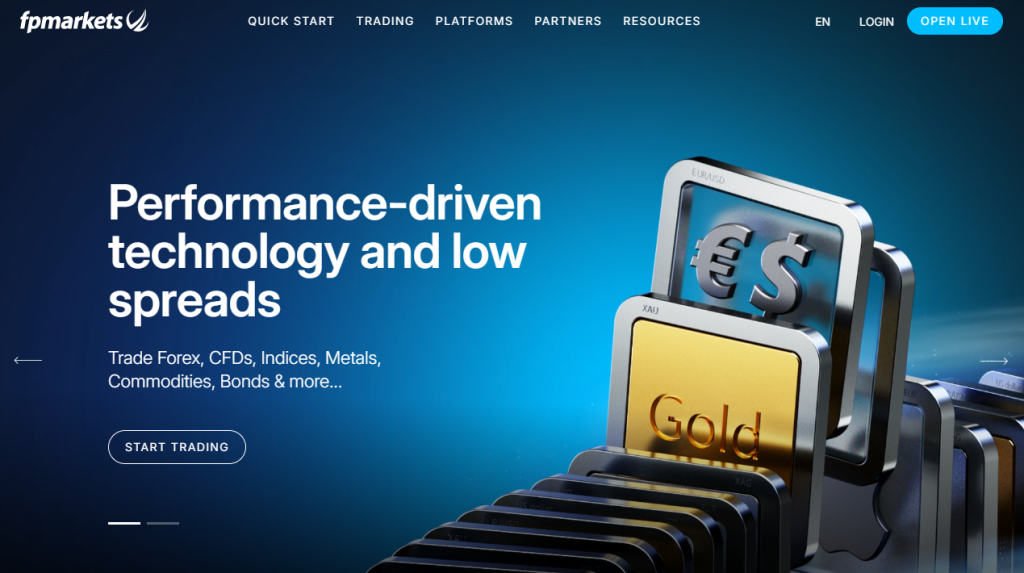
| Minimum Deposit: $100 Regulated by: ASIC, CySEC, FSCA, FSA, FSC, CMA Crypto: Yes |
Pros and Cons
| ✓ Pros | ✕ Cons |
| Licensed by 🇰🇪 CMA | No direct M-Pesa support |
| Strong global regulation | No Kenyan shilling base account |
| Competitive spreads | Minimum deposit relatively high |
| Multiple major platforms | Some instruments vary by region |
| Trusted global broker | Local support channels limited |
Our Insights
FP Markets provides a strong trading environment for Kenyan traders with 🇰🇪 CMA regulation, robust global oversight, reliable platforms, and a wide range of financial instruments. Its local presence, combined with international strength, makes FP Markets a trusted choice in the Kenyan forex space.
| # | Criteria | Score |
| 1 | Overall Rating and Trust Score | ⭐⭐⭐⭐⭐ |
| 2 | Range of Investments, Platforms, and Tools | ⭐⭐⭐⭐⭐ |
| 3 | Commissions, Fees, and Bonus Offers | ⭐⭐⭐⭐☆ |
| 4 | Research and Education | ⭐⭐⭐⭐☆ |
| 5 | Mobile Trading and User Experience | ⭐⭐⭐⭐☆ |
| 6 | Customer Support and Regulatory Compliance | ⭐⭐⭐⭐⭐ |
| 7 | Deposit and Withdrawal Option | ⭐⭐⭐⭐⭐ |
| 8 | Execution Speed and Order Types | ⭐⭐⭐⭐⭐ |
| 9 | Risk Management and Safety Measures | ⭐⭐⭐⭐⭐ |
| 10 | Markets Analysis and Trading Tools | ⭐⭐⭐⭐⭐ |
5. IC Markets
IC Markets operates in Kenya through IC Markets Kenya Ltd, a broker licensed by the 🇰🇪 Capital Markets Authority (CMA) to offer forex and CFD trading. The broker combines local access with global capabilities, giving Kenyan traders reliable execution, advanced platforms, and deep markets.
| Broker | IC Markets |
| Local Regulation | Licensed by 🇰🇪 CMA |
| Global Regulation | Also regulated by top authorities globally |
| Markets | Forex CFDs commodities indices |
| Platforms | MT4 MT5 cTrader |
| Trading Conditions | Tight spreads, deep liquidity |
| Open an Account | |
 | Minimum Deposit: $200 Regulated by: FSA Crypto: Yes |
Frequently Asked Questions
Is IC Markets regulated and authorised to accept traders from Kenya?
Yes. IC Markets Kenya Ltd holds a license from the 🇰🇪 Capital Markets Authority (CMA), so Kenyan traders can open accounts and trade under local regulation with legal protections like segregated client funds.
Can Kenyan traders open accounts and fund them locally with IC Markets?
Yes. Kenyan traders can open live accounts with IC Markets Kenya Ltd. Funding supports international transfer methods. Local deposit options may vary, so traders should check available methods for Kenya.

| Minimum Deposit: $200 Regulated by: FSA Crypto: Yes |
Pros and Cons
| ✓ Pros | ✕ Cons |
| Local entity under 🇰🇪 CMA | Minimum deposit may be higher than some brokers |
| Established global forex brand | Local funding options vary |
| Popular trading platforms available | M-Pesa not always supported |
| Competitive pricing and execution | Local support channels may be limited |
| Offers negative balance protection | Some instruments vary by region |
Our Insights
IC Markets offers Kenyan traders a local trading entity with 🇰🇪 CMA regulation, advanced platforms, competitive pricing, and global market access. Its local presence gives Kenyan traders confidence in execution, platform reliability, and legal oversight.
| # | Criteria | Score |
| 1 | Overall Rating and Trust Score | ⭐⭐⭐⭐⭐ |
| 2 | Range of Investments, Platforms and Tools | ⭐⭐⭐⭐☆ |
| 3 | Commissions, Fees, and Bonus Offers | ⭐⭐⭐⭐☆ |
| 4 | Research and Education | ⭐⭐⭐☆☆ |
| 5 | Mobile Trading and User Experience | ⭐⭐⭐⭐☆ |
| 6 | Customer Support and Regulatory Compliance | ⭐⭐⭐⭐☆ |
| 7 | Deposit and Withdrawal Option | ⭐⭐⭐⭐☆ |
| 8 | Execution Speed and Order Types | ⭐⭐⭐⭐⭐ |
| 9 | Risk Management and Safety Measures | ⭐⭐⭐⭐☆ |
| 10 | Markets Analysis and Trading Tools | ⭐⭐⭐⭐☆ |
5 Best CMA-Regulated Forex Brokers – Leaders Face-Off
| Variety of instruments and leverage tailored to local trading preferences. |  | |
| Accepts local deposits and withdrawals via M Pesa and Kenyan bank accounts. | | |
| Competitive spreads and low commissions favor Kenyan forex users. | | |
 | CMA-approved services for Kenyan traders, ensuring legal and regulated access. | | |
 | Advanced trading platforms (MT4, MT5, cTrader) fully accessible in Kenya. | | |
Forex Trading in Kenya with CMA-Regulated Brokers
Forex trading in Kenya has grown rapidly, supported by the 🇰🇪 Capital Markets Authority (CMA), which licenses and regulates brokers to provide legal, transparent, and safe trading for Kenyan residents. CMA-regulated brokers offer access to forex, commodities, indices, and CFDs while maintaining local investor protections. Traders can fund accounts through bank transfers and international methods, though mobile payments like M-Pesa are gradually being supported by select brokers.
Kenya’s forex market combines global trading opportunities with local oversight, giving traders legal recourse, segregated accounts, and reliable platforms. The industry attracts both beginners and experienced traders due to competitive spreads, flexible leverage, and the growing use of technology for online trading.
Pros and Cons of Forex Trading with CMA-Regulated Forex Brokers in Kenya
| ✓ Pros | ✕ Cons |
| Legal under 🇰🇪 CMA | High risk of losses |
| Segregated client funds | Some brokers lack M-Pesa support |
| Access to global markets | Requires knowledge and discipline |
| Flexible leverage | Fees vary by broker |
| Multiple platforms available | Scams exist with unregulated brokers |
You might also like:
In Conclusion
Forex trading in Kenya offers a secure and dynamic market environment for traders using CMA-regulated brokers. Local regulation ensures transparency and fund safety, while global connections allow access to a wide range of instruments. Kenyan traders benefit from regulated access, legal protections, and increasingly convenient funding options. Forex trading remains a high-risk but rewarding opportunity for disciplined participants.
Faq
Forex trading is buying and selling currencies using regulated brokers to profit from exchange rate fluctuations.
Yes. Brokers licensed by the 🇰🇪 CMA operate legally and follow local financial regulations.
Examples include HFM, Exness KE, Pepperstone Kenya, FP Markets, and IC Markets.
Some CMA brokers support M-Pesa, but many still rely on bank transfers or international payment methods.
Forex pairs, commodities, indices, stocks, and CFDs are commonly offered by CMA-regulated brokers.
MT4, MT5, cTrader, and proprietary broker platforms are widely supported.
Yes. Brokers are required to hold segregated accounts and follow investor protection rules.
Leverage varies; CMA-regulated brokers often limit retail leverage for safety, but professional accounts may offer higher limits.
Yes. Demo accounts, education resources, and regulated brokers make it suitable for beginners.
High volatility, leverage risk, and unregulated offshore brokers are the main concerns.
Sidebar rates


