Coinbase Legal Chief Calls Out Banks for Fighting Crypto Charter Applications
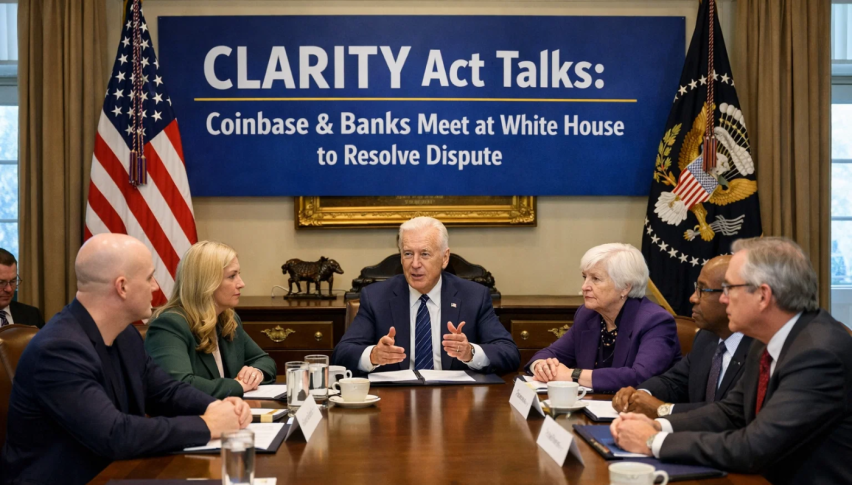
Coinbase's top lawyer just went after traditional banks for blocking the exchange's national trust bank charter application.

Quick overview
- Coinbase's Chief Legal Officer, Paul Grewal, criticized traditional banks for obstructing the exchange's national trust bank charter application.
- Community banks and Wall Street lobbying groups are intensifying efforts to prevent crypto firms from obtaining federal banking licenses.
- The Independent Community Bankers of America argues that Coinbase's application fails to meet chartering standards, citing governance and sustainability issues.
- Concerns over stablecoins have led banking groups to request strict enforcement of the GENIUS Act's ban on interest payments, fearing significant impacts on bank deposits.
Coinbase’s top lawyer just went after traditional banks for blocking the exchange’s national trust bank charter application. Paul Grewal, Coinbase’s Chief Legal Officer, accused banking groups of protecting their turf instead of caring about consumers.
Community banks and Wall Street lobbying groups both ramped up efforts this week to stop crypto firms from getting federal banking licenses. The Independent Community Bankers of America asked regulators to deny Coinbase’s charter for its subsidiary, Coinbase National Trust Company.
Grewal fired back on X. “Imagine opposing a regulated trust charter because you prefer crypto to stay… unregulated,” he wrote, adding that bank lobbyists are trying to “dig regulatory moats to protect their own.”
The ICBA sent a detailed letter to the Office of the Comptroller of the Currency on November 3. They argue Coinbase’s application doesn’t meet chartering standards. The banking group claims the application has problems with governance, profitability, sustainability, and what happens during receivership, especially when both Coinbase and its subsidiary face financial pressure at the same time.
The letter also questions the legal basis for OCC Interpretive Letter 1176, which lets national trust banks do non-fiduciary activities beyond traditional trust work. Banks say this letter was issued without proper public notice and comment procedures, making it invalid.
A separate banking fight emerged around stablecoins. The American Bankers Association and 52 state banking groups sent a joint letter to the Treasury Department on November 4. They want strict enforcement of the GENIUS Act’s ban on stablecoin interest payments.
Banks are worried about what they call a “loophole” where digital platforms offer interest through affiliates instead of directly from stablecoin issuers. Banking groups warned that without a broad reading of the interest ban, platforms will exploit loopholes through high-yield rewards.
The groups claim interest-bearing stablecoins could cause a 25.9% drop in bank deposits, wiping out $1.5 trillion in lending capacity. Small business and farm credit would shrink by $110 billion and $62 billion respectively.
Coinbase Chief Policy Officer Faryar Shirzad dismissed the concerns. He said the GENIUS Act explicitly allows third-party rewards programs and separates them from issuer-paid interest. “Congress answered this question,” Shirzad wrote.
The OCC review will take 12 to 18 months. Beyond Coinbase, the Bank Policy Institute is also opposing charter applications from Ripple, Circle, and Paxos. Anchorage Digital is the only crypto firm with an approved national trust bank charter, granted in January 2021.
- Check out our free forex signals
- Follow the top economic events on FX Leaders economic calendar
- Trade better, discover more Forex Trading Strategies
- Open a FREE Trading Account
- Read our latest reviews on: Avatrade, Exness, HFM and XM



 Save
Save