South Korea to Pass Digital Asset Act in January, Sets Stablecoin Rules
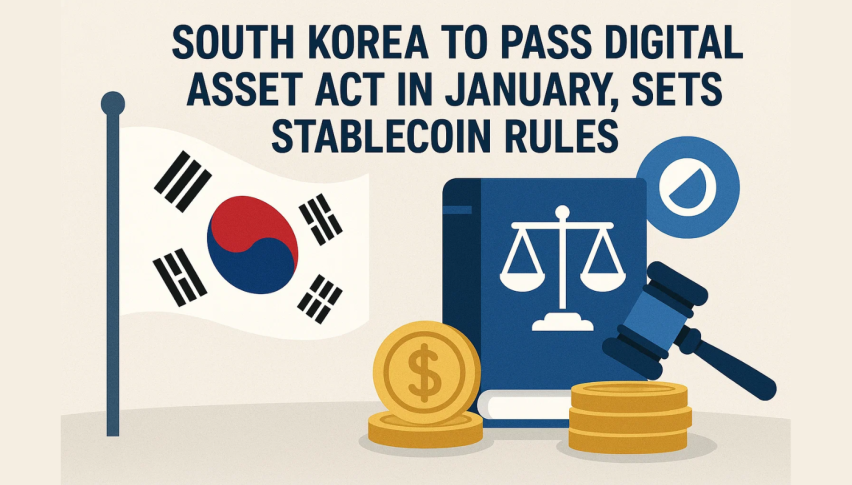
South Korea is well on its way to finalizing a brand new digital asset act by January - a move made possible by a breakthrough agreement...
Quick overview
- South Korea is set to finalize a new digital asset act by January, following a breakthrough agreement on won-backed stablecoins between lawmakers.
- The act will establish a consortium model where banks hold majority stakes, balancing monetary stability with private sector innovation.
- Key provisions include licensing for banks and stablecoin issuers, regular compliance reporting for crypto service providers, and alignment with global regulations.
- The legislation is part of a broader strategy to modernize financial regulations and enhance market transparency amid rising crypto popularity.
South Korea is well on its way to finalizing a brand new digital asset act by January – a move made possible by a breakthrough agreement between ruling and opposition lawmakers on how to issue won-backed stablecoins. After months of talks that had hit a roadblock, the two sides have reached a deal on a consortium model in which banks hold the majority stake and tech companies get a look-in. The upshot is a “made in Korea” stablecoin that balances the Bank of Korea’s wish for monetary stability with the need for private sector innovation – it includes clear rules on reserves and how many can be issued.
The government now has to get its official proposal on the table by Dec 10 – if they miss that deadline, things could get interesting with lawmakers possibly bringing forward their own draft. The National Assembly aims to pass the bill during its January session, and it’s working closely with the ruling People Power Party and the President’s office.
Digital Asset Rules and Market Impact
This new act builds on the Digital Asset Basic Act, introduced earlier this year, which established basic rules on licensing, reserves, and compliance for virtual asset service providers. This time round, though, the government is addressing some of the gaps that still exist by treating digital assets a bit more like traditional financial products – and by setting clear rules for foreign stablecoins like USDT and USDC.
🚨 BREAKING: South Korea’s parliament is set to legalise tokenised stocks, opening the door for security token offerings and a full RWA market to form.
On-chain equities are coming.
Tokenize everything 👀🚀 pic.twitter.com/5C3PNe9zmS
— Real World Asset Watchlist (@RWAwatchlist_) November 27, 2025
Key parts of the new act include:
- Banks and stablecoin issuers must be licensed and maintain sufficient cash reserves.
- Crypto service providers have to be able to tell anyone who asks how they are complying with the rules – and they have to report regularly on what they’re doing.
- The country wants to ensure it is in line with the rest of the world, so it is developing regulations similar to those in the US, EU, and Japan.
It’s all big because the popularity of crypto in Korea is on the rise – particularly among young adults. The government is worried that any delays could give other countries a head start on getting their stablecoins in order.
Broader Financial and Security Reforms
While all of the above was underway, lawmakers were also considering a few other pieces of legislation related to financial security and fair markets. They’re looking at changing the Electronic Financial Transactions Act to make the penalties for cyber attacks on big financial firms a lot stiffer – and to make it easier to enforce after one of those attacks has happened.
Meanwhile, they’re also looking to change the rules governing how stock is allocated when a company is sold. They’re particularly keen to make sure that small investors have a fair crack at getting in on the action.
All in all, the new digital asset act is part of a broader government strategy to modernise financial regulations, make markets more transparent, and keep both big and small investors safe in a world that is becoming ever more digital.
- Check out our free forex signals
- Follow the top economic events on FX Leaders economic calendar
- Trade better, discover more Forex Trading Strategies
- Open a FREE Trading Account
- Read our latest reviews on: Avatrade, Exness, HFM and XM

Related Articles
Sidebar rates

Related Posts
 Save
Save
