MicroStrategy’s Bitcoin Gambit: What Happens When Net Assets Exceed Market Value?
MicroStrategy has achieved a remarkable financial anomaly: the company's net Bitcoin holdings now exceed its market capitalization by $3.4B
Quick overview
- MicroStrategy's Bitcoin holdings now exceed its market capitalization by $3.4 billion, highlighting a significant financial anomaly.
- The company recently purchased an additional 10,624 BTC, bringing its total to 660,624, as part of CEO Michael Saylor's 'Bitcoin treasury strategy.'
- Despite a year-to-date Bitcoin yield of 27.8%, MicroStrategy's stock is down 38% this year, reflecting market skepticism and volatility.
- Saylor envisions a future where nation-states adopt Bitcoin-backed digital banking systems, potentially transforming global finance.
MicroStrategy has achieved a remarkable financial anomaly: the company’s net Bitcoin BTC/USD holdings now exceed its market capitalization by $3.4 billion, creating what some view as a potential value opportunity and others see as a flashing warning sign. This is a clear example of both market skepticism and calculated risk-taking.
The Bitcoin treasury, which used to be a business software company, said on Monday that it bought another 10,624 BTC for around $962.7 million between December 1 and 7. This brought its total holdings to 660,624 Bitcoin. This most recent purchase, which cost an average of $90,615 per coin, shows how dedicated CEO Michael Saylor is to what he terms a “Bitcoin treasury strategy.”
MSTR’s BTC Numbers Tell a Complex Story
At current market values, MicroStrategy’s Bitcoin cache is worth about $55.2 billion as of December 2. The corporation does, however, have $8.2 billion in debt, most of which is in convertible bonds with historically low interest rates. When you add in the $1.4 billion cash reserve that was just reported, the net value of Bitcoin goes up to $48.4 billion, which is much more than the company’s $45 billion market capitalization.
This strange inversion shows that investors are adding a lot of risk to the price. The discount is due to Bitcoin’s well-known volatility, the possibility of regulatory crackdowns, rising interest rates that could make it harder to pay off loans, and general economic uncertainty. However, this gap is a great chance for bullish investors to make money by wagering that Bitcoin will go up in value over time, which will prove Saylor’s vision right.
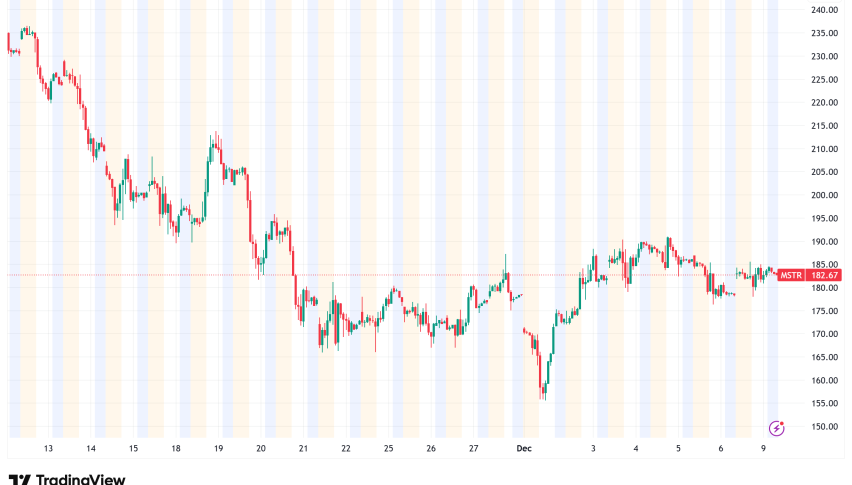
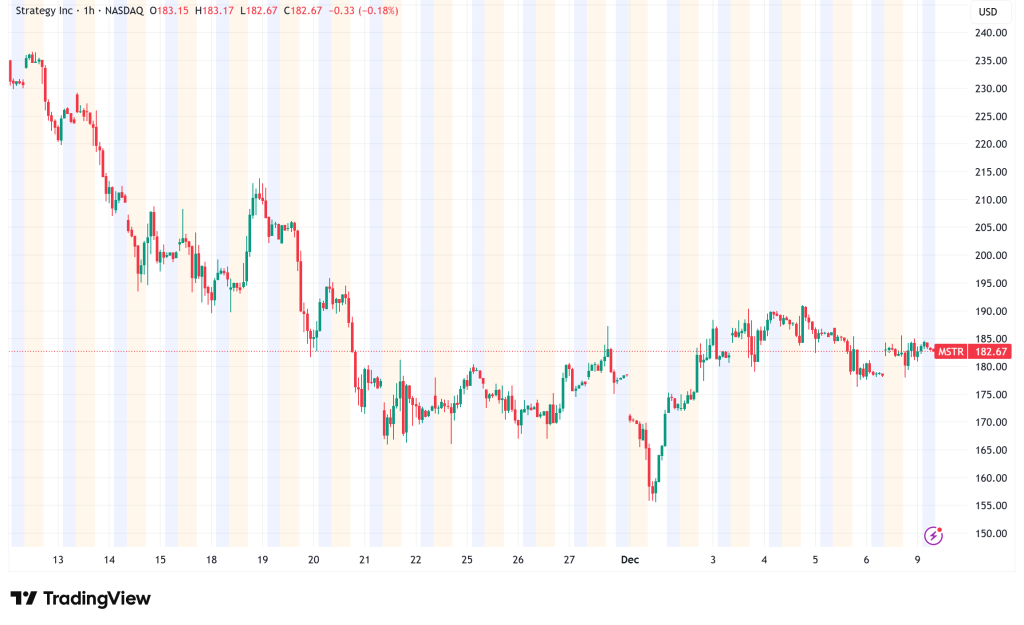
The company said that their Bitcoin yield was 27.8% year-to-date. This is a critical performance metric that shows how much the ratio of Bitcoin holdings to assumed diluted shares outstanding has changed. The news was good for MSTR stock, which rose more than 2% in pre-market trading to $182.45. However, it is still down 38% so far this year.
A High-Wire Act of Financial Engineering
MicroStrategy’s strategy is a bold sort of financial engineering that has split market watchers. The company has been able to buy Bitcoin during both bull and bear markets by issuing convertible notes and preferred stock since starting this strategy in 2020. The theory is based on the fact that Bitcoin has a fixed quantity of 21 million coins and that it is deflationary, making it a better store of value than fiat currencies, which might lose value over time.
During crypto rallies, this way of doing things has worked out really well. Bitcoin’s rise from less than $10,000 in 2020 to highs of over $100,000 has made the company’s assets grow by a huge amount. But the $8.2 billion debt load makes the company very risky. If Bitcoin’s price drops sharply, rising interest rates could make servicing costs go up, which could mean selling assets.
Some people have said that the structure is like a Ponzi scheme because it depends on Bitcoin prices going up all the time to cover interest costs. Supporters say that traditional businesses hoard cash that is losing value, whereas MicroStrategy’s method is in line with what they perceive as a digital gold standard. The company’s price cut shows that the market is using a risk-adjusted discount rate to future cash flows, taking into account everything from protracted crypto winters to possible SEC actions.
Beyond Corporate Boardrooms: A Global Banking Vision
Saylor wants to do a lot more than just manage corporate treasuries. He spoke at the Bitcoin MENA conference in Abu Dhabi and shared his idea for nation-states to create Bitcoin-backed digital banking systems with high-yield, low-volatility accounts that might bring in trillions of dollars in deposits.
His plan calls for digital credit instruments to make up about 80% of a fund, with fiat currency making up 20% and a 10% reserve buffer to keep things from getting too volatile. Saylor thinks that accounts like these, which are backed by Bitcoin reserves and have 5:1 overcollateralization, may bring in “$20 trillion or $50 trillion” in capital flows. This could make the countries that accept them “the digital banking capital of the world.”
This idea is similar to Strategy’s own STRC product, which is a money-market-style preferred share that was released in July and has a variable dividend rate of about 10%. The product’s market cap has grown to nearly $2.9 billion, but some people are unsure if it can stay stable amid crypto downturns.
Market Implications and Growing Scrutiny
MicroStrategy has become a leveraged proxy for Bitcoin, meaning that the stock makes changes in the price of cryptocurrencies bigger. Because of the debt multiplier effect, a 10% change in Bitcoin might mean a 20–30% change in MSTR. This quality has made the stock popular with institutional investors that want to get into crypto but can’t do it directly.
But there are a lot of risks. There is also the possibility of dilution from convertible debt conversions, which let bondholders trade their bonds for shares at set rates. If Bitcoin goes up a lot, conversions might flood the market with new shares, which would limit how far it could go up. Long-term downturns could put liquidity to the test, but the $1.4 billion cash buffer helps protect against acute problems.
Analysts have given the company mixed reviews. Bernstein and Cantor Fitzgerald still say to purchase, but Bernstein just lowered its price estimate from $600 to $450. The stock is down 38% so far this year, which is a big change from the huge gains it made in 2024. Bitcoin itself has dropped about 28% since it hit an all-time high in October.
MicroStrategy has about $6.8 billion left over from a projected $21 billion equity issue and another $21 billion available in fixed-income assets. This suggests that the company is not backing down from its ambition. The business has set a date for a special meeting to vote on proposals to raise the number of authorized Class A common equity shares from 330 million to 10.33 billion. This will provide them more options for buying more Bitcoin.
Is MicroStrategy a Bellwether for Crypto’s Corporate Future?
MicroStrategy’s stance is a perfect example of how traditional finance and the cryptocurrency revolution are at odds with each other. The company’s net Bitcoin value is $3.4 billion more than its market valuation. This creates a unique risk-reward situation that will probably last as long as Bitcoin stays volatile and the rules are still unclear.
For investors, the math is clear: MicroStrategy gives you leveraged exposure to Bitcoin’s potential, but it also comes with the hazards of debt, dilution, and market timing. Saylor said in his speech in Abu Dhabi, where he talked about meeting with sovereign wealth funds across the Middle East, that his ambition goes beyond just changing the way money works around the world.
In the end, whether MicroStrategy is a visionary leader or a warning about too much leverage will depend on how Bitcoin’s price moves and how well the firm can deal with the ups and downs of crypto acceptance, changing regulations, and big changes in the economy. For now, it is the biggest corporate bet on Bitcoin’s future and a sign of how traditional businesses might start using digital assets in the future.
- Check out our free forex signals
- Follow the top economic events on FX Leaders economic calendar
- Trade better, discover more Forex Trading Strategies
- Open a FREE Trading Account
- Read our latest reviews on: Avatrade, Exness, HFM and XM



 Save
Save