EU–Mercosur Deal: Expectations Surge Ahead of the Signing
The event is already listed in Mercosur’s official channels; all that remains is the announcement, pending the European Council’s decision.
Quick overview
- The European Council's decision is crucial for the upcoming Mercosur–European Union agreement signing scheduled for December 20.
- Diplomatic efforts have resolved internal disagreements, with Paraguay now supporting the deal under President Javier Milei's government.
- Brazil's President Lula da Silva insists on signing the agreement despite tensions with Paraguay, proposing to hold the Mercosur summit later in January.
- Opposition from France and Poland, along with Italy's cautious stance, could impact the final approval of the agreement.
The final word before the official announcement now lies with the European Council. After days of tension, the meeting is finally set to move forward.

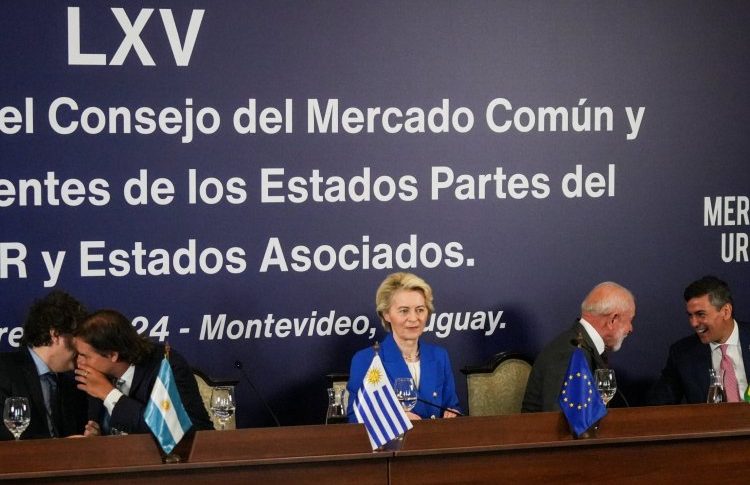
When it looked as if the Mercosur summit would once again collapse due to internal disagreements, diplomatic efforts managed to unlock the impasse. With Paraguay—initially the most resistant member—now on board, and with Javier Milei’s government signalling approval, Brazil pushed ahead with preparations for the presidential meeting scheduled for December 20 in Foz do Iguaçu. There, the long-delayed Mercosur–European Union agreement, strongly championed by Luiz Inácio Lula da Silva, could finally be signed.
The event is already listed in Mercosur’s official channels; all that remains is the formal announcement, pending the European Council’s decision on Tuesday the 16th. If the vote goes through, the signing could take place on the spot.
A dispute over dates—and an unexpected turn
The controversy began when Brazil’s Foreign Ministry rescheduled the summit from December 2 to December 20, convinced the EU would not have enough time to approve the text by the earlier date.
Paraguay reacted immediately, sending an official note to Brazil’s Mercosur coordinator, Gisela Padovan, declaring it would not attend.
Argentina, which also preferred the original date, supported the complaint—though it has consistently backed moving forward with the deal for months. This clash added to the already tense political distance between Milei and Lula da Silva, which persists despite ongoing diplomatic contacts.
Lula insists: “The signing will happen on the 20th”
Rather than back down, the Brazilian president doubled down publicly, insisting the pact must be signed on December 20. He acknowledged “problems” with Paraguay, governed by Santiago Peña, a political ally of Donald Trump—like Argentina’s Milei. As a workaround, Lula suggested signing the agreement with the EU on the 20th and holding the Mercosur presidential summit later, on January 14 in Brasília.
“I will do it in Brasília. I will do it in Brasília because we likely have a problem with Paraguay, which cannot join on the 20th. We may set the Mercosur meeting for early January and sign on December 20,” he stated.
Those comments triggered a new round of negotiations, which ultimately confirmed both the date and the venue.
Quiet diplomacy that brought positions closer
Argentine foreign minister Pablo Quirno held a key meeting with his Paraguayan counterpart Rubén Ramírez, where conversations were revived to secure Paraguay’s presence and advance the agenda proposed by Lula.
Likewise, relations between Argentina and Paraguay have grown increasingly coordinated. Not coincidentally, Peña and Milei traveled together to Oslo.
The decisive signal will come from Europe
Two governments—France and Poland—have already signaled their opposition. Another key player, Italy, is still weighing its position. Although relations between Giorgia Meloni and Milei are positive, Rome is unwilling to support the agreement without stronger guarantees for its agricultural sector.
- Check out our free forex signals
- Follow the top economic events on FX Leaders economic calendar
- Trade better, discover more Forex Trading Strategies
- Open a FREE Trading Account
- Read our latest reviews on: Avatrade, Exness, HFM and XM

Related Articles

 Save
Save