Mexican Peso Ends Slightly Higher Against the Dollar After Fed Rate Cut
The Dollar Index (DXY), which tracks the greenback against six major currencies, weakened 0.62% to 98.62 points.
Quick overview
- The U.S. central bank cut interest rates for the third consecutive time, leading to a weakening of the dollar.
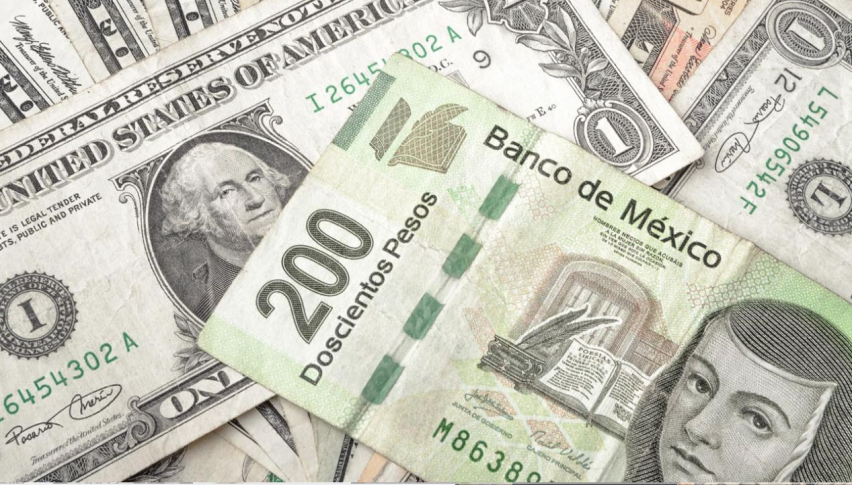
- The Mexican peso gained marginally against the dollar, closing at 18.1824 pesos per dollar after the Fed's rate cut.
- Mexico's Chamber of Deputies approved a plan to raise tariffs on imports from China and other Asian countries to bolster domestic production.
- The peso is expected to trade within a range of 18.15–18.25 per dollar, with political risks influencing the market.
The U.S. central bank cut rates for the third consecutive time, in line with market expectations. The dollar weakened after the announcement.
The Mexican peso posted a marginal gain against the dollar in midweek trading. The local currency advanced after the Federal Reserve delivered a widely expected 25-basis-point rate cut in its final policy meeting of the year.
The exchange rate closed the session at 18.1824 pesos per dollar. Compared with yesterday’s official Banxico close of 18.1919, the peso gained 0.05%, roughly one cent.
During the day, the dollar traded between a high of 18.2298 and a low of 18.1701 pesos. The Dollar Index (DXY), which tracks the greenback against six major currencies, weakened 0.62% to 98.62 points.
Fed cuts rates
U.S. Treasury yields extended their losses—pulling the dollar down—after the Fed cut interest rates by 25 basis points, matching expectations. It was the third straight reduction of that size.
The Fed’s new economic projections showed policymakers expect only one quarter-point cut in 2026, the same outlook as in September. Three officials dissented.
After the decision, U.S. President Donald Trump said the rate cut was “too small” and argued it could have been larger. The Republican leader has repeatedly criticized Fed Chair Jerome Powell.
In his post-meeting remarks, Powell focused on concerns about cutting rates while inflation remains above target. He noted that price pressures remain elevated partly due to Trump’s tariffs.
Mexico raises tariffs on China
On the domestic front, Mexico’s Chamber of Deputies approved a plan earlier in the day to raise tariffs by up to 50% next year on thousands of imported products from China and other Asian countries. The goal is to strengthen domestic production and address trade imbalances.
The proposal—which still needs Senate approval—would raise or impose new tariffs throughout 2026 on imports of autos, auto parts, textiles, clothing, plastics, and steel from China, India, South Korea, and others.
In the coming days, the peso is expected to trade within a range of 18.15–18.25 per dollar. The main risk remains political: tariff threats, diplomatic tensions, and issues surrounding the USMCA.
- Check out our free forex signals
- Follow the top economic events on FX Leaders economic calendar
- Trade better, discover more Forex Trading Strategies
- Open a FREE Trading Account
- Read our latest reviews on: Avatrade, Exness, HFM and XM

Related Articles
Sidebar rates

Related Posts
 Save
Save
