Inflation in the U.S. Falls to 2.7%, Below Expectations
Equity markets also reacted positively, as S&P 500 and Nasdaq futures accelerated following the inflation release.

Quick overview
- The Consumer Price Index (CPI) for November slowed to 2.7%, below the expected 3.1% and September's 3%.
- Core inflation also decreased to 2.6% year over year, indicating a softer inflationary environment.
- Economists warn that the reliability of the data is questionable due to delays caused by the recent government shutdown.
- Market reactions included a shift in expectations for Federal Reserve rate cuts, with a potential third cut now being considered.
The Consumer Price Index (CPI) came in below the 3% level recorded in September. Markets had expected inflation of 3.1%, but the figure surprised to the downside.
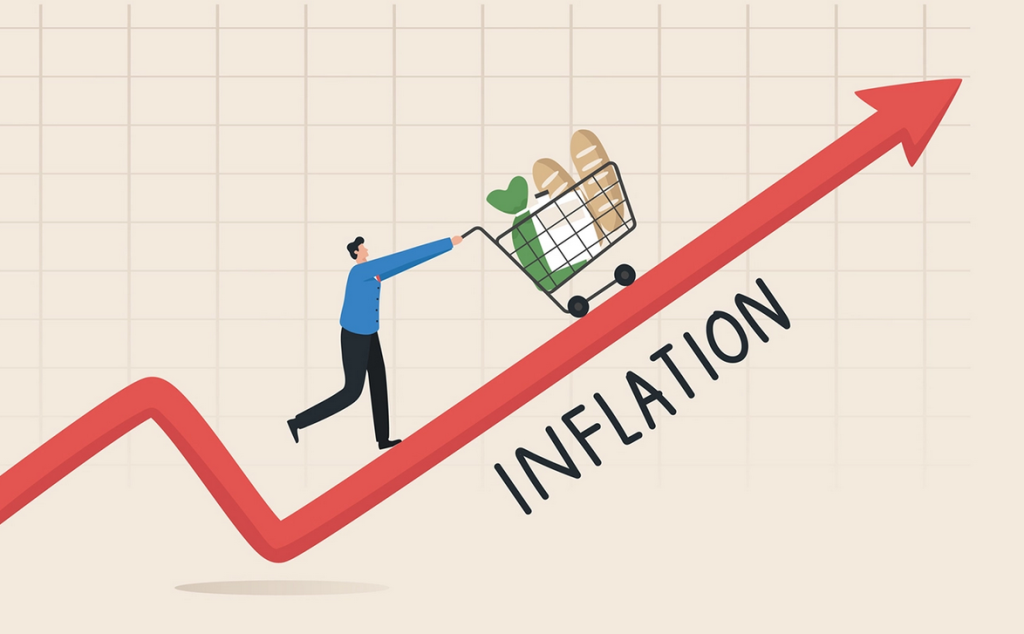
Lingering effects from the government shutdown continue to cloud the data. U.S. inflation rose less than expected in November. The country’s Consumer Price Index (CPI) slowed to 2.7% year over year, according to data released Thursday by the Bureau of Labor Statistics (BLS).
Although inflation remains above the Federal Reserve’s 2% target, the figure marks a deceleration from September’s 3% reading and came in below the 3.1% forecast by market analysts.
Meanwhile, core inflation—which excludes volatile components such as food and energy—rose 2.6% year over year in November, also below expectations that hovered near 3%. By comparison, headline CPI had increased 3% over the 12 months through September.
Questions over data reliability
Economists cautioned that the figures should be interpreted carefully, as they are the first inflation readings released since the federal government shutdown ended in mid-November.
Analysts noted that the softer-than-expected CPI reading may partly reflect delays in data collection toward the end of the month, when retailers offered seasonal holiday discounts. As a result, they anticipate a potential acceleration in inflation in December.
Market impact
Given the government shutdown and the lack of fully reliable data, today’s inflation reading is likely to be met with some skepticism. Still, it clearly supports the debate over the pace and magnitude of Federal Reserve rate cuts in 2026.
Markets had previously priced in two 25-basis-point rate cuts in 2026—one in April and another between July and September—but are now increasingly factoring in a third cut of the same size in December.
U.S. Treasury bonds reflected the shift in expectations, with 2-year and 10-year yields trading at 3.45% and 4.11%, respectively, showing compressions of 3–4 basis points. Equity markets also reacted positively, as S&P 500 and Nasdaq futures accelerated following the inflation release.
The October “data black hole”
The BLS did not publish October CPI figures after the 43-day government shutdown prevented data collection during that month. As a result, the agency canceled the release, noting that price data could not be gathered retroactively.
The statistics office acknowledged that it “cannot provide specific guidance to data users on how to interpret the missing October observations.”
The prolonged shutdown also disrupted labor market data, as the U.S. government failed to release the October unemployment rate—for the first time in the country’s history.
- Check out our free forex signals
- Follow the top economic events on FX Leaders economic calendar
- Trade better, discover more Forex Trading Strategies
- Open a FREE Trading Account
- Read our latest reviews on: Avatrade, Exness, HFM and XM

Related Articles
Sidebar rates


