Gold Set for Best Year Since 1979; $5,000 Seen in 2026
The metal’s 71% rally has far outpaced gains in the S&P 500, which has risen about 18% this year. In 2024, gold futures gained 27%.
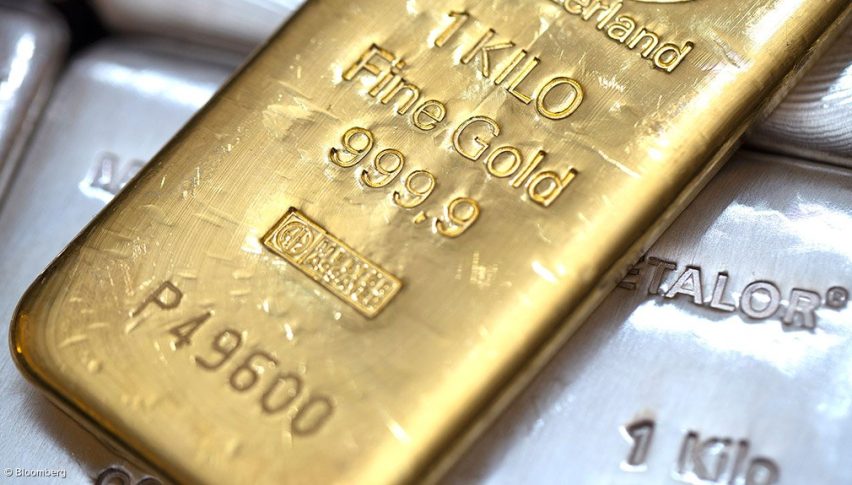
Quick overview
- Gold prices have surged over 70% in 2025, marking its best annual performance since 1979.
- Investor demand for gold is driven by geopolitical uncertainties and expectations of interest rate cuts in the U.S.
- Central bank buying, particularly from China, has significantly contributed to the rising gold prices.
- Analysts predict gold could surpass $5,000 per ounce in 2026, supported by a weaker U.S. dollar and ongoing global tensions.
The metal has been driven higher by global central bank buying, heightened geopolitical uncertainty, and expectations of interest rate cuts in the United States.
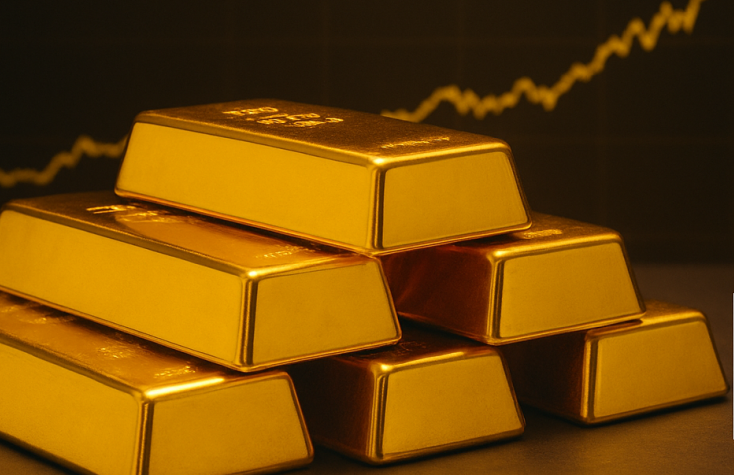
Gold has surged more than 70% in 2025, putting it on track for its best annual performance since 1979. As in that period, uncertainty has fueled investor demand for the precious metal.
The last time gold posted such a strong year, Jimmy Carter was president of the United States, the country was grappling with an energy crisis, tensions were escalating in the Middle East, and inflation was soaring. Today, investor concerns revolve around the trade war reignited by President Donald Trump, as well as ongoing conflicts in Ukraine, the Middle East, and Venezuela.
Against this backdrop, gold has become increasingly attractive as a strategic diversifier and a source of stability.
Gold futures were trading near $2,640 per ounce at the start of the year. This Monday, prices climbed above $4,500 per ounce, and analysts at JPMorgan Chase forecast that gold will surpass $5,000 per ounce in 2026.
The metal’s 71% rally has far outpaced gains in the S&P 500, which has risen about 18% this year. In 2024, gold futures gained 27%, compared with a 24% increase in the S&P 500.
What’s driving gold’s surge in 2025?
Expectations of interest rate cuts by the Federal Reserve in 2026 have supported gold prices. A weaker U.S. dollar has also provided a boost, making gold relatively cheaper for international investors.
Another key driver has been sustained central bank buying, led by China. One of the main reasons China’s central bank has been increasing its gold holdings is to reduce dependence on U.S. assets.
This current wave of central bank purchases stands apart because it is deeply rooted in geopolitics. The freezing of sovereign reserves and the broader fragmentation of the global financial system have introduced a structural component to gold demand—one that analysts believe is likely to persist for years.
- Check out our free forex signals
- Follow the top economic events on FX Leaders economic calendar
- Trade better, discover more Forex Trading Strategies
- Open a FREE Trading Account
- Read our latest reviews on: Avatrade, Exness, HFM and XM