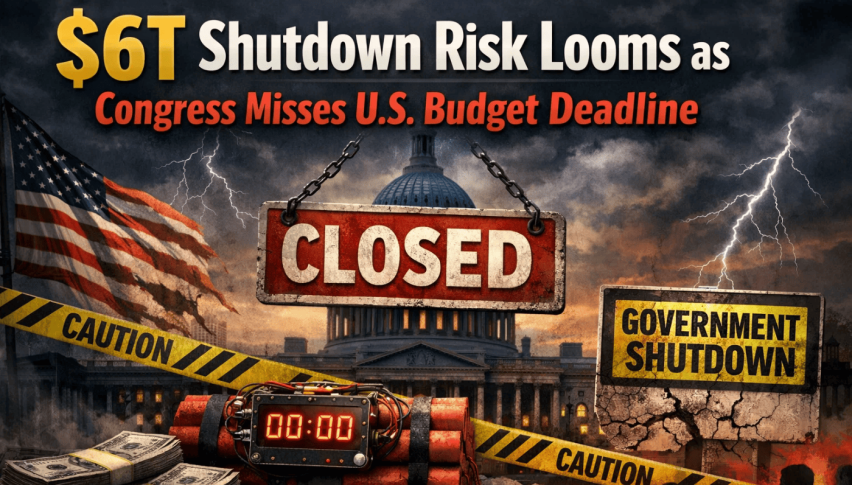
$6T Shutdown Risk Looms as Congress Misses U.S. Budget Deadline
As Congress packed up and headed out for Christmas recess without a budget deal or voting framework in place, the U.S. is careening...
Quick overview
- Congress is heading toward a government shutdown as they leave for Christmas recess without a budget deal in place.
- Despite agreeing on total spending caps, the House and Senate are struggling to allocate funds, leading to frustration among Democrats and conflict among Republicans.
- Short-term funding patches are expected, but missing the January 31 deadline could result in significant disruptions to federal operations and economic reporting.
- Lawmakers will return on January 5 with limited time to resolve partisan disagreements and avoid a shutdown that could impact government services and financial markets.
As Congress packed up and headed out for Christmas recess without a budget deal or voting framework in place, the U.S. is careening toward a government shutdown. And to make things even worse, that January 31 deadline is looming large, and the lack of progress is making folks increasingly uncertain about how federal operations will play out
Senate leaders threw in the towel on getting a spending package passed before the recess, after weeks of trying to hammer out a deal that just never seemed to materialise despite all their efforts. And as for the nine remaining appropriations bills, well, the two chambers haven’t even started detailed talks yet. The result is that we’re staring down the barrel of either a temporary funding extension or a shutdown – and not the kind of uncertainty that helps the situation.
Key points:
- The House and Senate managed to agree on total spending caps, but – and it’s a big but – they still can’t agree on how actually to allocate the funds.
- The Democrats are getting pretty frustrated – they’ve been hammering out a budget for months now and are still coming up empty-handed.
- And as for the Republicans, well, let’s say it’s not exactly a love fest – some fiscally-conservative members are insisting that each agency gets the same funding as last year, which isn’t helping things.
🟨 Breaking: U.S. lawmakers left for the Christmas recess without a budget deal or voting framework — raising the risk of another government shutdown on January 31 and renewing concerns for markets heading into 2026. pic.twitter.com/0Kl0sIaF1U
— Rishith (@goswamirishith) December 26, 2025
Appropriations Deadlock Pressures Leadership
This standoff is putting enormous pressure on congressional leadership. The Speaker of the House, Mike Johnson, wants to get all the funding bills through by January 30, but that’s looking increasingly unlikely given the partisan squabbles and ideological differences that are getting in the way.
Both parties say they expect short-term funding patches to be necessary. Some are warning that if they miss the deadline, they’ll only have a few weeks to scramble and prepare for a shutdown, which could have all sorts of knock-on effects. And in the Senate, things aren’t exactly going smoothly either – conservatives are still up in arms over any idea of earmarks, while the Democrats are refusing to back anything that involves a federal climate research centre.
Highlights:
- We can still expect some informal negotiations to take place over the recess.
- Even the Senate leadership is working through the holiday break – Chuck Schumer and John Thune have told staff to keep working.
- To be precise, we’re basically down to three working weeks after recess to get all the bills through
Economic Impact of Another Shutdown
As we all know, historical shutdowns have caused all sorts of problems – disrupted economic data releases and federal operations spring to mind, not to mention the knock on effects for financial markets. And if we’re facing another delay, things are likely to get a lot worse, not better.
- Agencies will face furloughs, which will, in turn, impact a wide range of services nationwide.
- We’re also talking potential delays to economic reporting which will have all sorts of knock on effects for financial markets and policy decisions.
- Short-term funding bills may provide temporary relief, but they’re all stopgap measures that will only prolong the uncertainty.
Congress comes back on January 5, and things are unlikely to get a lot easier – given the time constraints and the high stakes we’re facing, lawmakers are going to have to work some magic to get past the partisan disagreements and avoid another shutdown that could send shockwaves through both government operations and financial markets.
- Check out our free forex signals
- Follow the top economic events on FX Leaders economic calendar
- Trade better, discover more Forex Trading Strategies
- Open a FREE Trading Account
- Read our latest reviews on: Avatrade, Exness, HFM and XM

Related Articles

Sidebar rates

Related Posts
 Save
Save
