Bitcoin Bear Signal Suggests $56K–$60K Bottom Ahead in 2026
Bitcoin may already be two and a half months into a bear market. Or so say on-chain indicators tracked by CryptoQuant. Julio Moreno...
Quick overview
- Bitcoin is currently in a bear market, with long-term metrics indicating a lack of momentum since early November.
- The Bull Score Index and Bitcoin's 1-year moving average suggest a bearish trend, with prices below historical averages.
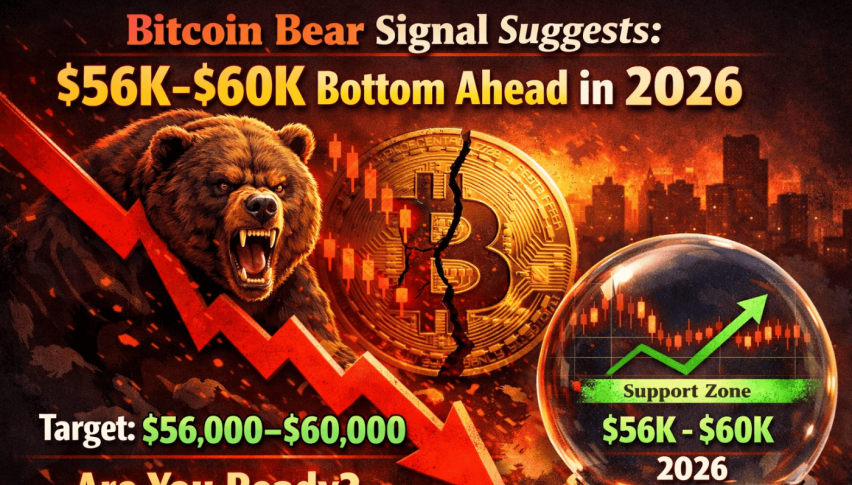
- Analysts predict a potential bottom for Bitcoin in the $56,000-$60,000 range by 2026, based on historical trends and the realised price.
- Despite a possible decline, the current market conditions are more stable than past crashes, indicating a less severe downturn.
Bitcoin may already be two and a half months into a bear market. Or so say on-chain indicators tracked by CryptoQuant. Julio Moreno, head of research at the firm, points out that multiple long-term metrics turned bearish back in early November and aren’t showing any signs of recovery, suggesting the momentum is no longer there, even if it doesn’t show on the surface.
On the Milk Road show, Moreno mentioned their Bull Score Index, which is essentially a composite gauge of the market’s state that looks at factors such as network activity, investor returns, buying trends, and market liquidity. The index ranges from 0 to 100, but historically, lower values have been associated with bear markets. And for the most part, most of its component metrics have been in the red since late 2024.
Another indicator supporting this view is Bitcoin’s 1-year moving average. That’s a simple metric that smoothes out price action noise over 12 months to help you see what’s going on at a higher level. When Bitcoin’s price is persistently below this level, it’s historically seen as a sign of an extended bear market.
Bitcoin started 2025 at around $93,000, hit a peak of $126,080 in October, but by the end of the year, it had dropped back below its opening level, according to CoinGecko data. As of Friday, it was trading around $ 88,500, a significant drop from its highs, which supports the view that momentum has weakened.
Why Analysts Think a $56,000 – $60,000 Bottom is Possible
Moreno believes that looking at how things have played out in the past can give us a useful guide on what might happen next. In previous bear markets, Bitcoin has tended to fall back to what’s called its realised price, which is essentially the average price at which all existing coins last changed hands.
Based on past data and how previous bear markets have played out, CryptoQuant thinks there could be a bottom for Bitcoin in the $56,000-$60,000 range in 2026. That estimate is based on long-term trends rather than the sort of short-term price volatility that can make markets look really unpredictable.
Some of the reference points behind the estimate include
- The realised price has historically acted as a kind of floor during bear markets
- When Bitcoin is way above its long-term average in a bull market, corrections tend to follow
- Investor profits on the blockchain are cooling off
- Money is coming into the market at a slower rate than in past peak periods
Moreno notes that the realised price isn’t a precise target – it’s more of a kind of base level that prices often gravitate towards during extended downturns.
A Less Severe Downturn Than Past Cryptocurrency Crashes
Even if Bitcoin were to drop to $56,000, that would be a modest decline at around 55% from the all-time high – and that’s a lot less severe than the kind of bear markets we saw in the past, which wiped out 70% to 80% of the market value.
This relatively gentle decline reflects some structural changes in the market. Unlike in 2022, when major institutional collapses and systemic failures put the squeeze on investors and led many to lose trust in the market. This time round, things look a bit more stable, and that’s reflected in
- A bigger base of long-term holders who aren’t going to sell out at the first sign of trouble
- The ongoing purchase of Bitcoin by institutions
- More regulated and transparent exchanges
- Stronger balance sheets at the big crypto exchanges
While the short-term indicators are saying ‘be careful,’ the fact that we haven’t seen the cascading failures we did in 2022 has actually helped stabilise the market. And for long-term investors, that suggests any downturn will likely be shorter and more orderly than in the past.
- Check out our free forex signals
- Follow the top economic events on FX Leaders economic calendar
- Trade better, discover more Forex Trading Strategies
- Open a FREE Trading Account
- Read our latest reviews on: Avatrade, Exness, HFM and XM





 Save
Save