Trump Calls Meeting with Oil Firms to Map Venezuela Restart
Two U.S. companies—Exxon and ConocoPhillips—are considered natural candidates for a potential rebuilding of the sector.
Quick overview
- President Trump prioritizes securing access to Venezuelan oil for U.S. companies, aiming to revive the country's oil industry.
- The reconstruction of Venezuela's oil sector could cost over $100 billion and require $10 billion in annual investments for a decade.
- Upcoming meetings with U.S. oil executives are crucial for Trump's plans, although major companies like Exxon and ConocoPhillips have not yet engaged with the administration.
- Venezuela's oil production has significantly declined under Maduro, and any investment will depend on political stability and clear signals from the new government.
U.S. President Donald Trump has repeatedly stated that one of his main priorities is securing access to Venezuelan oil for American companies. The Latin American country holds some of the world’s largest oil reserves.
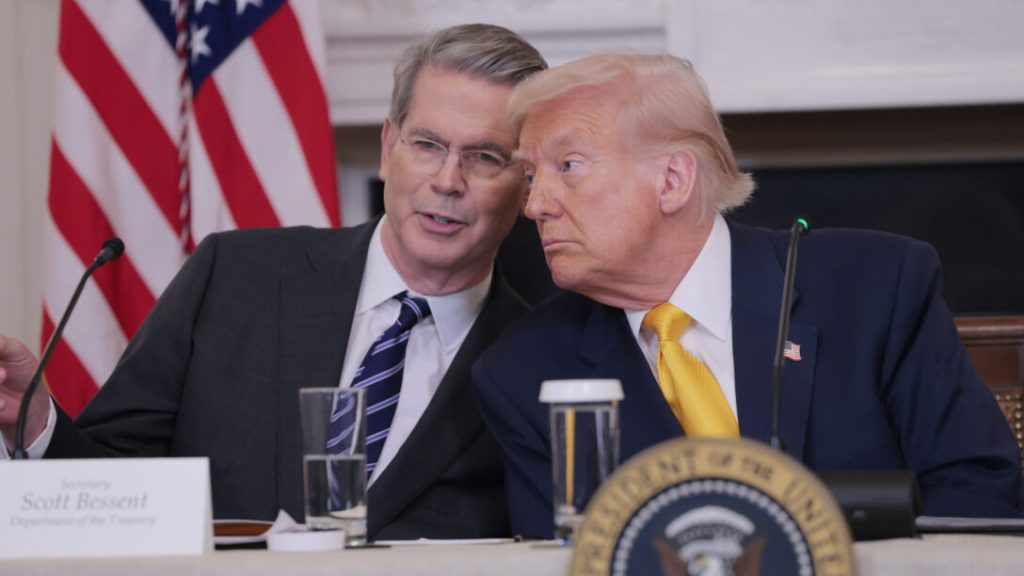
One of the most significant issues surrounding U.S. intervention is access to, availability of, and the reactivation of Venezuelan oil production. In several public appearances, President Donald Trump said he aims to revive the country’s oil industry. In fact, the president plans to meet with executives from U.S. oil companies later this week to discuss how to increase production. However, estimates warn that the reconstruction plan could cost more than $100 billion.
Venezuela’s oil industry peaked in the 1970s, and returning to those production levels would require sustained, large-scale financial investment. According to estimates by Francisco Monaldi, Director of Latin American Energy Policy at Rice University’s Baker Institute for Public Policy, rebuilding the sector would require investments of roughly $10 billion per year for at least a decade.
Trump’s meetings with oil companies
According to Reuters, the three largest U.S. oil companies—Exxon Mobil (XOM.N), ConocoPhillips (COP.N), and Chevron (CVX.N)—have not yet held talks with the administration regarding the removal of Maduro. This contrasts with Trump’s own statements over the weekend, when he said he had already met with “all” U.S. oil companies, both before and after the ouster of the Venezuelan president.
In this context, what happens during the upcoming meetings will be critical for Trump’s ambitions to boost Venezuela’s oil production and exports. The country is a former OPEC member with the world’s largest proven oil reserves and has the added advantage that much of its crude can be processed in U.S. refineries specifically designed for heavy oil.
Despite the White House’s stated intentions, it remains unclear which executives will attend the upcoming meetings with the Trump administration.
The plan to revive Venezuela’s oil industry
The Trump administration’s interest in Venezuela’s reserves has been evident in recent public remarks by both the president and his top official, Secretary of State Marco Rubio. Venezuela holds the largest oil reserves in the world, but production collapsed over the 12 years of Nicolás Maduro’s rule, who was captured Saturday morning by U.S. forces. Current output stands at around one million barrels per day, far below the nearly four million barrels the country produced in 1974.
From Washington, Rubio said U.S. oil companies could be eager to return to Venezuela, particularly because of its heavy crude, which is critical for refineries along the U.S. Gulf Coast. “I haven’t spoken to oil companies in recent days, but we’re quite confident there will be strong interest,” he said in an interview with ABC. “I believe there will be enormous demand and interest from the private sector if they are given the space to operate.”
Challenges and Interested Companies
However, this potential interest clashes with a fragile political and institutional reality. Former Petróleos de Venezuela (PDVSA) executive Lino Carrillo, who left the country more than two decades ago, stressed that companies will need clear signs of stability before committing. “For any oil company to seriously consider investing in Venezuela, there would need to be a new Congress or National Assembly,” he said. “That is not what is happening now. Definitely not.”
In the meantime, the country’s remaining oil production depends largely on Chevron, the only major U.S. oil company still operating in Venezuela. The Houston-based firm accounts for about 25% of national output and operates under special licenses that allow it to remain active despite U.S. sanctions.
Two other U.S. companies—Exxon and ConocoPhillips—are considered natural candidates for a potential rebuilding of the sector. Both have the experience and scale required but exited the country after their assets were nationalized during Hugo Chávez’s government in the mid-2000s. Neither responded to recent requests for comment, although Exxon has previously said it would only consider returning under appropriate conditions.
Chevron, for its part, said in a statement that its priority is the safety of its personnel and the integrity of its assets. “We continue to operate in full compliance with all applicable laws and regulations,” the company said.
- Check out our free forex signals
- Follow the top economic events on FX Leaders economic calendar
- Trade better, discover more Forex Trading Strategies
- Open a FREE Trading Account
- Read our latest reviews on: Avatrade, Exness, HFM and XM

Related Articles


 Save
Save