Venezuelan Bonds Rally More Than 25% Following U.S. Intervention
There is a high degree of uncertainty regarding the true state of Venezuela’s economy and its long-term repayment capacity.

Quick overview
- Following Nicolás Maduro's departure, Venezuela's defaulted bonds surged over 25% amid speculation of a political shift.
- Venezuela's total external debt is estimated between $150 billion and $170 billion, with a debt-to-GDP ratio projected at 180% to 200%.
- Analysts caution investors about Venezuela's political uncertainty and the complexity of its debt restructuring process.
- U.S. sanctions and the lack of IMF consultations complicate Venezuela's ability to issue or restructure its debt.
Following the fall of Nicolás Maduro, Venezuela’s defaulted bonds surged amid bets on a political shift, although analysts warn about the weight of the country’s extremely high debt burden.
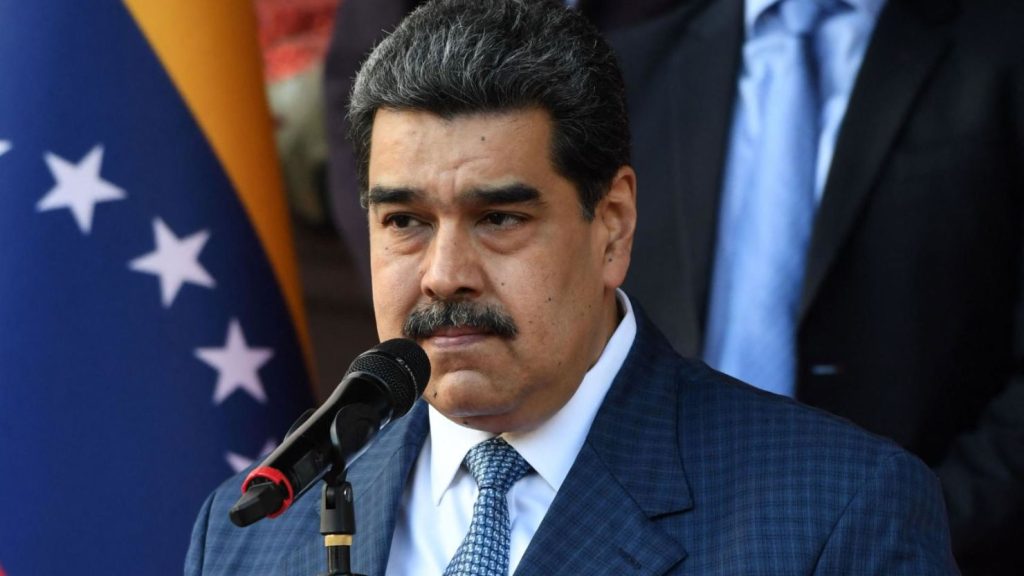
The departure of Nicolás Maduro had an immediate impact on Venezuelan financial assets. On Monday, following the intervention carried out by the United States, Venezuela’s sovereign bonds closed at $42.62, posting gains of more than 25% compared with their value last Friday, prior to the resumption of Caracas-linked trading. The move translated into a daily increase of 5.25%.
After years of economic crisis and U.S. sanctions that isolated the country from international capital markets, Venezuela entered default in late 2017 after failing to meet payments on international bonds issued by both the government and state-owned oil company Petróleos de Venezuela (PDVSA).
Since then, accumulated interest and legal claims stemming from past expropriations have added to the unpaid debt, pushing total external liabilities well beyond the bonds’ original nominal value. Venezuela’s debt has continued to grow since U.S. President Donald Trump returned to office in January 2025, amid speculative bets on a political transition in the country.
According to a recent UBS report, “there is a high degree of uncertainty regarding the true state of Venezuela’s economy and its long-term repayment capacity, given the severe deterioration in the quality of official economic statistics in recent years. Geopolitical factors, including the roles of China and Russia as key creditors, add an additional layer of complexity.”
In this context, analysts at the Swiss investment bank urged investors to “exercise extreme caution,” citing political uncertainty and limited visibility regarding Venezuela’s ability to service its debt.
What is Venezuela’s debt-to-GDP ratio?
Venezuela has roughly $60 billion in defaulted bonds alone. However, total external debt—including PDVSA liabilities, bilateral loans, and arbitration awards—is estimated at between $150 billion and $170 billion, according to analysts, depending on how accrued interest and court rulings are accounted for.
The International Monetary Fund estimates Venezuela’s nominal GDP at around $82.8 billion for 2025, implying a debt-to-GDP ratio of between 180% and 200%, one of the highest in the world.
A PDVSA bond originally maturing in 2020 was backed by a majority stake in U.S. refiner Citgo, which is ultimately owned by PDVSA and headquartered in Caracas. Citgo has since become a central asset in court-supervised creditor efforts to recover funds.
Most creditors are believed to be international bondholders, including distressed-debt investors commonly referred to as “vulture funds,” as well as companies that obtained compensation through international arbitration following asset expropriations by the Venezuelan state.
U.S. courts have upheld multi-billion-dollar awards in favor of companies such as ConocoPhillips and Crystallex, converting those rulings into enforceable debt obligations and allowing creditors to pursue Venezuelan assets abroad.
The debt restructuring process: who the creditors are
Given the sheer number of claims, ongoing legal proceedings, and persistent political uncertainty, any formal debt restructuring is expected to be complex and protracted.
A sovereign debt restructuring would likely need to be anchored in an IMF-backed program setting fiscal targets and debt-sustainability assumptions. However, Venezuela has not held an annual IMF consultation in nearly two decades and remains excluded from the institution’s financing.
U.S. sanctions represent another major hurdle. Since 2017, restrictions imposed by Washington have severely constrained Venezuela’s ability to issue or restructure debt without explicit licenses from the U.S. Treasury Department.
In November, Citigroup analysts estimated that a principal haircut of at least 50% would be required to restore debt sustainability and meet potential IMF conditions. Under Citi’s base-case scenario, Venezuela could offer creditors a 20-year bond with a coupon of around 4.4%, along with a 10-year zero-coupon instrument to compensate for accrued interest.
- Check out our free forex signals
- Follow the top economic events on FX Leaders economic calendar
- Trade better, discover more Forex Trading Strategies
- Open a FREE Trading Account
- Read our latest reviews on: Avatrade, Exness, HFM and XM

Related Articles
Sidebar rates


