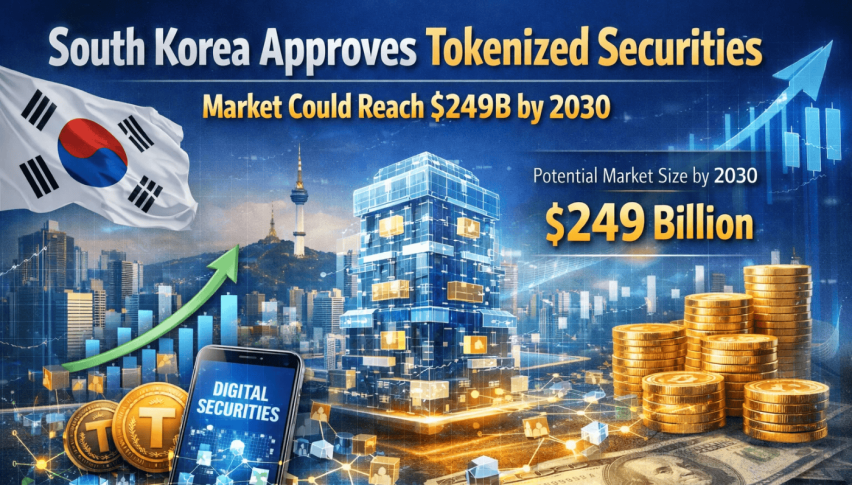
South Korea Approves Tokenized Securities, Market Could Reach $249B by 2030
South Korea has made a massive leap for blockchain adoption by making tokenized securities official. The National Assembly...
Quick overview
- South Korea has officially adopted tokenized securities, allowing qualified companies to issue digital securities on a distributed ledger.
- Trading of digital securities will now occur through brokerages, similar to traditional securities, with smart contracts automating the process.
- The new regulations will enable institutional investors to trade digital assets legally, marking a significant shift in the corporate use of blockchain technology.
- Analysts predict that South Korea's tokenized securities market could reach 249 billion by 2030, reflecting a growing global trend in asset tokenization.
South Korea has made a massive leap for blockchain adoption by making tokenized securities official. The National Assembly has given the green light to changes to the Capital Market Act and Electronic Securities Act, allowing companies that qualify to issue digital securities on a distributed ledger.
A few key points to take away:
- Trading can now go through brokerages & financial types just like it does for regular securities.
- Smart contracts can automate the whole process of issuing and settling trades.
- This is all a supplement to existing market systems, not a replacement.
The Financial Services Commission has been saying that using a ledger to manage accounts is pretty handy. Once the bill has gotten parliamentary approval its off to the State Council and then the President will enact it all and itll take effect come January of 2027. This really brings an end to 9 years of pretty strict restrictions on corporate use of digital assets.
New Rules Mean Corporate Trading Online
Korea has introduced new rules that allow corporations and institutions to trade digital assets legally – this opens a major door for companies and investors looking to dabble in blockchain-based financial products.
South Korea news from today: The good and the bad🇰🇷
(really depends on your own personal view)
The Good🟢
South Korea's National Assembly voted to pass a key framework that approves and regulates tokenized securities. With this, products such as tokenized stocks can be issued… pic.twitter.com/xxfTEq2ibk— Danny Kunwoong Park (@ParkKunwoong) January 16, 2026
The main points on this are:
- Institutional investors can now join the party and trade digital securities.
- Smart contracts are just super useful for streamlining transactions and keeping records.
- Digital assets just slot right into the financial systems already in place.
The Financial Services Commission is confident this will further boost the use of smart contracts and distributed ledgers. Analysts are predicting that South Korea’s big banks will start to really get into tokenized securities now.
The Tokenization Trend Takes Off
South Korea has joined the ranks of places like the U.S. that are really pushing forward with asset tokenization. And even the U.S. has started easing rules for larger companies experimenting with blockchain.
Some highlights of this trend include:
- JPMorgan did a tokenised money market fund on Ethereum.
- The Boston Consulting Group reckons South Korea’s tokenized securities market could be worth 249 billion by 2030.
- Standard Chartered is forecasting that the global tokenisation market could reach 2 trillion by 2028.
This is all interesting because it highlights how blockchain is going to play an even bigger role in securities trading worldwide.
- Check out our free forex signals
- Follow the top economic events on FX Leaders economic calendar
- Trade better, discover more Forex Trading Strategies
- Open a FREE Trading Account
- Read our latest reviews on: Avatrade, Exness, HFM and XM

Related Articles
Sidebar rates

Related Posts
 Save
Save
