Mexican Peso Closes Flat Against the Dollar, Consolidates Below 17.50
Mexico’s headline consumer price index accelerated to an annual rate of 3.77% in the first half of January, after two declines.
Quick overview
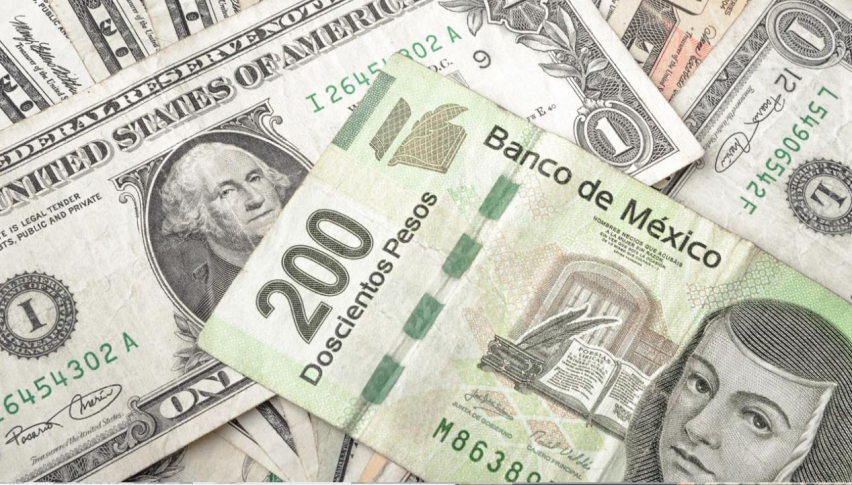
- The Mexican peso remained stable, closing at 17.4802 per dollar, as it consolidated below the 17.50 level amid new inflation data.
- The peso's slight gain of 0.02% reflects ongoing investor absorption of domestic economic indicators.
- U.S. President Trump's comments regarding Greenland eased market concerns, contributing to the peso's strength.
- Inflation data suggests the Bank of Mexico may maintain current interest rates, while U.S. economic growth exceeded expectations.
The local currency traded steadily as it continued to consolidate at levels not seen since June 2024, while markets digested a fresh local inflation report.
The Mexican peso ended Thursday’s session virtually unchanged against the U.S. dollar. The currency remained stable while continuing to consolidate below the 17.50-per-dollar level, as investors absorbed new domestic inflation data.
The exchange rate closed at 17.4802 pesos per dollar, compared with Wednesday’s close of 17.4843, according to official data from the Bank of Mexico (Banxico). The move left the peso with a marginal gain of 0.02%, less than one cent.
The dollar traded within a range, hitting a high of 17.5136 pesos and a low of 17.4378. The U.S. Dollar Index (DXY) from Intercontinental Exchange, which measures the greenback against a basket of six major currencies, fell 0.45% to 98.35.
Greenland concerns ease
The peso continued to consolidate below the 17.50 level after touching its strongest levels since June 2024 on Wednesday, supported by remarks from U.S. President Donald Trump that eased concerns surrounding Greenland.
Trump said on Thursday that the details of a Greenland agreement are being finalized, a day after he dropped tariff threats against European nations opposing his plans to acquire the territory and ruled out taking it by force.
The peso has extended the strengthening seen last year, also benefiting from a weaker dollar amid uncertainty over U.S. trade strategy. Analysts say there is still room for further appreciation.
There are few signs that the dollar’s fragility will reverse meaningfully this year, as Trump’s policy of weakening the dollar to stimulate the economy appears to remain intact.
Key data
On the economic front, inflation data supported expectations that the Bank of Mexico will keep interest rates unchanged at its next meeting. In the United States, economic growth and price data also drew attention.
Mexico’s headline consumer price index accelerated to an annual rate of 3.77% in the first half of January, after two consecutive periods of decline. Core inflation also edged higher to 4.47%, following moderation in the previous two fortnights.
The world’s largest economy grew 4.4% in the third quarter of last year, beating forecasts of 4.3% and accelerating from 3.8% in the prior quarter. The personal consumption expenditures (PCE) price index—the Federal Reserve’s preferred inflation gauge—rose 2.8% year over year in November.
- Check out our free forex signals
- Follow the top economic events on FX Leaders economic calendar
- Trade better, discover more Forex Trading Strategies
- Open a FREE Trading Account
- Read our latest reviews on: Avatrade, Exness, HFM and XM

Related Articles
Sidebar rates

Related Posts
 Save
Save
