Daily Crypto Signals: Bitcoin Holds $89K, Ethereum Eyes $3.3K Rally Amid Market Turbulence
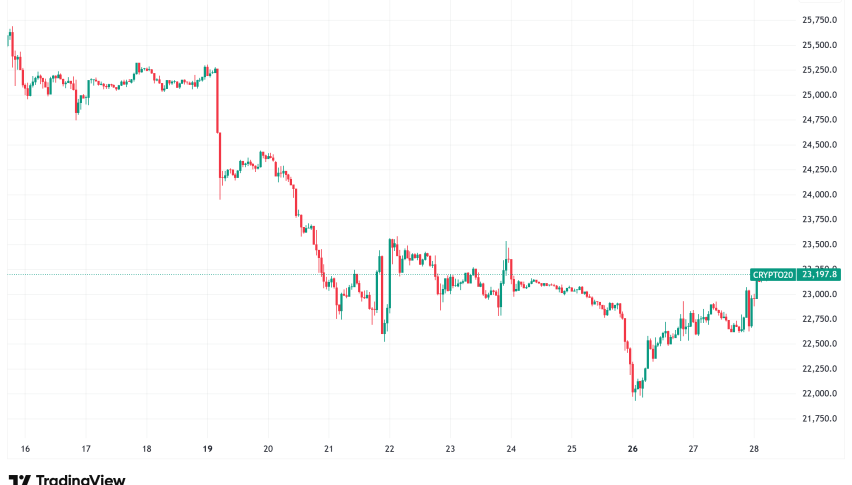
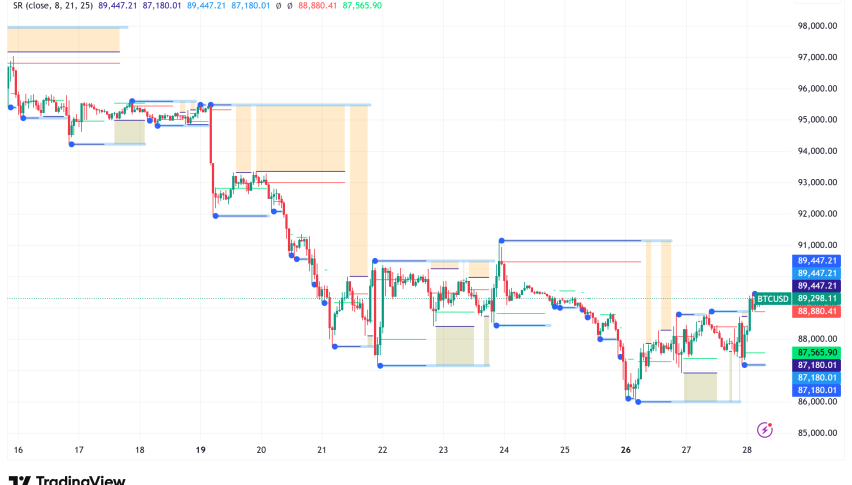
The cryptocurrency market faces headwinds as Bitcoin trades at $89,378 with modest 2.2% monthly gains, while Ethereum shows recovery signs
Quick overview
- Bitcoin trades at $89,378 with a modest 2.2% monthly gain, while Ethereum shows signs of recovery after a 15.9% weekly correction.
- Institutional interest in cryptocurrency is growing, with Laser Digital applying for a US national bank trust charter, indicating increased confidence in federal regulations.
- A recent winter storm significantly impacted Bitcoin mining, causing a 40% drop in network hashrate, highlighting the concentration of mining capacity in the US.
- Ethereum's network activity is surging, with layer-2 solutions surpassing BNB Chain and Tron in transactions, signaling a positive trend for the ecosystem.
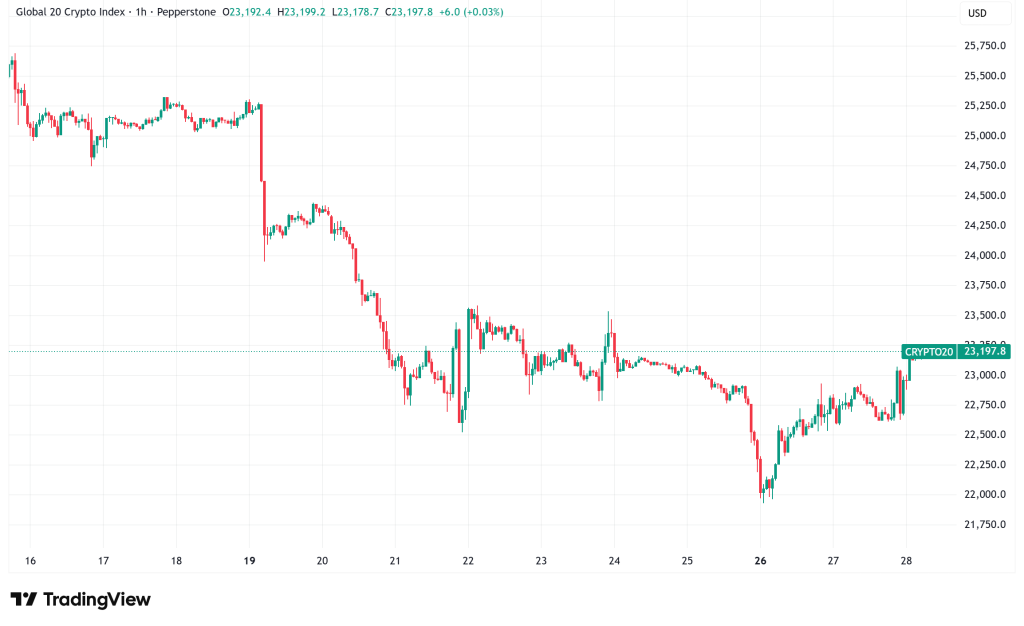
The cryptocurrency market faces headwinds as Bitcoin BTC/USD trades at $89,378 with modest 2.2% monthly gains, while Ethereum ETH/USD shows signs of recovery despite a 15.9% weekly correction. Network activity surges across Ethereum’s layer-2 ecosystem as institutional players push for deeper integration into traditional finance, even as stablecoin growth threatens bank deposit stability.
Crypto Market Developments
As winter weather makes mining harder and institutional players look for more legitimacy, the cryptocurrency industry is going through a time of legislative change and infrastructure growth. Laser Digital, which is funded by Nomura, has applied for a US national bank trust charter with the Office of the Comptroller of the Currency. This shows that crypto-focused companies are becoming more confident in doing business at the federal level, where the rules seem to be more relaxed.
But traditional banks are worried about competition from the digital asset industry. Standard Chartered put out a research that said stablecoins are a big threat to bank savings, especially for rural lenders. Analysts think that US bank deposits could drop by a third of the US dollar-pegged stablecoin market, which is worth $301.4 billion. Based on net interest margin income as a percentage of total revenue, regional banks like Huntington Bancshares, M&T Bank, Truist Financial, and CFG Bank have the most risk.
Over the weekend, a huge winter storm hit three dozen US states, making it hard for miners to keep working. This also affected the physical infrastructure that supports Bitcoin. In just two days, Bitcoin’s network hashrate dropped by more than 40%, reaching a seven-month low of 663 exahashes per second on Sunday. By Monday, it had risen to 854 EH/s. About 40% of the world’s Bitcoin mining capacity was affected by the outage. This shows how concentrated the network is in the US, which makes up over 38% of the world’s hashrate.
Can Bitcoin Rally in February?
The price of Bitcoin has been rather calm in January, with only a 2.2% monthly gain as it trades around $89,378. But based on past patterns, February could be a far better month for performance. Timothy Peterson, a network economist, pointed out that the two weeks from February 7 to 21 had traditionally had median weekly returns of 7% or higher. The week ending February 21 had the greatest median return since 2016, at 8.4%.
Peterson says that the seasonal strength in February comes from macroeconomic issues, not crypto-specific ones. In the middle of February, companies report their full-year earnings and give future guidance, which is usually positive and encourages investors to take on more risk. During correction years, the first three weeks of February have also been good indications. In early 2018, 2022, and 2025, the market did poorly, which was a sign of gloomy annual closes.
Long-term predictions are still positive, even though things have been volatile lately. Using the Bitcoin Decay Channel model, Bitcoin researcher Sminston says that the highest price for Bitcoin in 2026 will be between $210,000 and $300,000. Meanwhile, momentum indicators show that the current drop was caused by news rather than a fundamental breakdown. The sell-off happened at the same time as the Nasdaq’s drop after increased US tariff worries. XWIN Research says that Bitcoin’s Realized Cap keeps going up, which means that spot-based capital is still coming into the network even though it is in a consolidation period.
Ethereum Getting Ready to Surge to $3,300?
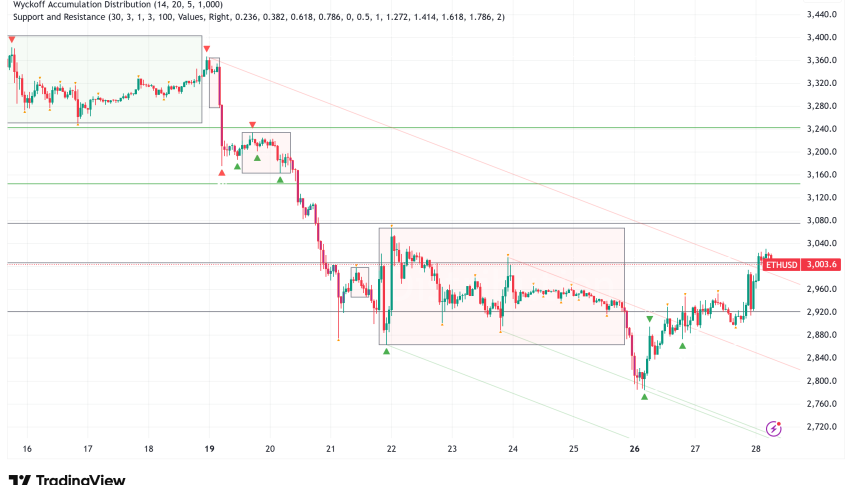
The price of Ethereum dropped sharply over the past week, falling 15.9% to $3,021. This caused $910 million in liquidations for bullish leveraged holdings. Some on-chain data show that a possible bounce back to $3,300 is starting to happen, even though people were worried that the $2,800 support level might fail after holding for two months.
Network activity gives a strong message about how the ecosystem is growing. Ethereum layer-2 solutions had more transactions than BNB Chain and Tron in the last week, at 128 million. While Solana and Tron saw their network fees go down, Ethereum’s basic layer witnessed a 19% rise. Average transaction fees have gone down from $0.50 in November 2025 to $0.20 now. This is because of the Fusaka upgrade in December, which greatly increased the network’s data capacity and added transaction batch workflows.
Decentralized exchange activity is another sign that investors are interested again. Weekly DEX volumes on Ethereum rose from $8.15 billion four weeks ago to $13 billion now. With layer-2 activity from Base, Polygon, Arbitrum, and Optimism, the total weekly DEX volume for the Ethereum ecosystem reached $26.8 billion, making it second only to Solana’s $30 billion. This increase shows that Ethereum’s plan to focus on scalability through rollups is starting to work.
- Check out our free forex signals
- Follow the top economic events on FX Leaders economic calendar
- Trade better, discover more Forex Trading Strategies
- Open a FREE Trading Account
- Read our latest reviews on: Avatrade, Exness, HFM and XM



 Save
Save