White House Pushes Crypto-Wall Street Deal on Stablecoins Before March
On February 2, 2026, the White House held an important meeting to address the growing divide between the cryptocurrency...
Quick overview
- The White House held a meeting on February 2, 2026, to discuss the divide between the cryptocurrency industry and traditional banks, focusing on stablecoin yields.
- No formal agreement was reached, highlighting ongoing divisions over the GENIUS Act, which bans direct interest payments on stablecoins.
- Banks argue that yield offerings could harm community lending, while crypto industry representatives claim they are essential for competition and innovation.
- Future negotiations will involve smaller groups to expedite decision-making, with the Senate vote remaining crucial for a federal stablecoin framework.
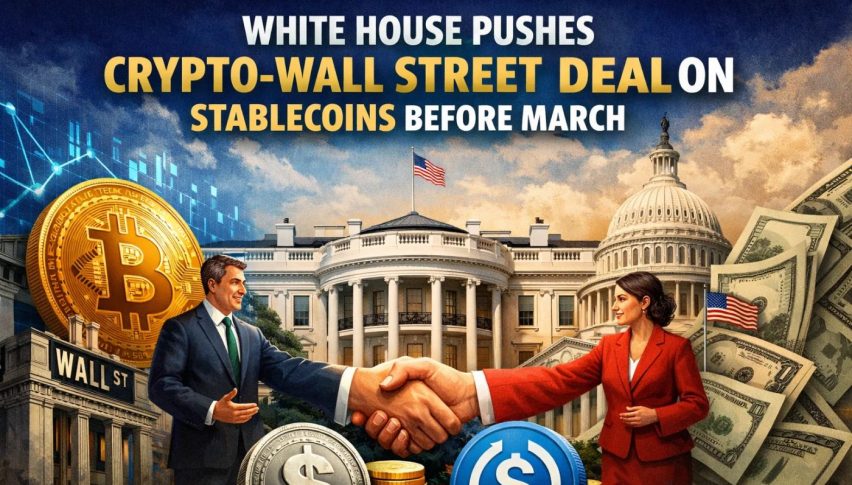
On February 2, 2026, the White House held an important meeting to address the growing divide between the cryptocurrency industry and traditional Wall Street banks.
Patrick Witt, Executive Director of the President’s Council of Advisors on Digital Assets, led the meeting in the Diplomatic Reception Room. The main topic was whether stablecoins should be allowed to offer yields and rewards.
Although the two-hour discussion was called “productive” and a “constructive step forward,” no formal agreement was made. The two sides are still divided on important issues.
The “Yield Loophole” Controversy
The main debate centers on the GENIUS Act, passed in summer 2025, which bans stablecoin issuers from paying direct interest to token holders. However, third-party platforms such as exchanges still offer “rewards” for holding these stablecoins, creating a major loophole.
🚨BREAKING:
The White House is meeting with banking and crypto leaders today to advance the Crypto Market Structure Bill.
This bill will clarify how digital assets are regulated in the U.S.
It gives institutional investors certainty and removes legal grey areas slowing… pic.twitter.com/GPwyqu5Q4V
— Crypto Tice (@CryptoTice_) February 3, 2026
- Banks, represented by the American Bankers Association (ABA) and the Financial Services Forum, argue that stablecoins offering yields are similar to traditional deposits. They warn that these “deposit substitutes” could cause large amounts of money to leave community banks, which could hurt lending for homes and small businesses.
- On the other hand, industry representatives from companies like Coinbase say that offering yields is important, especially when interest rates are high. They believe banning these rewards would limit competition, help banks keep their dominance, and push digital innovation to other countries.
The Road to March: Negotiating the Market Structure
After the meeting, smaller groups were assigned to work out specific changes to the larger crypto market structure bill. The White House hopes to reach a workable agreement by the end of February 2026 to keep the legislative process moving.
Key takeaways from the session:
- The Senate vote is still the key step for passing a federal stablecoin framework. Citi analysts warn that continued disagreements could push the CLARITY Act past 2026.
- Recently, the Senate Agriculture Committee moved the Digital Commodity Intermediaries Act forward along party lines. This is an important step toward setting clear rules for digital commodities.
- Future White House meetings will include smaller groups to help make decisions and reach compromises more quickly.
Banks Signal “Rigid” Willingness to Collaborate
Even though the meeting was described as “constructive,” sources said that banking representatives stayed “rigid.” They explained that banks could not be flexible without first talking to their member banks.
A joint statement from the ABA, Bank Policy Institute, and other trade groups emphasized that any new laws must:
- Support Local Lending: Ensure deposits remain within regulated institutions to fund families and small businesses.
- Protect Stability: Maintain the safety and soundness of the financial system against unbacked “store of value” tokens.
- Ensure Regulatory Parity: Close loopholes that allow non-bank entities to act as “shadow banks” without equivalent oversight.
- Check out our free forex signals
- Follow the top economic events on FX Leaders economic calendar
- Trade better, discover more Forex Trading Strategies
- Open a FREE Trading Account
- Read our latest reviews on: Avatrade, Exness, HFM and XM


 Save
Save