Is a $500 Billion Crypto Shift Coming? Senator Warns Banks and Crypto Firms to Strike a Deal
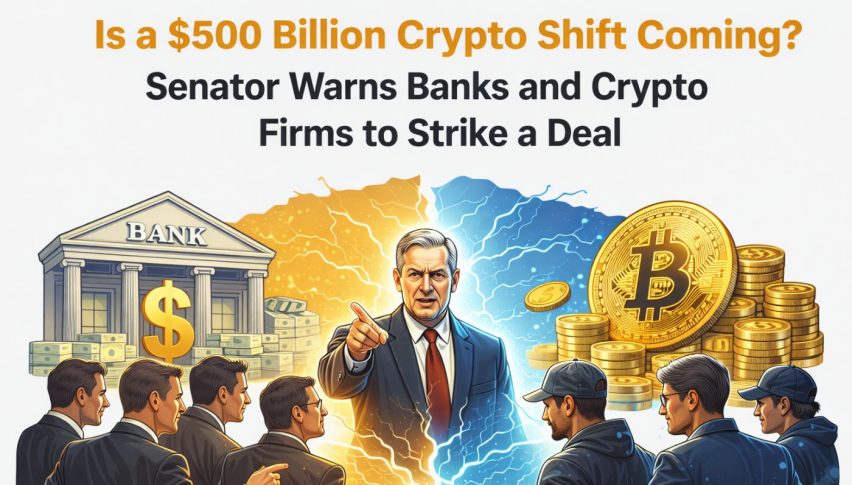
The future of the U.S. digital economy is at a turning point as a $500 billion crypto market bill faces a key decision in Congress.
Quick overview
- The U.S. digital economy faces a pivotal moment as a $500 billion crypto market bill is debated in Congress.
- Senator Angela Alsobrooks emphasizes the need for collaboration between Wall Street and Silicon Valley to establish clear regulations for stablecoins.
- Public sentiment is shifting, with a majority of Americans supporting stringent safety standards for firms offering bank-like services.
- The Senate Banking Committee is considering a compromise that could reshape the crypto market, focusing on activity-based incentives and enhanced oversight.
The future of the U.S. digital economy is at a turning point as a $500 billion crypto market bill faces a key decision in Congress. Senator Angela Alsobrooks, a leading Democrat on the Senate Banking Committee, has urged both Wall Street and Silicon Valley to find common ground or risk missing a major chance for clear rules. At a recent American Bankers Association event, Alsobrooks stressed that while no one will get everything they want, doing nothing could be much worse for the stability of the U.S. financial system.
The main issue centers on stablecoins and the debate over whether holders should earn interest, or ‘yield.’ The crypto industry has long operated without clear rules, but the new bill aims to set firm federal guidelines. With payment stablecoins expected to reach nearly $500 billion by 2026, lawmakers are working to decide how these digital assets should fit with traditional banks.
The Yield War: Why Your Digital Dollars Are at the Center of a DC Battle
The biggest disagreement right now is whether stablecoin holders should be able to earn interest on their coins. The new GENIUS Act bans stablecoin issuers from offering interest directly, but some third-party platforms have found ways to offer ‘rewards’ to users. The American Bankers Association and other banks see these rewards as a threat, worrying that people will move their money from regular savings accounts to digital wallets that are less regulated.
Senator Alsobrooks has signaled a willingness to tighten these rules, famously remarking that “if it quacks like a duck and looks like a duck, it is a duck.” This philosophy suggests that if a crypto product functions like a bank account by offering returns, it must be subject to the same stringent consumer protections and capital requirements as a traditional bank. The crypto industry, however, argues that these incentives are vital for innovation and maintaining a competitive edge in a global market where other jurisdictions are moving faster to embrace digital finance.
https://twitter.com/i/broadcasts/1AKEmOvzdroKL?s=20
Public Opinion and the Push for “Bank-Like” Protections
Lawmakers are not just listening to lobbyists; they are also watching a shift in public sentiment. Recent data from a Morning Consult survey involving over 4,400 adults suggests that the average American is becoming increasingly wary of unregulated financial experiments. The survey revealed that a staggering 84% of respondents believe any firm offering bank-like services should follow the same safety standards as traditional banks. Furthermore, 42% of those polled would support an outright ban on stablecoin yields if those yields posed a systemic risk to the liquidity of the banking system.
These numbers give Senator Alsobrooks and Republican Senator Thom Tillis the support they need to push for changes from the crypto industry. They want the new crypto bill to protect innovation but also keep community and national banks strong. Their aim is to build a system where digital assets can be used for everyday transactions, not just as risky investments.
What a Compromise Means for the $0.5T Market
As the Senate Banking Committee moves toward a final markup of the bill, the industry is bracing for a “middle ground” solution that could reshape the economics of the entire sector. While the final text is still being debated, several key themes have emerged that will likely define the future of the $500 billion market:
- Activity-Based Incentives: Lawmakers are exploring a distinction between “passive yield,” which looks like interest, and “activity-based rewards” given for actual transactions or network participation.
- Strict Third-Party Oversight: New rules may close loopholes that allow affiliates to bypass the GENIUS Act’s interest ban, ensuring that “yield-as-a-service” models face heavy scrutiny.
- Enhanced Reporting and Disclosure: Expect much higher transparency requirements for stablecoin issuers, including weekly reports on reserve assets to prevent another FTX-style collapse.
- Bank-Chartered Issuers: The bill may favor non-bank firms that obtain limited federal bank charters, bringing them directly under the watchful eye of the OCC.
Moving forward will take unusual cooperation between both political parties and different industries. If lawmakers can reach a deal, it could lead to more big institutions using crypto and help the U.S. become a leader in the field. But if talks stall, the $500 billion market could stay stuck in uncertain rules, which helps no one.
- Check out our free forex signals
- Follow the top economic events on FX Leaders economic calendar
- Trade better, discover more Forex Trading Strategies
- Open a FREE Trading Account
- Read our latest reviews on: Avatrade, Exness, HFM and XM

Related Articles


Sidebar rates

Related Posts
 Save
Save
