Mexican Peso Weakens Against Dollar After Trump Threatens Iran
In Mexico, industrial activity declined in January after three consecutive months of gains, marking its weakest reading since 2024.
Quick overview
- The Mexican peso weakened against the dollar, closing at 17.9489 pesos per dollar, reflecting a weekly loss amid rising geopolitical tensions.
- U.S. President Trump's warning of potential military action against Iran contributed to market caution and a depreciation of the peso.
- Oil prices remain high, hovering near $100 per barrel, which could impact Mexico's economy by increasing oil revenues but also risking inflation.
- Mexico's industrial activity declined in January, marking its weakest performance since December 2024, adding to the economic uncertainty.
The Mexican peso weakened against the dollar on Friday and posted a weekly loss, as markets turned cautious after U.S. President Donald Trump warned that the United States could strike Iran “with severity” next week.
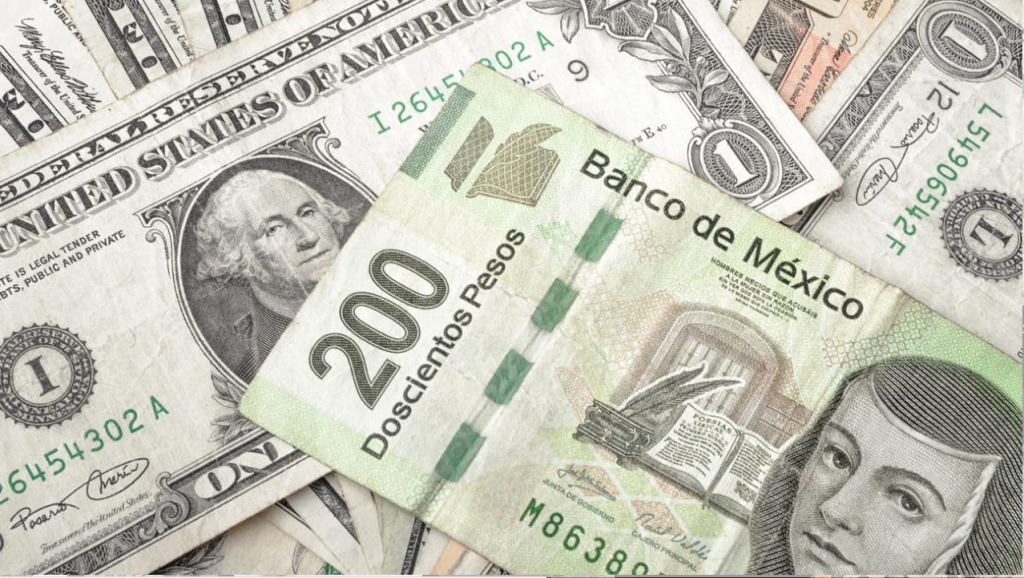
The currency depreciated amid concerns that tensions between the United States and Iran could escalate over the weekend.
The exchange rate ended the session at 17.9489 pesos per dollar, compared with Thursday’s official close of 17.8449, according to data from Bank of Mexico. The move represented a loss of 10.40 centavos, or 0.58%.
During the session, the dollar traded between a high of 17.9727 pesos and a low of 17.7488. The U.S. Dollar Index, which measures the greenback against a basket of six major currencies, rose 0.78% to 100.53.
Trump comments rattle markets
Trump said the United States would hit Iran “with severity” next week, escalating his rhetoric. Only days earlier, he had suggested the conflict could end sooner than previously expected.
Markets were also reacting to disruptions in the Strait of Hormuz, a key route for global oil shipments, attributed to Iran. U.S. crude futures were trading around $99.28 per barrel despite efforts to ease supply concerns.
The geopolitical backdrop adds another layer of uncertainty. Oil prices hovering near $100 per barrel are a double-edged sword for Mexico: while higher prices boost oil revenues, they also risk importing inflationary pressures.
Economic data
In Mexico, industrial activity declined in January after three consecutive months of gains, marking its weakest reading since December 2024. The drop reflected deterioration across all major components, according to seasonally adjusted data.
Earlier in the day, weaker-than-expected U.S. economic figures also weighed on sentiment. Gross domestic product slowed more than initially estimated in the fourth quarter, while consumer spending rose more than expected in January.
Weekly loss
Against this backdrop, the peso ended the week with a cumulative loss. Compared with last Friday’s official close of 17.8034 per dollar, the currency fell 16.93 centavos, or 0.95%.
Analysts expect pressure on the peso to persist as geopolitical risks remain elevated.
- Check out our free forex signals
- Follow the top economic events on FX Leaders economic calendar
- Trade better, discover more Forex Trading Strategies
- Open a FREE Trading Account
- Read our latest reviews on: Avatrade, Exness, HFM and XM

Related Articles
Sidebar rates

Related Posts
 Save
Save
