Eli Lilly Shares Tumble Nearly 6% After HSBC Downgrades Stock Amid GLP-1 Market Concerns
Shares of pharmaceutical giant Eli Lilly fell sharply on Tuesday, losing nearly 6% to close at $930.35, making it one of the worst performer
Quick overview
- Eli Lilly's shares fell nearly 6% after HSBC downgraded the stock, citing concerns about the sustainability of the obesity drug market.
- HSBC lowered its price target for Lilly from $1,070 to $850, reflecting skepticism about the projected growth of GLP-1 weight-loss medications.
- The analysts highlighted vulnerabilities in the cash-pay model for obesity drugs, particularly during economic downturns and potential job losses due to AI.
- Lilly's high valuation may be difficult to maintain if the cautious market outlook proves accurate, especially with upcoming FDA decisions on new medications.
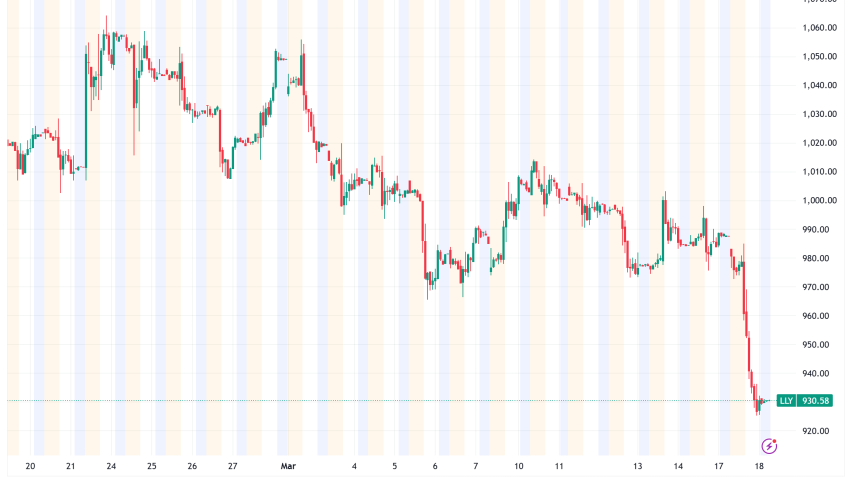
After investment bank HSBC issued a rare downgrade on the stock, citing growing concerns about the sustainability of the booming obesity drug market, shares of pharmaceutical giant Eli Lilly fell sharply on Tuesday, losing nearly 6% to close at $930.35, making it one of the worst performers in the S&P 500 for the day.
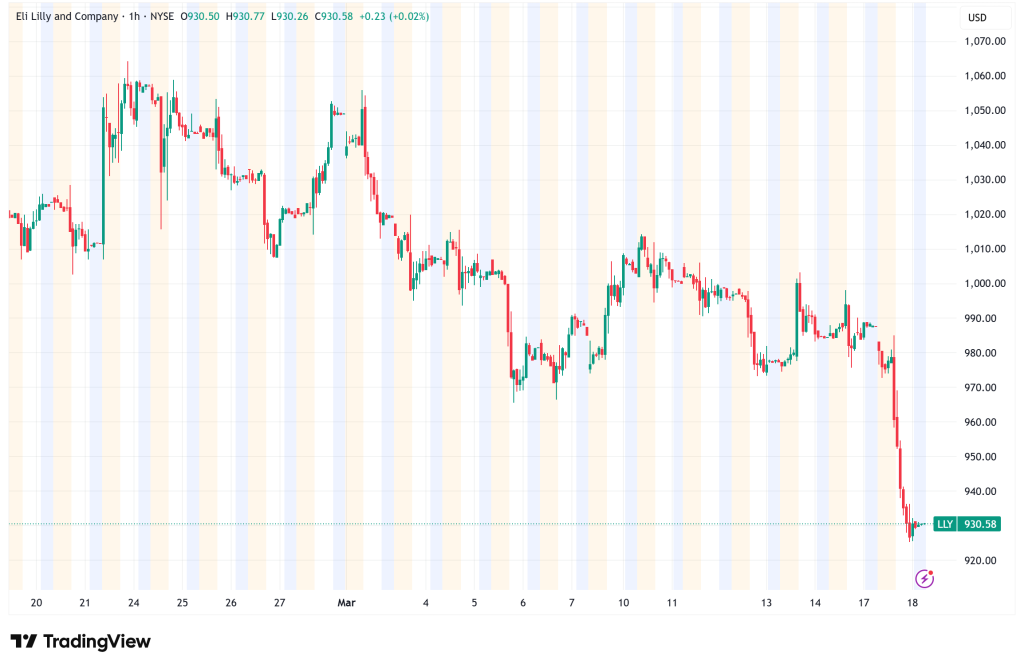
Lilly’s stock was downgraded by HSBC analyst Rajesh Kumar to “reduce” from “hold,” and his price target was lowered from $1,070 to $850. Investors who have long relied on Lilly’s popular weight-loss medication Zepbound and the larger GLP-1 medicine class to support years of rapid expansion were alarmed by the move.
Is the Global Obesity Market Really Worth $150 Billion?
The frequently quoted prediction that the global obesity medicine industry will generate $150 billion in sales annually is at the core of HSBC’s concern. It doesn’t sit well with Kumar and his group. According to their updated forecast, peak sales of GLP-1 weight-loss medications will reach between $80 billion and $120 billion by 2032. This is a substantial reduction that, if true, would fundamentally change the growth story supporting Lilly’s premium valuation.
“Whilst the execution at Lilly has been good so far, we think the risk of paying up for its bullish worldview embedded in the guidance is unattractive,” the analysts at HSBC stated.
This more cautious perspective is supported by two major factors: declining costs and patient dropout rates. From its 2023 launch price of $1,059 per month to as low as $299 per month for entry-level doses, Lilly has already drastically reduced the price of Zepbound, and more price rivalry with rival Novo Nordisk is anticipated. Long-term volume forecasts are called into question because clinical trial data indicates that not all patients who start GLP-1 medication continue.
Eli Lilly’s Cash-Pay Problem
The GLP-1 market’s strong reliance on patient out-of-pocket payments is one of its most unique—and possibly vulnerable—features. When their insurance does not cover weight-loss drugs, many Americans turn to direct-pay platforms like Lilly’s own LillyDirect, services like TrumpRx, and telemedicine providers like Hims & Hers. As of mid-March, almost 80% of prescriptions for Novo Nordisk’s oral Wegovy were paid for using cash, according to IQVIA statistics referenced by Jefferies.
This cash-pay approach is intrinsically vulnerable, HSBC cautioned. During a recession, middle-class Americans, who make up the majority of the market for these medications, might reduce their discretionary health spending. More remarkably, the experts identified the loss of jobs in white-collar industries due to artificial intelligence as a possible long-term barrier to demand. “This cash-pay channel might be more sensitive to economic cycle, especially to middle-class U.S. households, and might be sensitive to AI-led labor-market disruptions in white-collar jobs,” they stated.
Are Novo’s Struggles a Warning Sign?
HSBC also cited Novo Nordisk, Lilly’s main competitor, as a possible sign of future issues. Due to supply issues, leadership changes, and lower-than-expected 2026 sales forecasts, Novo’s shares fell 72% last year. “Is Novo’s bearish read of the market more accurate?” The analysts posed pointed questions.
In contrast, Lilly’s stock increased by 28% last year and momentarily reached a $1 trillion market valuation, which was a first for any pharmaceutical company. However, Tuesday’s dip contributes to a difficult start to 2026: Lilly’s stock has now dropped 14% so far this year, while the S&P 500 as a whole has declined 2%.
Eli Lilly (LLY) Stock Valuation Under the Microscope
Lilly’s valuation gives little margin for mistake because the company is trading at 43 times trailing profits and more than double that on a free cash flow basis. Over the next five years, analysts surveyed by S&P Global Market Intelligence predict annual earnings growth of no more than 22%. The premium price tag of the stock may become harder to defend if HSBC’s more cautious market outlook turns out to be accurate.
The FDA’s decision on Lilly’s new oral GLP-1 medication orforglipron, which is anticipated in early April, is currently the center of attention. This decision could either boost investor confidence or put additional strain on an already tumultuous year.
- Check out our free forex signals
- Follow the top economic events on FX Leaders economic calendar
- Trade better, discover more Forex Trading Strategies
- Open a FREE Trading Account
- Read our latest reviews on: Avatrade, Exness, HFM and XM

Related Articles
Sidebar rates

Related Posts
 Save
Save
