Bitcoin Clings to $70,000 as Oil-Driven Inflation and Rising Yields Lock Out the Bulls
On Wednesday, Bitcoin (BTC) is holding slightly above the psychologically significant $70,000 barrier, but analysts caution that if larger
Quick overview
- Bitcoin is currently trading above $70,000, but analysts warn that worsening macro conditions could lead to a decline.
- The macro backdrop is challenging, with rising US Treasury rates and high oil prices impacting risk assets like Bitcoin.
- Technical analysis suggests Bitcoin may retest the $66,000 support level if selling pressure continues.
- Despite current challenges, positive on-chain metrics and institutional developments indicate a potential for future bullish momentum.
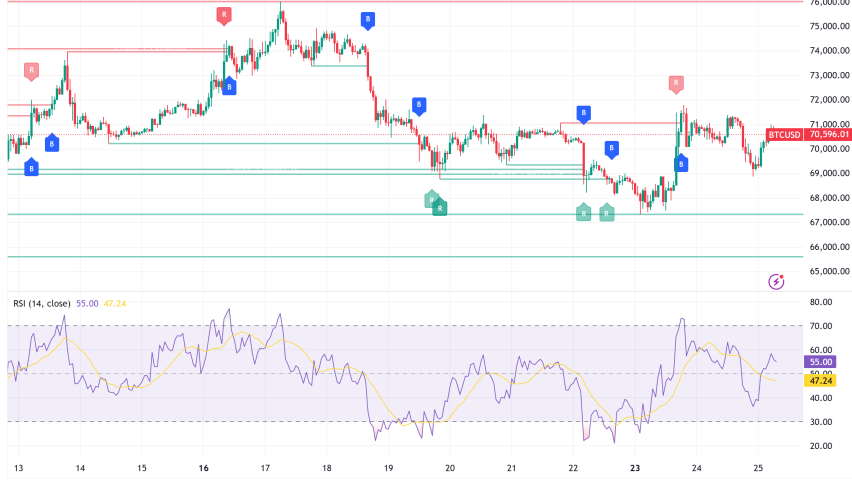
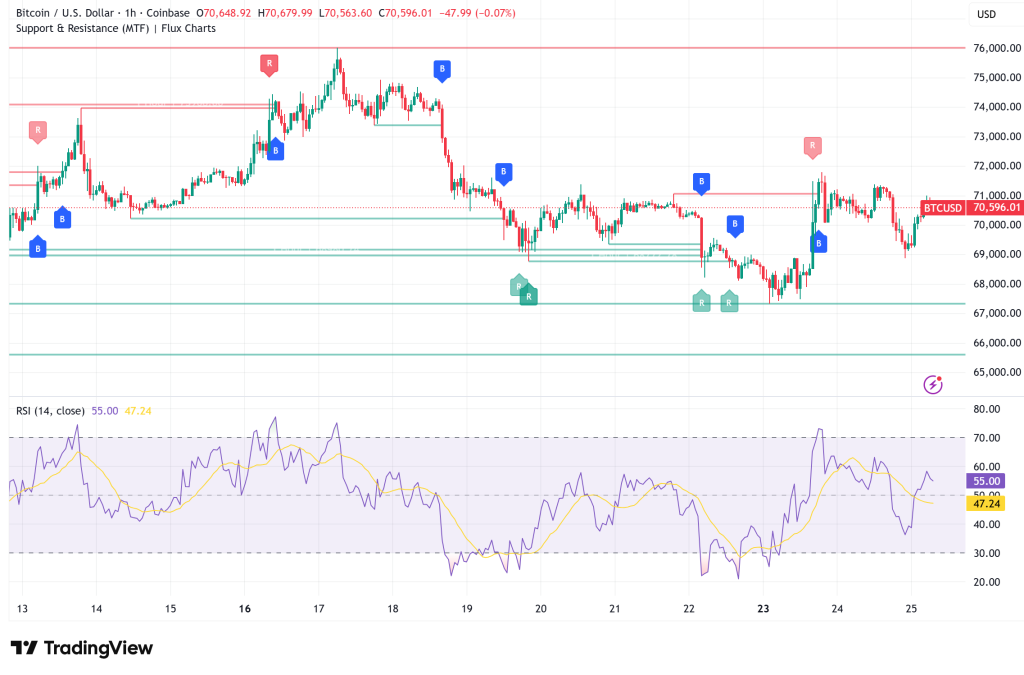
On Wednesday, Bitcoin BTC/USD is holding slightly above the psychologically significant $70,000 barrier, but analysts caution that if larger macro conditions worsen, the level may give way. Earlier last week, as US Treasury rates surged to nine-month highs and gold experienced its largest single-session fall in more than 50 years, the token momentarily declined to retest the $67,500 support zone.
Unusually hostile is the macro backdrop. The protracted war in Iran has regularly driven Brent crude above $100 on escalation news, keeping oil prices—the through-line connecting nearly every risk-asset headwind at the moment—above $90 per barrel. Energy markets now have a sustained inflation premium because to the Strait of Hormuz disruptions that started in late February, which is making the Federal Reserve’s task much more difficult.
The Fed’s Hands Are Tied, and Crypto Knows it
The probability that the FOMC will raise interest rates by July is now priced at 20.5% in bond market futures, up from practically nil a week ago. As investors demanded higher returns to keep government debt in the face of mounting fiscal pressure, US 5-year Treasury rates reached 4.10%, their highest level in nine months. With the US national debt now above $39 trillion and Congress contemplating an additional $200 billion in war-related spending, bond markets are experiencing a supply glut that is driving up yields even more.
This is a structurally unfavorable atmosphere for Bitcoin. When economic conditions tighten, cryptocurrency continues to behave like a high-beta risk asset, and higher real rates make non-yielding assets less appealing. Major tech companies including Google, Meta, and IBM each lost 10% or more over the previous six weeks, causing the S&P 500 to reach its lowest position in more than six months on Monday. Digital assets seldom find a bid when equity risk is being sold aggressively.
Can Bitcoin Retest $66,000 in the Near-Term?
Technically speaking, the Bitcoin chart is reaching a turning point. On Monday’s test, the $67,500 level held, but another round of selling pressure could push the decline toward $66,000, especially over a weekend when cryptocurrency markets absorb geopolitical shocks in thinner, round-the-clock trading conditions. Until oil prices decline and Fed rate-cut prospects can resurface, a retest is a real probability. That level is the next significant support zone.
The price of Brent crude must return to the $80–$85 area, according to market expert Sam Daodu. At that point, the Fed would have enough leeway to consider easing, which would be the impetus required for risk capital to shift back into cryptocurrency. Until then, the same inflation-and-rates dynamic that has shaped price behavior since February will continue to overpower any good event for Bitcoin, including regulatory advancements, ETF inflows, and the CLARITY Act.
Bitcoin Price Prediction: Structural Bullish Case Intact, but Patience Required
Ignoring Bitcoin’s core principles would be a mistake. On-chain metrics are still positive, miner selling pressure has dropped to almost three-year lows, and the SEC’s ongoing shift to treating Bitcoin as a commodity signifies real institutional development. Inflows into XRP ETFs and progress on cryptocurrency legislation attest to the improvement of the overall regulatory landscape.
The bullish position is genuine; all that needs to happen is for the macro fog to clear. The Fed regains policy flexibility, risk appetite returns, and Bitcoin has the groundwork to maintain a rally if a truce or diplomatic breakthrough in the Middle East lowers oil prices toward $85. Since late February, higher lows have been formed, indicating that buyers are still present on every downturn. That is the signature of an asset that is awaiting authorization to be moved, not the signature of a broken asset.
- Check out our free forex signals
- Follow the top economic events on FX Leaders economic calendar
- Trade better, discover more Forex Trading Strategies
- Open a FREE Trading Account
- Read our latest reviews on: Avatrade, Exness, HFM and XM

Related Articles
Sidebar rates

Related Posts
 Save
Save
