Christine Lagarde Leaves Door Open to Rate Hike
Under that scenario, inflation would peak above 4% in the second half of this year before returning to target by mid-2027.

Quick overview
- Christine Lagarde indicated that the European Central Bank may raise interest rates if rising oil prices from the Middle East conflict lead to increased inflation in the eurozone.
- She emphasized the importance of monitoring early warning signs of inflation and the need for a forceful response if inflation exceeds the ECB's 2% target for an extended period.
- Lagarde noted that even a moderate increase in inflation could justify a measured adjustment in interest rates to avoid communication risks with the public.
- The ECB is prepared to act at any meeting and will not be hindered by uncertainty, closely watching for signals that the current crisis impacts broader inflation dynamics.
Christine Lagarde signaled that the European Central Bank could raise interest rates again if rising oil prices driven by the Middle East conflict trigger a renewed inflation surge in the eurozone.
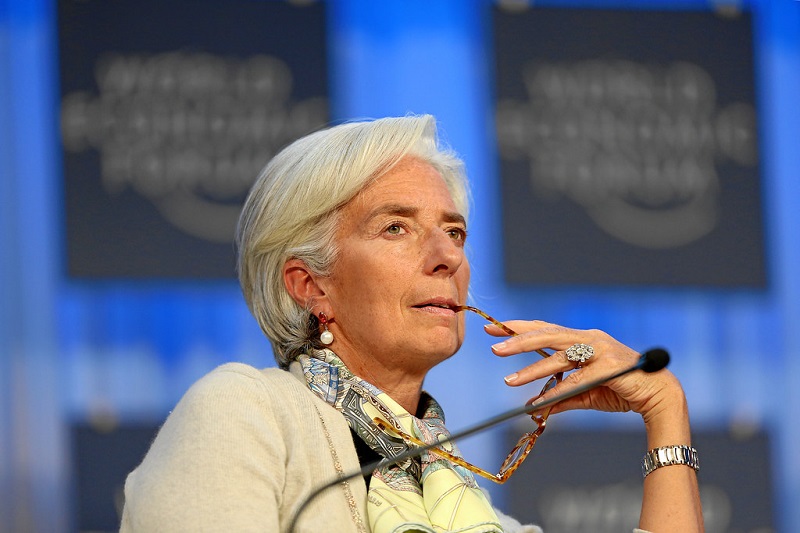
Lagarde stressed that the ECB must remain alert to early warning signs that volatility in global oil prices is feeding into broader inflation dynamics across the region.
Speaking in Frankfurt, she said the central bank would need to respond forcefully if inflation were to rise well above its 2% target for a prolonged period. However, she added that even a more moderate uptick could justify a “measured” adjustment in interest rates.
“If the crisis leads to a significant, though not overly persistent, deviation from our target, a moderate policy adjustment could be warranted,” Lagarde said.
“Failing to address such a deviation could pose a communication risk: the public may find it difficult to understand a reaction function that does not react,” she added.
Scenarios for Europe
The ECB kept rates unchanged last week but warned of mounting price pressures. While Lagarde did not explicitly align her remarks with a specific ECB scenario, her outlook closely resembles the bank’s “adverse” case.
Under that scenario, inflation would peak above 4% in the second half of this year before returning to target by mid-2027.
In a more severe scenario, inflation could exceed 6% early next year and remain above target for several years. By contrast, in the ECB’s baseline outlook, inflation is expected to average 2.6% this year, compared with 2% last year.
Ready to act
“If we foresee inflation deviating significantly and persistently from our target, the response must be forceful or sustained,” Lagarde said. “Otherwise, upward feedback mechanisms could take hold and the risk of de-anchoring would increase.”
She emphasized that the ECB stands ready to act “at any meeting” and, while it will wait for sufficient data before changing policy, it will not be “paralyzed by uncertainty.”
Lagarde concluded that the ECB must closely monitor early signals that the current crisis is feeding into broader inflation dynamics—including through wages and inflation expectations.
“As projected deviations from our inflation target become larger and more persistent, the need to act becomes more evident,” she said.
- Check out our free forex signals
- Follow the top economic events on FX Leaders economic calendar
- Trade better, discover more Forex Trading Strategies
- Open a FREE Trading Account
- Read our latest reviews on: Avatrade, Exness, HFM and XM

Related Articles
Sidebar rates


