Oil Tops $100, Up More Than 2%, as Trump Escalates Threats Toward Iran
The Euro Stoxx index is up 0.39%, reaching a new all-time high. Gains are broadly spread across the region, with Germany’s DAX rising 0.27%.

Quick overview
- The intensifying war in the Middle East is causing global market volatility, with oil prices rising significantly.
- U.S. stock futures indicate a potential rebound, while major Asian equities have experienced sharp declines.
- Geopolitical tensions are escalating, with military movements and attacks contributing to fears of a broader energy crisis.
- European stocks are rising, reaching new highs, while precious metals also see gains amid the uncertainty.
The intensifying war in the Middle East continues to keep global markets on edge. In premarket trading on Wall Street, futures point to a rebound for the main U.S. stock indexes.
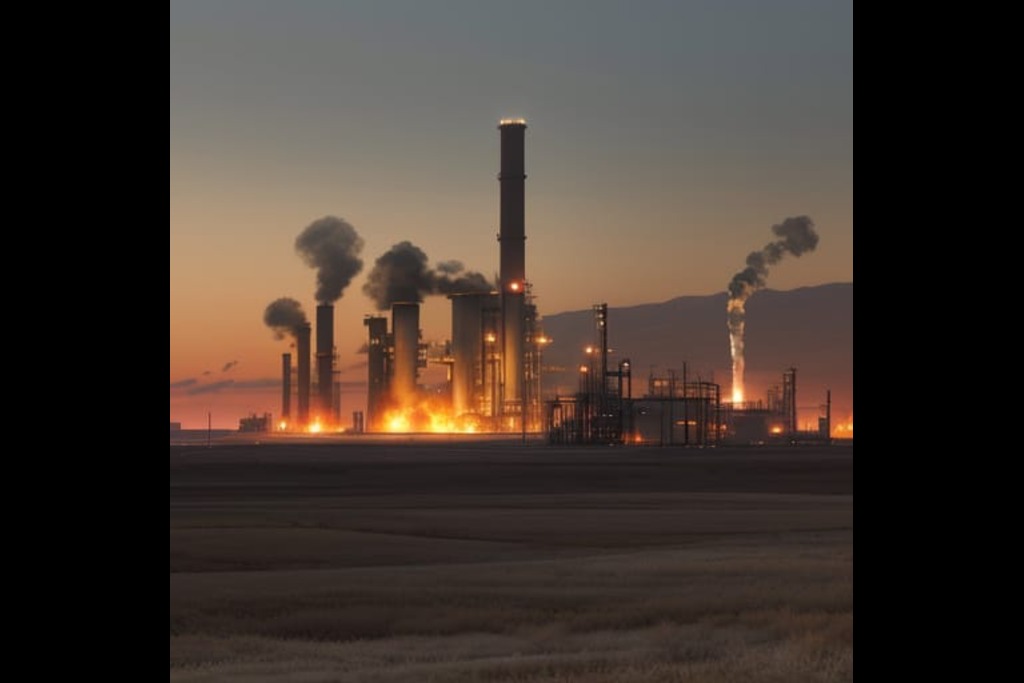
Global markets are starting the week dominated by rising geopolitical tensions. Oil prices extended their rally, while major Asian equities fell by as much as 3%, as the escalating conflict in the Middle East fueled fears of a broader energy crisis. Donald Trump issued a fresh threat, saying he wants to “take control of Iran’s oil,” according to the Financial Times.
Over the weekend, Yemen’s Houthi group launched another attack against Israel, widening the scope of the confrontation and increasing geopolitical risk in the region. At the same time, tensions among the United States, Israel, and Iran continue to escalate, with no clear signs of de-escalation.
Against this backdrop, Brent crude futures rose 2% to $107.47 per barrel. The increase adds to what has already been an extremely strong month for oil, with prices up nearly 60% in March amid disruptions to global supply. Meanwhile, West Texas Intermediate (WTI) crude gained 1.9% to $101 per barrel.
The situation has also worsened with the confirmation of new military movements. Israel intensified strikes on targets in Tehran, while the United States deployed about 3,500 troops to the region aboard the warship USS Tripoli. At the same time, Iran said it is prepared to confront a potential U.S. ground incursion.
Pakistan has meanwhile offered to mediate and open a channel for dialogue between Washington and Tehran after the United States proposed a ceasefire. Iran, however, rejected the possibility of direct talks and accused the White House of planning an invasion.
European stocks rise, Wall Street futures rebound
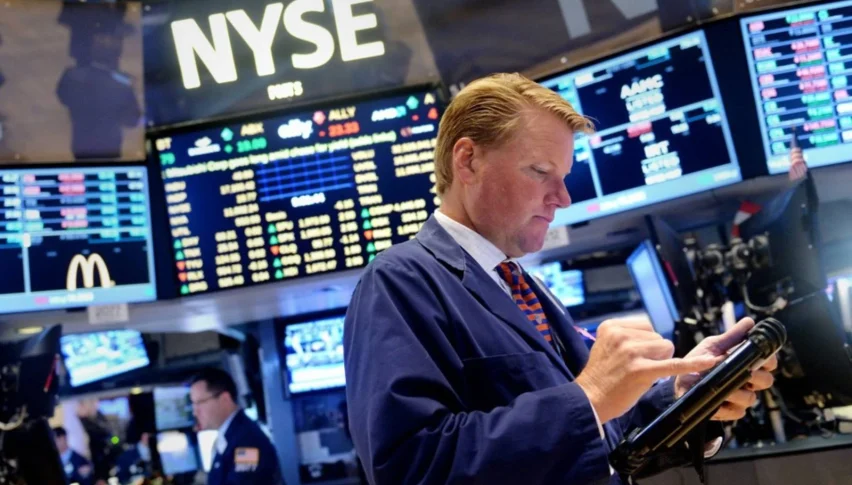
Amid this backdrop, futures for the S&P 500 — which tracks the largest companies listed on the New York Stock Exchange — are up 0.50% in premarket trading. Nasdaq Composite futures, which are heavily weighted toward technology stocks, are rising 0.44%, while Dow Jones Industrial Average futures are up 0.49%.
Among individual stocks, the biggest premarket gainers include Entergy (+6.8%), Brown-Forman (+5.6%), and Teleflex (+5.19%). On the downside, the largest declines are seen in Moderna (-7.49%), Norwegian Cruise Line (-6.85%), and Airbnb (-6.25%).
In Europe, the Euro Stoxx index is up 0.39%, reaching a new all-time high. Gains are broadly spread across the region, with Germany’s DAX rising 0.27% and France’s CAC 40 advancing 0.39%. Outside the eurozone, the UK’s FTSE 100 is up 0.95%.
Asian markets, however, posted sharp losses. Japan’s Nikkei 225 dropped 2.8%, in line with other regional markets that also traded in negative territory. South Korea’s Kospi 200 fell 3%, reflecting investors’ concerns about the possibility of a global energy shock.
Precious metals also moved higher during the session. Gold rose 1% to $4,570 per ounce, while silver traded at $71.09, up 1.9%.
- Check out our free forex signals
- Follow the top economic events on FX Leaders economic calendar
- Trade better, discover more Forex Trading Strategies
- Open a FREE Trading Account
- Read our latest reviews on: Avatrade, Exness, HFM and XM

Related Articles

Sidebar rates

Related Posts
 Save
Save
