Pips Calculator vs Profit/Loss Calculator – Which Tool Should Forex Traders Use — and When?
This is where two often-overlooked tools come into play. The pips calculator and the profit/loss calculator may seem interchangeable.
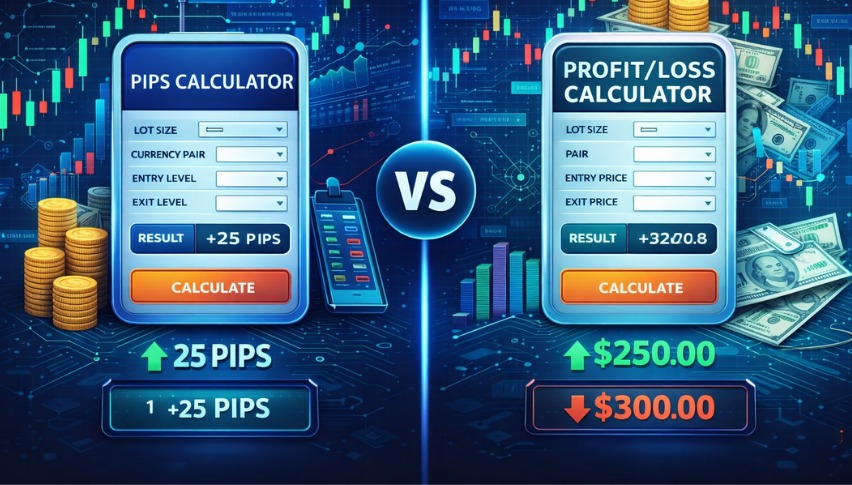
Quick overview
- Traders often overlook the distinct purposes of the pips calculator and the profit/loss calculator, which can significantly impact their decision-making.
- The pips calculator helps traders understand market movement in standardized units, promoting a disciplined approach to trading.
- In contrast, the profit/loss calculator connects trade outcomes to actual currency values, emphasizing the importance of position sizing for sustainable trading.
- Using both tools together allows traders to maintain a balance between objective analysis and financial accountability.
The way traders measure and interpret pips often affects the quality of their decisions far more than the trades themselves.
This is where two often-overlooked tools come into play. The pips calculator and the profit/loss calculator may seem interchangeable, but they actually serve very different purposes. Knowing when to use each one can transform how a trader approaches risk and execution.
Understanding the Pips Calculator
A pips calculator answers a simple but essential question: how far has the market moved?
It translates price changes into standardised units, allowing traders to compare movements across different currency pairs. Whether EUR/USD moves 20 pips or GBP/JPY moves 50, the tool brings clarity to what would otherwise feel like abstract price fluctuations.
More importantly, it creates consistency. Traders begin to think in terms of movement rather than money, which encourages discipline. A setup is no longer “about R500 potential profit” but rather “a 30 pip opportunity with a defined structure”.
This method keeps emotion at a distance while anchoring decisions in market behaviour.
What the Profit/Loss Calculator Reveals
While the pips calculator focuses on movement, the profit/loss calculator brings everything back to reality.
It answers the question traders eventually have to confront: what does this trade mean for my account?
By factoring in lot size, entry price and exit levels, it converts pip movement into actual currency values. Suddenly, that 30 pip move is no longer abstract and becomes a tangible gain or a painful drawdown.
This is where risk becomes real. This is the part where many traders realise that position sizing, not prediction, is what ultimately defines sustainability.
Perspective vs Consequence
The distinction between the two tools lies in perspective. The pips calculator offers a market-first view so that traders can analyse setups and plan entries and exits with a clean, technical mindset.
The profit/loss calculator, on the other hand, introduces consequence by connecting the trade to capital, reminding the trader that every decision carries weight.
Used together, these tools create balance. One sharpens analysis while the other grounds expectation.
When to Use Each Tool
Before entering a trade, the pips calculator is often the better companion. It allows traders to map out potential movement to assess whether a setup offers enough range and align their strategy with market conditions.
Once a trade idea is formed, the profit/loss calculator steps in. It translates that idea into risk, helping traders adjust position size so that a loss remains manageable while a gain aligns with their broader goals.
During the trade, both tools can still play a role. Pips provide a quick sense of how price is behaving, while profit and loss figures keep the trader aware of real exposure.
A Smarter Way to Think About Tools
Neither tool is superior, and the mistake lies in using one without the other. Traders who focus only on pips risk detaching from financial reality. Those who fixate solely on profit and loss often become reactive, swayed by every fluctuation in their account balance.
The real advantage comes from integration. Think in pips to stay objective, then translate into profit and loss to stay accountable.
In the end, these tools are lenses, and the traders who learn to look through both tend to see the market far more clearly.
- Check out our free forex signals
- Follow the top economic events on FX Leaders economic calendar
- Trade better, discover more Forex Trading Strategies
- Open a FREE Trading Account
- Read our latest reviews on: Avatrade, Exness, HFM and XM

Related Articles
Sidebar rates


