Coinbase Gains OCC Trust Charter Boosting Crypto Expansion Across 50 States
Coinbase has secured conditional approval for a national trust bank charter from the Office of the Comptroller of the Currency...
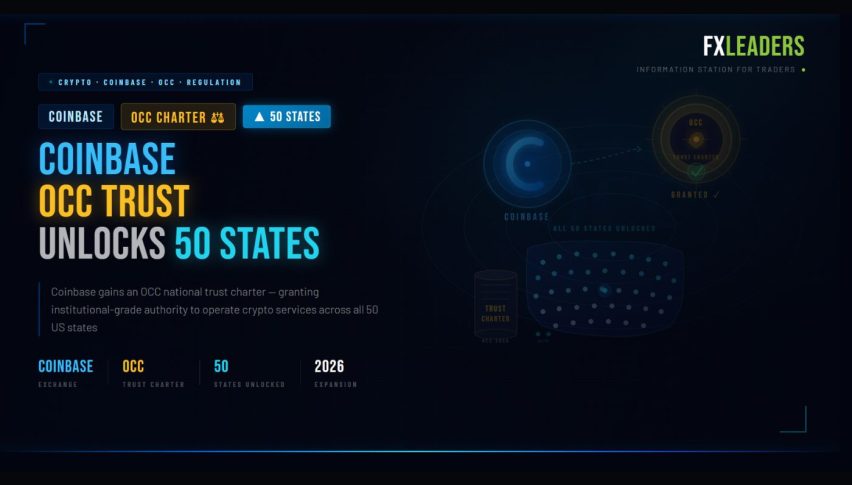
Quick overview
- Coinbase has received conditional approval for a national trust bank charter, allowing it to operate under a unified federal framework.
- The charter enables Coinbase to expand custody and payment services while avoiding traditional banking risks by not accepting retail deposits.
- This regulatory approval aligns with broader efforts to integrate digital assets into mainstream finance and enhance institutional investor appeal.
- Despite ongoing criticism regarding potential risks, the trend of crypto firms obtaining federal charters indicates a shift towards regulatory clarity in the industry.
Coinbase has secured conditional approval for a national trust bank charter from the Office of the Comptroller of the Currency, marking a major step toward deeper integration between crypto firms and the traditional financial system. The approval allows Coinbase to expand custody and payment services under a unified federal framework, without becoming a full service commercial bank.
Coinbase Trust Charter Signals New Phase for Crypto Banking
The conditional charter gives Coinbase a strategic advantage by removing the need to navigate fragmented state by state regulations. Instead, the company can operate under a single federal standard, improving efficiency and scalability for institutional services.
Importantly, Coinbase clarified that it will not accept retail deposits or engage in traditional lending practices. This means the firm avoids risks tied to fractional reserve banking while still benefiting from regulatory clarity.
The charter builds on Coinbase’s earlier approval from the New York Department of Financial Services, where its custody arm gained recognition as a qualified custodian in 2018. That foundation helped the company establish credibility among institutional investors.
Stablecoin Regulation and Federal Oversight Expand
The approval aligns with broader regulatory developments under the GENIUS Act, which grants oversight authority to the OCC for stablecoin issuers operating as national trust banks. This framework is designed to eliminate regulatory inconsistencies and encourage innovation within a controlled environment.
Coinbase already maintains close ties with Circle, a major stablecoin issuer that received similar approval. These partnerships position Coinbase to expand into payments and tokenized financial services.
🚨NEW: COINBASE WINS CONDITIONAL U.S. APPROVAL FOR NATIONAL TRUST CHARTER@Coinbase has secured conditional approval from the Office of the Comptroller of the Currency (OCC) for a national trust company charter.
This federal license allows the exchange to operate as a crypto… pic.twitter.com/lCuBp2byXA
— BSCN (@BSCNews) April 2, 2026
Key benefits of the charter include:
- Nationwide regulatory clarity for custody services
- Easier expansion into crypto based payments
- Enhanced appeal to institutional investors
- Alignment with federal stablecoin frameworks
This regulatory shift reflects a broader effort to integrate digital assets into mainstream finance while maintaining oversight.
Growing Institutional Adoption Strengthens Market Structure
The OCC’s move is part of a wider trend where crypto firms are seeking legitimacy through federal charters. Other major players, including Ripple, BitGo, and Paxos, have also received similar approvals.
Earlier, Anchorage Digital became the first federally chartered digital asset bank, setting a precedent for compliance focused growth.
At the same time, Kraken recently gained access to core payment infrastructure through a Federal Reserve master account, further bridging the gap between crypto and traditional finance.
These developments indicate that institutional adoption is accelerating, with regulatory frameworks evolving to accommodate digital assets rather than restrict them.
Regulatory Debate Intensifies as Crypto Expands
Despite the progress, the expansion of crypto firms into banking territory continues to face criticism. Lawmakers such as Elizabeth Warren have raised concerns about potential conflicts of interest and systemic risks.
Meanwhile, the Bank Policy Institute has warned that granting bank like privileges to crypto firms could blur the definition of traditional banking and introduce new vulnerabilities into the financial system.
Still, momentum remains strong. As crypto firms gain access to federal charters and payment systems, their role within global finance is becoming more entrenched.
For market participants, the implication is clear. Regulatory clarity is gradually replacing uncertainty, creating a more stable foundation for long term growth in digital assets while reshaping how financial services are delivered in the United States.
c
- Check out our free forex signals
- Follow the top economic events on FX Leaders economic calendar
- Trade better, discover more Forex Trading Strategies
- Open a FREE Trading Account
- Read our latest reviews on: Avatrade, Exness, HFM and XM

Related Articles


Sidebar rates

Related Posts
 Save
Save
