Daily Crypto Signals: Bitcoin Reclaims $72K, US Treasury Tightens GENIUS Act Rules Around Stablecoins
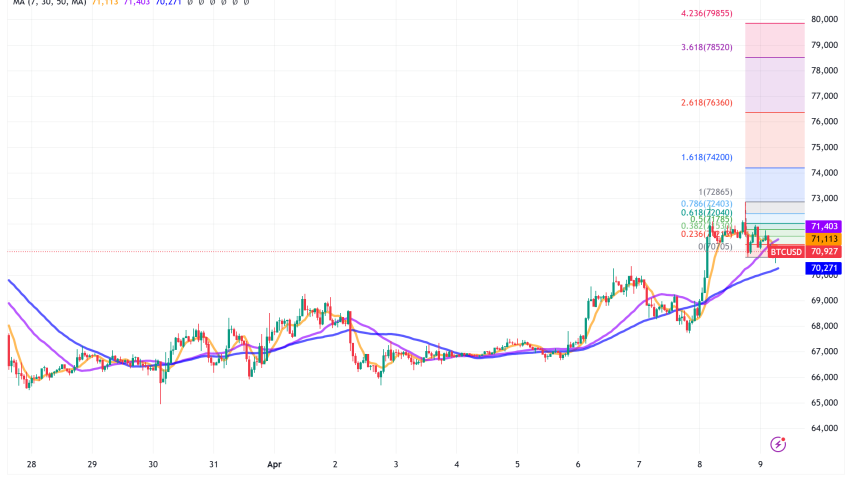
Bitcoin surged past $72,000 for the first time in 20 days following a US-Iran ceasefire announcement, even as derivatives data suggest the
Quick overview
- Bitcoin surged past $72,000 for the first time in 20 days following a US-Iran ceasefire announcement, although the rally appears fragile according to derivatives data.
- The US Treasury is advancing the implementation of the GENIUS Act, proposing strict anti-money laundering rules for stablecoin issuers.
- Despite the price increase, bearish traders faced significant liquidations, and analysts warn of a potential correction back to $68,000.
- The GENIUS Act will require stablecoin issuers to comply with regulations similar to traditional financial institutions, raising concerns about increased wallet freezes and asset seizures.
Bitcoin BTC/USD surged past $72,000 for the first time in 20 days following a US-Iran ceasefire announcement, even as derivatives data suggest the rally remains fragile. Meanwhile, the US Treasury pushed forward with GENIUS Act implementation, proposing strict anti-money laundering rules for stablecoin issuers.
Crypto Market Developments
Geopolitical relief, regulatory action, and a rekindled discussion over Bitcoin’s enigmatic roots all came together on Wednesday, making it a busy day for the cryptocurrency markets. Bearish traders were caught off guard when Bitcoin’s price surge caused a $280 million liquidation event in futures markets. While Congress remained blocked on more comprehensive legislation pertaining to the digital asset market, federal agencies proceeded to implement regulations under the GENIUS Act, the historic stablecoin legislation enacted into law in July 2025. The day was made more colorful when the New York Times released a new study that suggested British cryptographer Adam Back was most likely the person using the Satoshi Nakamoto alias. Back quickly refuted this claim.
Bitcoin Reclaims $72,000, But What Comes Next?
Bitcoin reached $72,339, its highest level in almost three weeks, after rising 2.6% in the hour on reports that the US and Iran had reached a two-week ceasefire. The increase was strongly linked to general market optimism: Bitcoin’s strong correlation with S&P 500 futures indicates that predictions for lower oil prices and less inflationary pressure, rather than any spark unique to cryptocurrencies, were the main drivers of the rally. A prolonged de-escalation may lessen the pressure on the US Federal Reserve to maintain high interest rates, which might lead to a shift in market attitude toward more risk.
The underlying derivatives situation is far less optimistic despite the headline gain. The market for downside protection options has outpaced bullish call instruments for the previous two weeks, and Bitcoin’s futures annualized premium was only 3% on Wednesday, below the neutral 4% barrier it has been below since late January. Bears have not significantly reduced their short positions, and analysts believe a correction back to $68,000 is still a real possibility given that Brent crude is still trading at about $95 per barrel and that a two-week ceasefire is far from a sustainable solution.
US Moves Ahead with the GENIUS Act
The US Treasury Department’s Financial Crimes Enforcement Network and the Office of Foreign Assets Control jointly proposed a new rule on Wednesday that would mandate payment stablecoin issuers to set up anti-money laundering and counter-the-financing-of-terrorism programs, marking a significant step in the implementation of the GENIUS Act. Under the Bank Secrecy Act, issuers would be subject to the same requirements as traditional financial institutions, including maintaining sanctions compliance and having the technical capacity to block, freeze, and refuse specific transactions. The CEO of blockchain analytics company Nominis, Snir Levi, cautioned that the action would make stablecoin issuers “bank-like gatekeepers,” forecasting a sharp rise in wallet freezes and asset seizures at scale.
The GENIUS Act, which is scheduled to go into effect either 18 months after it is signed in July 2025 or 120 days after federal agencies complete relevant regulations, is the focal point of a number of regulatory pieces being assembled around it, including the Treasury’s plan. This week, the Federal Deposit Insurance Corporation separately released its own proposed rule, making it clear that while reserve deposits held by issuers would be safeguarded, stablecoin investors would not be covered by insurance under the law. The Banking Committee has not yet scheduled a markup vote on the CLARITY Act, a more comprehensive piece of legislation pertaining to the digital asset market. Meanwhile, industry and banking representatives are still in backroom talks with White House officials regarding tokenized stocks and stablecoin yield rules.
- Check out our free forex signals
- Follow the top economic events on FX Leaders economic calendar
- Trade better, discover more Forex Trading Strategies
- Open a FREE Trading Account
- Read our latest reviews on: Avatrade, Exness, HFM and XM

Related Articles


Sidebar rates

Related Posts
 Save
Save
