Snowflake Shares Crater 12% as AI Disruption Fears and Legal Woes Mount
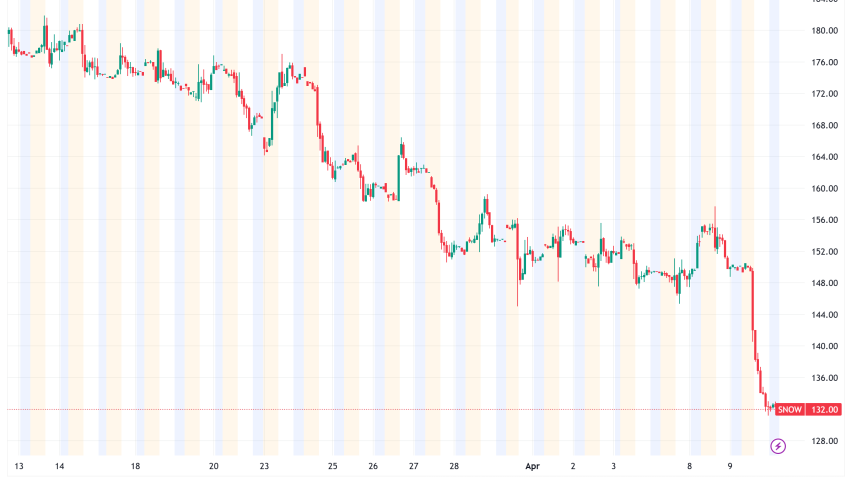
Shares of Snowflake Inc. (NYSE: SNOW) plummeted on Thursday, closing down about 11.8% to $132.24. The data cloud firm was only $2 above its
Quick overview
- Snowflake Inc. shares fell 11.8% to $132.24, nearing its 52-week low amid a broader sell-off in enterprise software due to AI disruption concerns.
- The company faces legal challenges from securities class action lawsuits alleging executives made false statements about customer usage and revenue prospects.
- Macroeconomic factors, including slow GDP growth and persistent inflation, add pressure to Snowflake's stock performance and growth outlook.
- Analysts are divided on Snowflake's valuation, with some suggesting significant upside potential while others argue the stock is overpriced.
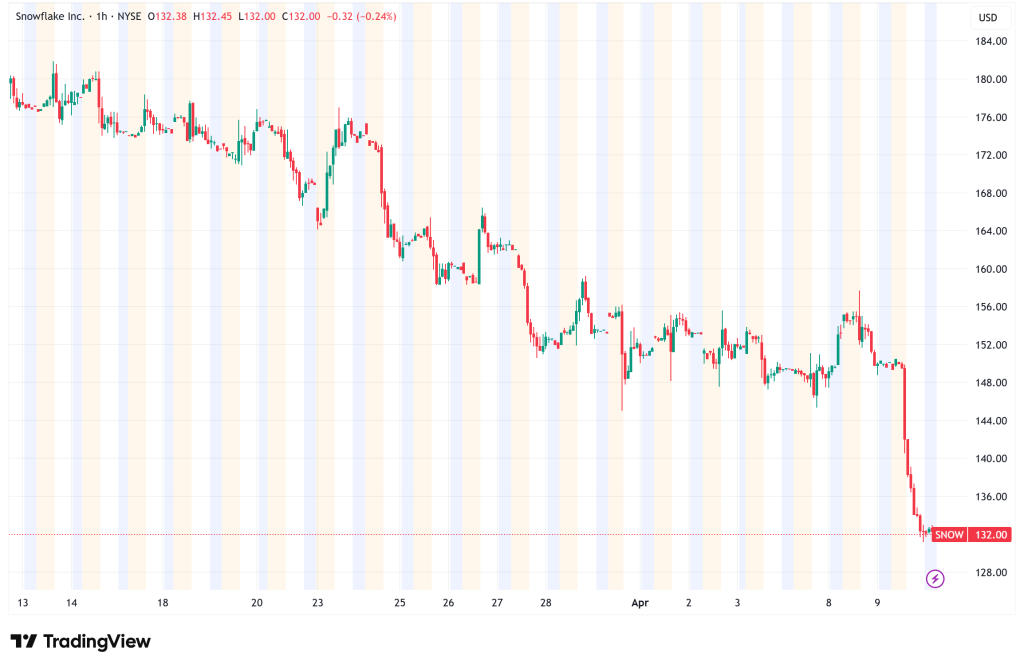
Shares of Snowflake Inc. (NYSE: SNOW) plummeted on Thursday, closing down about 11.8% to $132.24. The data cloud firm was only $2 above its 52-week low of $129.85 after a harsh session. For the stock, which has already lost about 39% of its value since January, the sell-off was the most recent phase of a terrible 2026.
AI Disruption Changes the Competitive Environment
A wider wave of selling across enterprise software, spurred by growing concern over the emergence of agentic AI, was the direct cause of Thursday’s decline. Snowflake’s consumption-driven revenue approach is predicated on seat-based SaaS pricing models, which have been called into question by Anthropic’s introduction of Managed Agents, autonomous systems that can carry out multi-step activities without human intervention.
Another significant participant in the cloud corporate market, Workday Inc. (NASDAQ: WDAY), had a 6.88% decline in sympathy, indicating how widely the industry is pricing in competition risk from next-generation AI systems.
SNOW Investor Sentiment Is Darkened by Legal Clouds
In addition to the threat posed by AI, Snowflake is engaged in a legal dispute. A number of securities class action lawsuits, including one filed by Rosen Law Firm with a lead plaintiff deadline of April 27, 2026, claim that executives of the company made materially false statements about customer usage patterns and revenue prospects between June 2023 and February 2024.
According to the lawsuits, Snowflake neglected to reveal that Iceberg Tables, tiered storage pricing, and improvements in product efficiency were anticipated to have a significant detrimental effect on sales and consumption. Compensation may be available to investors who bought SNOW shares during that time. If validated, the claims might further undermine confidence in management’s assessment of the company’s consumption model, which is a key component of Snowflake’s long-term growth strategy.
Snowflake’s Pressure Is Increased by Macro Headwinds
There was no respite from the macro backdrop. The U.S. GDP grew at an annualized rate of only 0.5% in Q4 2025, a significant slowdown from the 4.4% pace of the previous quarter, according to the Bureau of Economic Analysis. Core PCE inflation, on the other hand, remained at 3.0% annually, a full percentage point above than the Federal Reserve’s target, giving the central bank little leeway to lower interest rates and encourage growth stocks.
Analysts Continue to Debate Snowflake (SNOW) Stock Valuation
Seldom has there been such disagreement on Snowflake’s fair value. In February, Rosenblatt Securities and Bank of America Securities both reaffirmed their buy ratings with a $275 price target. One DCF model places intrinsic value as high as $240.32, while the average analyst goal of $237.89 suggests upside of around 80% from current levels.
However, the most popular competing valuation narrative at the moment contends that SNOW is significantly overpriced at its current price, putting its fair value at just $78.83, which is significantly less than Thursday’s closing. The model indicates a $1.33 billion yearly net loss and raises concerns about whether AI-driven growth can materialize fast enough to support any premium multiple.
There is cause for hope in real-world deployments: United Rentals recently introduced an AI agent based on Snowflake Intelligence that provides real-time, natural-language access to financial and operational data for employees across more than 1,600 branches. Bulls will need more than deployment news to turn the trend around, though, as technical momentum is clearly negative and critical resistance is at $163.50.
- Check out our free forex signals
- Follow the top economic events on FX Leaders economic calendar
- Trade better, discover more Forex Trading Strategies
- Open a FREE Trading Account
- Read our latest reviews on: Avatrade, Exness, HFM and XM

Related Articles


Sidebar rates

Related Posts
 Save
Save
