Stocks Plunge on Blockade; Is Market Crash Inevitable?
Stocks fell Monday after a weekend of rising tensions in the Middle East, and oil prices conversely jumped.
Quick overview
- U.S. stocks fell on Monday while oil prices surged after the government announced a blockade of the Strait of Hormuz.
- The Dow dropped 0.7%, and both Brent crude and West Texas Intermediate oil prices increased by 7%.
- Despite warnings of a potential market crash, the recent decline has not erased last week's gains in the Nasdaq Composite.
- The ongoing tensions between Iran and the U.S. could lead to further volatility in the stock market and rising oil prices.
U.S. stocks and oil prices reversed directions on Monday after the United States government announced it would be blockading the Strait of Hormuz.
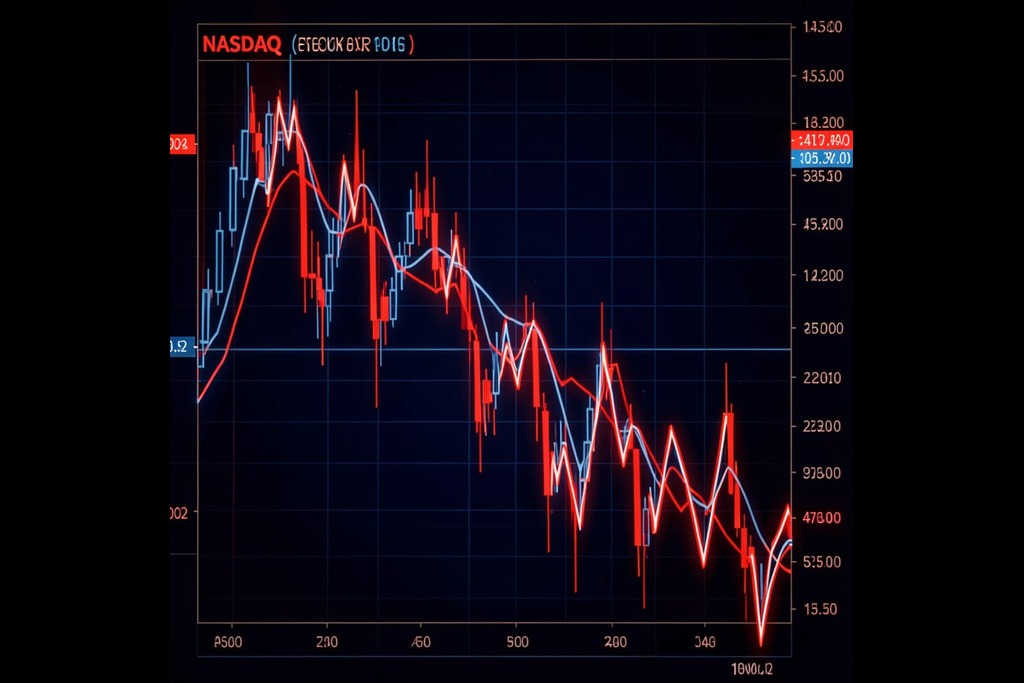
Flipping from their Friday positions, stock indices fell on Monday while oil prices soared. Over the weekend, peace negotiation between Iran and the United States broke down, with U.S. Vice President J.D. Vance said there was “no deal”.
The Dow dropped 0.7% while the Nasdaq and S&P 500 both fell 0.3%. Meanwhile, oil prices jumped with both Brent crude and West Texas Intermediate increasing by 7%.
Will No Deal Lead to a Stock Market Crash?
Several news outlets are already warning about an imminent market crash, but it is not that bad just yet. A crash could happen, but such an event is usually defined as a drop of about 20% or more. That is certainly not the case here, although the term crash is often used loosely to mean any sharp market drop.
Last week, the Nasdaq Composite climbed about 4%, and Monday’s decline has not come close to wiping out those gains. Until the market shows real loss from the previous week, there is no need to worry that a crash is happening. Tensions are heating up in the Middle East, of course, as Iran and the United States are at odds over the Strait of Hormuz. There is potential for the two countries to start attacking one another with missile strikes again, and that will definitely hurt the stock market and spike oil prices further.
The most serious factor at work right now is the oil price jump. That sizable increase is damaging to stocks and is alarming to investors. Now both Brent crude and WTI are above $100 a barrel once more. That psychological level could drive stocks down further as investors.
Traffic is now blocked both in and out of the Strait of Hormuz, and the situation is incredibly tense in the Middle East. Only traffic headed to non-Iranian ports is being allowed through at the moment. The U.S. government is hoping that peace talks will begin again in a few days, and investors are concerned that the situation may be so far gone that Iran is not willing to give in on any terms the United States proposes.
Stocks should continue to be volatile while this situation persists. As long as there is a chance that military strikes could resume or that shipping could be limited through the strait, then stocks will be in a fragile place where they could shift quickly at any moment.
- Check out our free forex signals
- Follow the top economic events on FX Leaders economic calendar
- Trade better, discover more Forex Trading Strategies
- Open a FREE Trading Account
- Read our latest reviews on: Avatrade, Exness, HFM and XM

Related Articles



Sidebar rates

Related Posts
 Save
Save
