South African Rand Forecast: Dovish FED, Moody’s Stable Rating Weigh on USD/ZAR
The South African rand is seeing a comeback as domestic reforms, monetary easing, and shifting global conditions create a more favorable...
Quick overview
- The South African rand has strengthened significantly, breaking below the R17 level against the U.S. dollar due to improved domestic policies and global conditions.
- Recent economic indicators, including a narrowed current account deficit and increased foreign reserves, have bolstered market confidence in the rand.
- The South African Reserve Bank's recent interest rate cut and clearer inflation targets signal a strategic shift towards a more stable macro environment.
- Global dynamics, particularly anticipated U.S. rate cuts, are further supporting the rand's performance against the dollar.
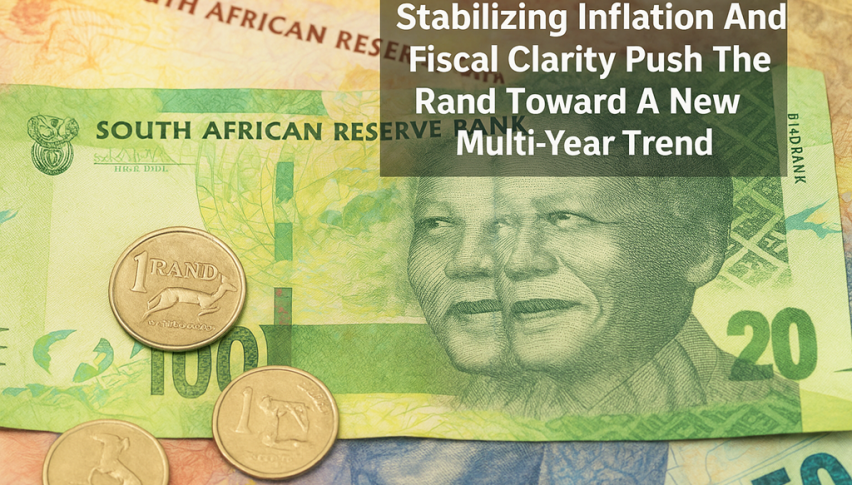
The South African rand is seeing a comeback as domestic reforms, monetary easing, and shifting global conditions create a more favorable environment for the currency.
Rand Strengthens As South Africa’s Policy Mix Gains Credibility
The South African rand has entered the new week with renewed momentum, breaking decisively beneath the R17 level against the U.S. dollar and holding that move with conviction. This surge reflects a broader shift in how markets are viewing the country’s trajectory, with monetary policy, fiscal communication, and inflation strategy aligning in a way not seen for several years. Investors are beginning to price in a sturdier macro framework, one that contrasts sharply with the volatility seen earlier this year when USD/ZAR hovered near R20.
USD/ZAR Chart Daily – MAs Acting As Resistance

The decline below R17 is particularly significant. Earlier attempts to break that level were brief and uncertain, with price consistently rebounding back toward the R17.50 resistance zone. Last week’s move was different. Dollar weakness following soft U.S. labor data allowed the rand to build strength throughout the week, and the pair closed firmly beneath the psychological floor.
USD/ZAR Chart Weekly – The 20 SMA Pushing the Pair Lower

This time, the bearish break carries far more structural weight. Market participants now see the path clearing toward the 2023 lows at R16.70, followed by deeper support around R16 on the long-term chart.
Improving Domestic Indicators Reinforce Market Confidence
Recent economic data has added substance to the rand’s recovery. South Africa’s current account deficit narrowed more than expected to 0.7% of GDP from 1.0%, signaling healthier external balances. The government also returned to international debt markets, issuing dollar-denominated eurobonds for the first time since 2024. Initial price guidance between 6.625% and 7.750% drew investor attention, helping support bond flows and indirectly strengthening the rand.
Foreign reserves climbed as well, rising to $70.024 billion in November from $69.364 billion in October, underscoring growing external stability. Additional macro releases pointed to firmer underlying momentum: M3 money supply expanded 7.52% in October, private-sector credit grew 7.26%, and trade data continued to show positive monthly surpluses. Government bonds also gained ground, with yields on 2035 maturities dipping toward 8.3%.
Equity markets reflected this improved sentiment. The JSE Top-40 index posted a 1.6% gain, reinforcing the idea that institutional capital is viewing South Africa more favorably. These data points collectively illustrate a country with strengthening financial underpinnings, lending further durability to the rand’s advance.
Monetary Easing Marks A Strategic Turning Point For SARB
The most pivotal moment came when the South African Reserve Bank delivered its first interest-rate cut of the cycle, lowering the repo rate by 25 basis points. The unanimous vote from the Monetary Policy Committee signaled conviction: the bank now sees enough progress on inflation to begin normalizing policy after an extended tightening period.
This shift was complemented by an equally important move on the fiscal side. Finance Minister Enoch Godongwana’s endorsement of a more explicit 3% inflation target introduced a clearer policy anchor. This clarity reduces uncertainty surrounding price stability and strengthens coordination between the Treasury and SARB. For investors, the combination of easing rates and credible inflation management presents a more predictable macro environment—a rarity in recent years.
The upcoming Moody’s review adds another layer of anticipation. With economic and fiscal dynamics improving, many in the market expect a shift in outlook from stable to positive, which could further reinforce foreign inflows.
Global Dynamics Create A Tailwind For South Africa
The global macro landscape is also creating room for the rand to outperform. Multiple central banks—the BOJ, SNB, RBA, and BOC—are expected to remain on hold this week, but all attention is centered on the Federal Reserve. Markets almost fully price in another 25-basis-point U.S. rate cut, a development that typically weakens the dollar and supports emerging-market currencies like the rand.
Guidance from the Fed will determine how deep this USD softness extends. A message hinting at a pause may temporarily steady the dollar, but any signal of continued cuts through 2025 and 2026 would restore downside pressure. Political speculation is also shaping expectations: reports that Kevin Hassett could succeed Jerome Powell—paired with his preference for faster, more aggressive cuts—has reinforced the market’s dovish bias.
Soft U.S. labor data further supports this view. ADP reported a 32,000 job decline, Challenger layoffs jumped above 71,000, and the delayed September payrolls report failed to change the broader narrative of a cooling employment landscape. These trends reduce the probability of any near-term U.S. tightening and keep the dollar on the defensive.
Outlook For USD/ZAR As Downside Momentum Intensifies
With domestic conditions improving and global dynamics tilting dovishly, the rand now holds a more durable advantage. As long as USD/ZAR remains below the R17 barrier, downward pressure should remain dominant. The next major levels lie at R16.70 and R16, both of which are now well within reach. Any short-term rebounds are likely to encounter resistance at key moving averages, which continue to track downward.
The combination of structural reforms, macro stabilization, and a softer U.S. dollar gives the rand one of its strongest fundamental backdrops in years—and sets the stage for a potentially deeper multi-month trend.
- Check out our free forex signals
- Follow the top economic events on FX Leaders economic calendar
- Trade better, discover more Forex Trading Strategies
- Open a FREE Trading Account
- Read our latest reviews on: Avatrade, Exness, HFM and XM

Related Articles


Sidebar rates

Related Posts
 Save
Save