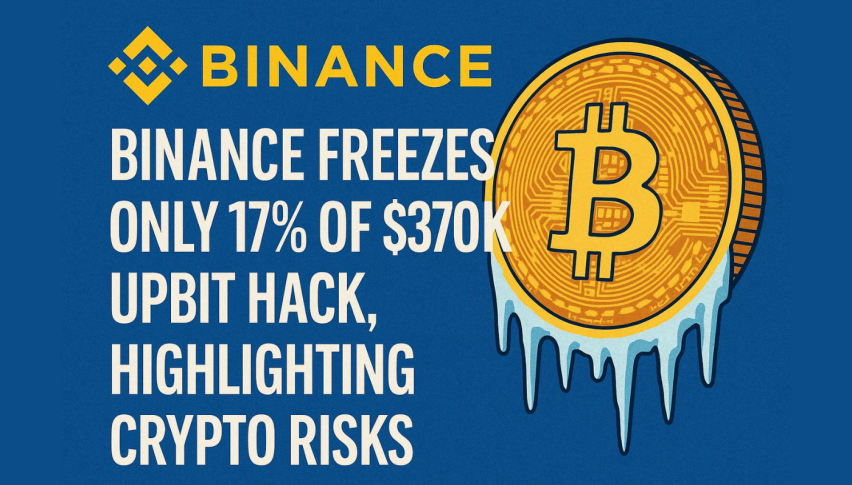
Binance Freezes Only 17% of $370K Upbit Hack, Highlighting Crypto Risks
Korean authorities revealed that Binance froze only a small fraction of crypto stolen during last month’s Upbit hack, despite urgent...
Quick overview
- Korean authorities reported that Binance froze only 17% of the assets requested after the Upbit hack, despite urgent requests from law enforcement.
- The hacking group used a sophisticated laundering scheme, moving stolen funds across over 1,000 wallets to obscure their trail.
- Upbit has since increased its cold storage ratio to 99% to enhance security following the $30 million loss from the breach.
- Experts emphasize the need for global coordination to enable immediate asset freezes during crypto crises.
Korean authorities revealed that Binance froze only a small fraction of crypto stolen during last month’s Upbit hack, despite urgent requests from police and the exchange itself. Investigators reported that just 17% of flagged assets were locked down, according to local media on Friday.
The hacking group behind the November 27 attack deployed a sophisticated laundering scheme, moving assets across more than 1,000 wallets within hours. Attackers repeatedly split the stolen funds, swapped tokens, and used bridges to obscure the trail, eventually funneling most of the assets into Binance service wallets.
Upbit and law enforcement sought an immediate freeze of roughly 470 million won ($370,000) in Solana deposited on Binance. The platform, however, froze only 80 million won ($75,000), citing the need for verification before taking broader action. The partial freeze occurred approximately 15 hours after the initial request.
- Freeze covered only 17% of the requested funds
- The delay prompted criticism from South Korean experts
- Binance declined to provide details, citing investigation policies
🇰🇷 Korean Authorities Claim #Binance Partially Complied in Freezing #Upbit Hack Funds
Korean authorities say #Binance froze only a small portion of the #crypto stolen during last month’s #Upbit hack pic.twitter.com/iPqSKuGU3i
— CryptOpus (@ImCryptOpus) December 12, 2025
Expert Concerns Over Slow Response
Security analysts warn that delayed intervention can magnify losses in crypto hacks. Cho Jae-woo, director at Hansung University’s Blockchain Research Institute, emphasized the importance of rapid action.
“To prevent damage from hacking, a swift initial freeze is essential. Exchanges often cite litigation risks as an excuse for hesitation,” Cho said.
Experts suggest establishing a global emergency hotline or a coordinated authority capable of imposing immediate freezes across exchanges during crises.
- Stolen Solana has largely been converted to Ethereum
- Conversion is likely aimed at higher liquidity in deep markets
- Experts argue that global coordination is crucial for asset recovery
Upbit Strengthens Security After $30M Loss
Following the breach, Upbit moved nearly all customer assets to cold storage, raising the offline storage ratio to 99%, far exceeding South Korea’s legal requirement of 80%. The exchange had already held 98.33% in cold wallets at the end of October, but accelerated its overhaul after the hack.
- Hack involved 44.5 billion won (~$30 million) in Solana
- Cold wallet ratio increased to 99%, hot wallet exposure near zero
- Authorities investigating possible links to North Korea’s Lazarus Group
The incident underscores ongoing vulnerabilities in crypto exchanges and the urgent need for coordinated responses to prevent rapid laundering of stolen funds.
- Check out our free forex signals
- Follow the top economic events on FX Leaders economic calendar
- Trade better, discover more Forex Trading Strategies
- Open a FREE Trading Account
- Read our latest reviews on: Avatrade, Exness, HFM and XM

Related Articles
Sidebar rates

Related Posts
 Save
SaveAva