South African Rand Forecast: Further Strength Ahead as Markets Price USD/ZAR Lower
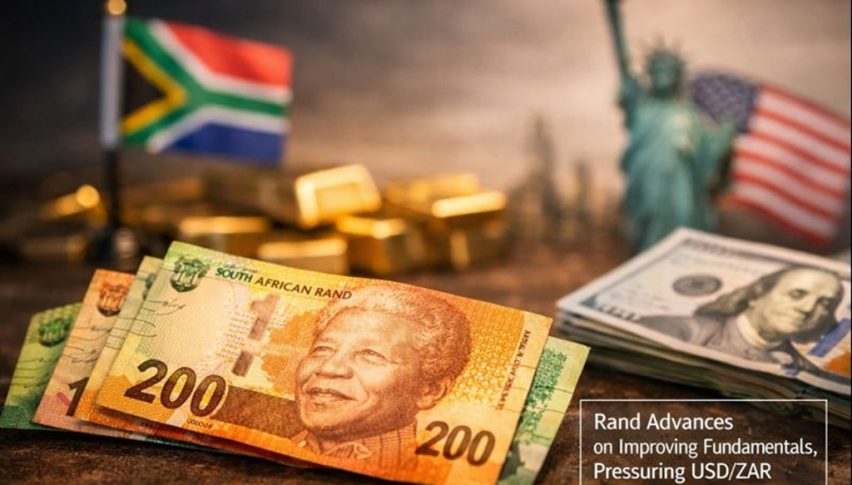
Due to increased legitimacy and backing from commodities, the South African rand has gained into early 2026. However, the rally is based...
Quick overview
- The South African rand has strengthened in early 2026 due to commodity support and improved investor confidence, but its gains are fragile.
- While the rally in precious metals has boosted export revenues, the rand remains vulnerable to global economic shifts and policy changes.
- Investor sentiment has improved thanks to better governance and fiscal oversight, but confidence is still conditional and not firmly established.
- Despite recent gains, structural challenges and reliance on commodities suggest that the rand's upside potential may be limited.
Due to increased legitimacy and backing from commodities, the South African rand has gained into early 2026. However, the rally is based on shaky foundations and is facing increasing opposition from policymakers as well as uncertainty throughout the world.
Rand Strength Builds, but Conviction Remains Cautious
The South African rand has started 2026 on firmer footing, extending gains as precious metals rally and investor confidence tentatively improves. However, beneath the surface, the currency’s advance appears more fragile than decisive, shaped as much by external tailwinds as by lasting domestic transformation.
While USD/ZAR has slipped below key psychological levels, the move has yet to fully convince markets that a durable trend reversal is under way. Authorities remain wary of excessive currency strength, and investors are increasingly aware that the rand’s history is marked by sharp reversals once global conditions turn less favourable.
Commodity Rally Helps, but Leaves the Rand Exposed
A powerful rally in precious metals has provided meaningful short-term support. Gold, platinum, and silver trading near record levels have improved South Africa’s terms of trade and boosted export revenues, helping ease external funding pressures.
As a major producer of these metals, South Africa benefits directly when prices rise. Stronger export receipts improve the current account picture and temporarily cushion the rand from global volatility. However, this reliance also leaves the currency vulnerable. Commodity-driven support is inherently cyclical, and history suggests that such tailwinds can fade quickly when global demand or risk sentiment shifts.
Rather than reflecting structural resilience, the rand’s strength remains closely tied to factors largely beyond domestic control.
Policy Credibility Improves, but Confidence Is Still Conditional
Investor sentiment toward South Africa has improved, supported by a perception of better governance, tighter fiscal oversight, and a more predictable policy environment. The South African Reserve Bank has played a key role, maintaining a consistent stance on price stability and communicating policy intentions clearly.
Inflation expectations have remained well anchored, reinforcing the SARB’s credibility and supporting rand-denominated assets. At the same time, reduced political noise has helped lower the risk premium that weighed heavily on the currency in recent years.
That said, confidence remains conditional rather than entrenched. Markets are responding to incremental improvement, not to decisive reform. Any signs of fiscal slippage, policy inconsistency, or political instability could quickly revive scepticism.
Economic Data Improves, but Momentum Is Uneven
Recent domestic data has been encouraging, though hardly conclusive. The SARB’s leading business cycle indicator rose modestly, hinting at stabilisation after prior weakness. Inflation printed at 3.5% year-on-year, comfortably within the target range and slightly below expectations.
While these figures offer breathing room for policymakers, they do not signal a robust growth acceleration. Structural challenges—weak productivity, energy constraints, and high unemployment—continue to limit South Africa’s economic potential.
As a result, the rand’s gains appear more reflective of reduced downside risk than of genuine growth optimism.
Global Liquidity Shifts Provide Temporary Relief
The rand’s advance has coincided with a softer U.S. dollar following the Federal Reserve’s recent rate cut. Improved global liquidity conditions have supported emerging-market currencies, particularly those linked to commodities.
This has allowed USD/ZAR to retreat sharply from earlier highs near R20, highlighting how sensitive the currency remains to global risk appetite. However, this sensitivity cuts both ways. Should U.S. inflation surprise to the upside or global risk aversion return, the rand could quickly surrender recent gains.
The currency’s history suggests that rallies driven by global liquidity often prove reversible.
Technical Break Looks Constructive, but Still Vulnerable
Technically, USD/ZAR has broken below key moving averages, which are now acting as resistance rather than support. The pair closed near R16.50 last week, down roughly 17% from April highs.
USD/ZAR Chart Daily – MAs Pushing the Trend Lower

While this move appears more sustained than previous dips below R17, the broader trend remains vulnerable to sudden shifts in sentiment. On longer-term charts, attention is turning toward the 100-month simple moving average near R16.00, a level that could attract buyers and slow further appreciation.
USD/ZAR Chart – Will the 100 SMA Hold As Support Again or Breakdown?

The risk is that the current move exhausts itself before establishing a clear long-term base.
Policy Coordination Helps, but Limits Upside
Improved coordination between monetary and fiscal authorities has underpinned recent stability. The SARB’s first rate cut of the cycle was unanimous, and Finance Minister Enoch Godongwana’s endorsement of a 3% inflation target has reinforced institutional alignment.
This coherence reduces uncertainty, but it also places implicit limits on currency strength. Policymakers have little incentive to tolerate excessive rand appreciation, which could undermine export competitiveness and constrain growth.
As a result, authorities may quietly welcome consolidation rather than continued gains.
Why the Rand’s Upside Is Likely Capped
Despite recent progress, expectations of a significantly stronger rand appear premature. Structural constraints, reliance on commodities, and sensitivity to global risk cycles remain entrenched features of the currency.
Market participants increasingly view the R15 level against the dollar as a practical ceiling rather than a destination. While modest gains are possible, the balance of risks suggests consolidation—or even renewed volatility—rather than a sustained appreciation trend.
US CPI Looms as a Near-Term Risk Event
The immediate test comes with U.S. CPI data due Tuesday. Wells Fargo expects headline CPI to rise 0.35% month-on-month and core CPI 0.36%, with annual rates holding steady.
Any upside surprise could strengthen the dollar and place renewed pressure on emerging-market currencies, including the rand. Conversely, a softer outcome may offer temporary relief—but would not resolve the structural vulnerabilities that continue to cap confidence.
Conclusion: A Rally Built on Narrow Support
The rand’s early-2026 strength reflects improved sentiment and favourable external conditions, but the foundation remains narrow. Commodity prices, global liquidity, and policy credibility have aligned for now, yet none offer guarantees.
Without deeper structural reform and sustained growth momentum, the rand’s recovery risks proving temporary—another cyclical upswing rather than a lasting transformation.
- Check out our free forex signals
- Follow the top economic events on FX Leaders economic calendar
- Trade better, discover more Forex Trading Strategies
- Open a FREE Trading Account
- Read our latest reviews on: Avatrade, Exness, HFM and XM

Related Articles
Sidebar rates

