Prosus Share Price JSE Threatens to Fall Below R1,000 Despite Buybacks and Solid Earnings
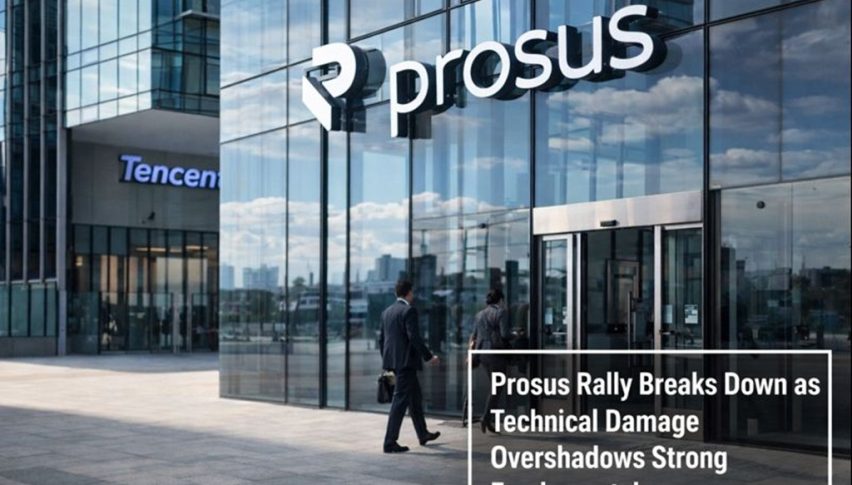
Prosus, which dominated the JSE for a large portion of 2025, is under pressure going into 2026 as a dramatic technical reversal calls into..
Quick overview
- Prosus experienced a significant rally in 2025, nearly doubling its share price before facing a sharp reversal in early 2026.
- Despite the recent decline, the company's fundamentals remain strong, with e-commerce revenue rising 22% year-on-year to $3.62 billion.
- Performance across Prosus's portfolio has been mixed, with standout results from iFood in Brazil but underperformance from eMag.
- The stock's technical breakdown raises concerns, as it struggles to maintain support levels, indicating a potential transition to a consolidation phase.
Prosus, which dominated the JSE for a large portion of 2025, is under pressure going into 2026 as a dramatic technical reversal calls into question an otherwise sound fundamental background.
A Powerful Rally That Lost Momentum
Prosus was one of the standout performers on the JSE throughout most of 2025, delivering a near-doubling in share price as investor confidence surged. That momentum peaked in mid-November when the stock reached an all-time high of R1,266, fuelled by strong earnings from Tencent and a broad recovery across Prosus’s global e-commerce portfolio.
However, the rally proved vulnerable once sentiment toward global technology and AI-linked stocks began to shift. After stalling in November, Prosus reversed sharply lower, interrupting what had been one of the most impressive uptrends of the year. Since then, the stock has fallen roughly 21% and is now hovering precariously near the psychologically important R1,000 level.
Fundamentals Remain Constructive Beneath the Surface
Despite the deterioration in price action, Prosus’s underlying business performance remains resilient. Interim results for the six months to September 2025 highlighted broad operational progress across its e-commerce ecosystem.
Total e-commerce revenue rose 22% year-on-year to $3.62 billion, matching expectations and reflecting strong demand across several platforms. Adjusted EBITDA climbed sharply to $530 million, translating into a 15% margin and comfortably exceeding last year’s performance. Adjusted EBIT came in at $400 million, slightly below consensus but still well ahead of the prior year.
OLX stood out, delivering revenue growth of 22% year-on-year, or 17% on an organic basis, reaching $473 million. This performance reinforced the group’s improving margin profile and the benefits of tighter cost discipline.
Mixed Performance Across Portfolio Assets
Performance across individual assets was uneven but broadly supportive of the longer-term strategy. iFood in Brazil exceeded expectations with revenue of $880 million, driven by steady order growth and improving operational leverage. While profitability missed estimates slightly, the trajectory remained constructive.
In contrast, eMag underperformed, posting revenue of $1.13 billion versus expectations of $1.24 billion. Weakness here weighed on overall sentiment, although stronger contributions from OLX helped offset the shortfall.
Prosus reaffirmed full-year guidance for e-commerce revenue of $7.3–$7.5 billion and adjusted EBITDA of $1.1–$1.2 billion, excluding Just Eat Takeaway, signalling management’s confidence in execution despite market volatility.
Tencent Continues to Anchor the Investment Case
Tencent remains central to Prosus’s valuation, with the group retaining roughly a 24% indirect stake through Naspers. Tencent’s latest results provided further reassurance, marking a third consecutive quarter of double-digit revenue growth.
Strength was driven by a recovery in gaming and the rollout of AI-enhanced features across its platforms. Tencent’s ability to generate consistent growth amid a volatile Chinese tech landscape continues to support Prosus’s long-term asset value, even as broader sentiment toward China remains cautious.
Strategic Adjustments Add Complexity
Prosus also disclosed for the first time that it reduced its exposure to Meituan, selling $549 million worth of shares across 2025, including $300 million in October. While not alarming in isolation, the move highlights ongoing portfolio management as the group balances concentration risk and capital allocation priorities.
The company has remained active on the capital management front, funding buybacks through the sale of $4.6 billion worth of Tencent shares. Free cash flow improved meaningfully to $1.3 billion, including the Tencent dividend, and swung back into positive territory even excluding it.
Buybacks Offer Support, But Not a Floor
In early January, Prosus continued its open-ended repurchase programme, buying back approximately 1.46 million shares at an average price of R1,035.24, for a total outlay of R1.51 billion. While buybacks provide incremental support and signal confidence, they have not been sufficient to arrest the broader technical deterioration.
Markets appear more focused on macro risk, global tech positioning, and the loss of upward momentum rather than capital return initiatives.
Technical Breakdown Shifts the Narrative
The most immediate challenge for Prosus is technical rather than fundamental. The stock has slipped below key daily moving averages, with the 200-day SMA (purple) near R1,000 briefly offering support during December after the November crash, before giving way last week.
PRXJn Chart Daily – The Uptrend Has Ended

On the weekly chart, the break below the 50-week moving average (yellow)—a level that has supported the stock since 2022—represents a notable change in trend. With that support gone, attention is shifting toward the 2021 highs just above R900 as the next major downside reference.
PRXJn Chart Weekly – The Uptrend Has Ended

Lower highs and repeated failed rebounds suggest that sellers remain in control for now.
A Market Favourite in Transition
Prosus’s pullback reflects a broader recalibration rather than a collapse in fundamentals. Strong assets, improving cash flow, and disciplined capital allocation remain intact. However, markets are clearly demanding renewed momentum and technical confirmation before re-engaging.
Unless the stock can reclaim lost support levels and stabilise above R1,000, the path of least resistance remains lower. For now, Prosus appears to be transitioning from momentum leadership to a consolidation phase—one that will test investor patience in the months ahead.
- Check out our free forex signals
- Follow the top economic events on FX Leaders economic calendar
- Trade better, discover more Forex Trading Strategies
- Open a FREE Trading Account
- Read our latest reviews on: Avatrade, Exness, HFM and XM

Related Articles



Sidebar rates

Related Posts
 Save
SaveAva
