Platinum Prediction: XPT Price Nears $3,000 as Demand, Deficits, and Macro Tailwinds Align
As supply shortages, rising Chinese demand, and favorable macro conditions change its long-term prognosis, platinum has started 2026 with...
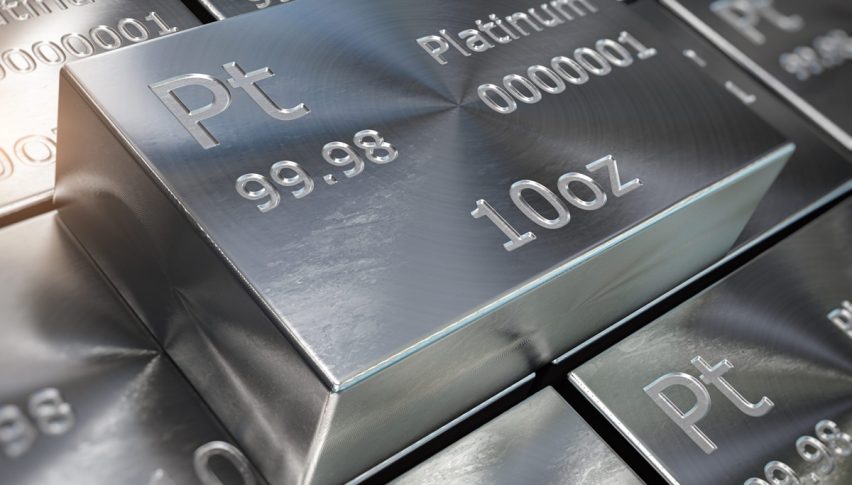
Quick overview
- Platinum has surged approximately 30% year-to-date, nearing the $3,000 mark due to supply deficits and increased demand, particularly from China.
- The metal's resurgence is driven by a combination of structural forces, including evolving policies and renewed investment interest, repositioning it as both an industrial necessity and a strategic asset.
- Supportive monetary conditions and a shift in European regulations have bolstered platinum's long-term demand outlook, particularly in the automotive sector.
- The convergence of strong industrial consumption and rising investment demand is broadening platinum's appeal, suggesting a re-rating of its long-term value as it approaches 2026.
Live PLATINUM Chart

As supply shortages, rising Chinese demand, and favorable macro conditions change its long-term prognosis, platinum has started 2026 with remarkable velocity, climbing about 30% year to date and quickly approaching $3,000.
Platinum Emerges as a Leader in the Commodities Complex
Platinum has reasserted itself as one of the most compelling performers across the global commodities space, decisively breaking higher and drawing renewed interest from both investors and industrial users. Having reclaimed ground above $2,000, the metal has accelerated sharply, outperforming many industrial commodities and even several traditional precious metals.
This resurgence reflects a broader re-evaluation of platinum’s role in global markets. Long viewed as cyclical and vulnerable to shifts in automotive demand, platinum is now benefiting from a convergence of structural forces. Tight supply, evolving policy frameworks, and renewed investment interest are combining to reposition the metal as both an industrial necessity and a strategic store of value.
Price Action Signals a Durable and Self-Reinforcing Uptrend
From a technical perspective, platinum’s rally is not a sudden spike but the continuation of a trend that has been building since mid-2025. Pullbacks have been shallow and short-lived, with buyers consistently defending key support levels.
Platinum Weekly Chart – A Strong Rebound Off the 20 SMA

The November correction, for example, found firm support near the 20-week moving average, preserving the broader bullish structure. Subsequent advances have produced a clear sequence of higher highs and higher lows—classic signals of sustained momentum.
Platinum Chart Daily – The 20 SMA Held As Support

Even periods of heightened volatility, including thin holiday trading late last year, failed to break the trend. A sharp late-December swing briefly pushed prices lower before buyers quickly re-entered, reinforcing the view that dips are being treated as opportunities rather than warning signs. With momentum intact, platinum is now pressing toward the psychologically important $3,000 level.
Monetary Policy Shifts Strengthen the Macro Backdrop
Supportive monetary conditions have played an important role in platinum’s advance. Signals from the U.S. Federal Reserve indicating a cooling labour market and easing inflation pressures have reinforced expectations that interest rates will remain lower for longer.
Lower rates tend to improve liquidity conditions and reduce the opportunity cost of holding real assets. For platinum, this backdrop is especially constructive, as it benefits simultaneously from improved financial conditions and its deep links to industrial activity.
As markets look ahead to further policy clarity in early 2026, the expectation of accommodative monetary settings continues to underpin demand for commodities with constrained supply profiles.
European Policy Shifts Revive the Long-Term PGM Demand Story
One of the most significant structural tailwinds for platinum has emerged from Europe’s evolving regulatory stance. The European Union’s decision to delay its proposed 2035 ban on internal combustion engines has materially altered the demand outlook for platinum group metals (PGMs).
Rather than signalling a retreat from emissions goals, the policy shift extends the lifespan of combustion engines while simultaneously tightening emissions standards. This combination increases platinum loadings in catalytic converters, directly supporting long-term demand.
For markets that had heavily discounted platinum on expectations of rapid electrification, this reversal has forced a reassessment. The automotive sector, far from becoming irrelevant, now represents a more durable and stable source of consumption than previously assumed.
China Becomes the Primary Engine of Demand
While global macro forces have set the foundation, China has emerged as the dominant driver of platinum’s recent acceleration. As gold prices pushed to record highs, Chinese consumers and investors increasingly turned to platinum as a more affordable alternative for jewellery, bars, and coins.
China now accounts for the majority of global platinum bar and coin demand, marking a dramatic shift from earlier cycles. Industry events such as Shanghai Platinum Week have highlighted growing engagement across the entire value chain, from manufacturers to institutional investors.
Beyond consumer demand, platinum’s role in China’s industrial strategy is expanding. Its applications in hydrogen technologies, emissions control, and advanced manufacturing align closely with national priorities, reinforcing long-term consumption trends.
Physical Markets Tighten as Trade Flows Shift
Conditions in the physical platinum market have tightened considerably. Defensive stock-building, reduced availability, and elevated lease rates point to increasing stress across supply chains.
A key contributor has been the shift in global trade flows following the United States’ decision to add platinum and palladium to its critical minerals list. This move has redirected material toward the U.S., reducing availability in traditional markets and lifting regional premiums.
These physical constraints have added an important layer of price support, reinforcing the impact of financial and industrial demand.
Persistent Supply Deficits Leave Little Room for Error
On the supply side, the outlook remains structurally constrained. The platinum market is expected to record its third consecutive annual deficit, with the shortfall estimated at approximately 850,000 ounces.
Production growth has been limited, particularly in South Africa, which dominates global supply. Years of underinvestment, rising costs, operational challenges, and power constraints have restricted output expansion. At the same time, geopolitical uncertainty continues to cloud Russian supply.
Although higher prices have encouraged some increase in recycling, these volumes remain insufficient to close the gap. As inventories continue to draw down, the market remains highly sensitive to any additional disruptions.
Industrial and Investment Demand Converge
What sets the current platinum cycle apart is the convergence of strong industrial consumption and rising investment demand. Automotive use remains resilient due to stricter emissions standards and increased platinum loadings, while industrial applications in energy transition technologies continue to grow.
At the same time, investment interest has accelerated sharply. Demand for platinum bars and coins is projected to rise significantly, led by China but supported by growing participation across Europe, the United States, and India.
This dual demand profile has broadened platinum’s appeal and shifted perceptions. Once viewed as a niche metal, platinum is increasingly being treated as a strategic asset within diversified portfolios—one with both tangible utility and limited supply.
A Re-Rated Market With Momentum Into 2026
As platinum approaches the $3,000 level, the rally reflects more than short-term enthusiasm. Tight physical markets, unresolved supply deficits, policy support, and expanding demand have combined to create a structurally stronger market.
With both industrial users and investors competing for a limited pool of supply, platinum’s momentum into 2026 appears well supported—suggesting that the current move may represent not a peak, but a re-rating of the metal’s long-term value.
- Check out our free forex signals
- Follow the top economic events on FX Leaders economic calendar
- Trade better, discover more Forex Trading Strategies
- Open a FREE Trading Account
- Read our latest reviews on: Avatrade, Exness, HFM and XM

Related Articles
Sidebar rates

Related Posts
 Save
Save