Wall Street Deepens Its Slump, Marking a Fifth Drop in Six Sessions
Investors also digested weekly jobless claims data, which exceeded expectations with 231,000 new applications.
Quick overview
- Wall Street's main indexes fell on Thursday, driven by a wave of risk aversion following disappointing technology earnings and weak labor market data.
- The Dow Jones and S&P 500 both dropped 1.2%, while the Nasdaq Composite slid 1.6%, with significant losses in technology stocks like Qualcomm and Alphabet.
- January saw the highest job cuts since 2009, with 108,435 layoffs reported, nearly tripling December's total, which further dampened investor confidence.
- The probability of a Federal Reserve rate cut in March increased to nearly 16% following the labor data, as investors remain focused on upcoming tech earnings.
This situation is unfolding alongside the corporate earnings season, which could further shake asset prices, and follows a disappointing U.S. employment report.

Wall Street’s main indexes fell on Thursday after what markets have dubbed the “Software Armageddon” battered technology stocks over recent days, driving a broader wave of risk aversion that spilled over into other asset classes such as commodities and cryptocurrencies.
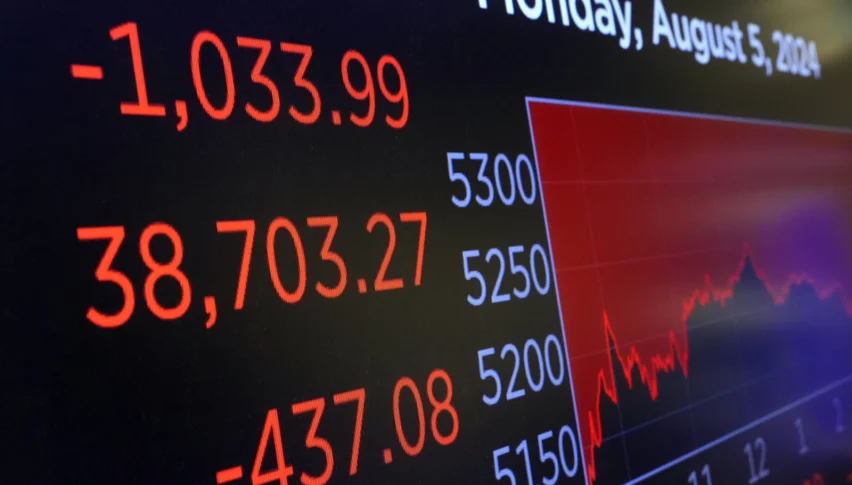
In this context, the Dow Jones Industrial Average fell 1.2% to 48,908.41 points, the S&P 500 dropped 1.2% to 6,799.99, and the Nasdaq Composite slid 1.6% to 22,540.59.
Technology stocks extended their losses, including post-earnings declines in Qualcomm (-9%) and Alphabet Inc. (-2.5%). Weak labor market data also weighed heavily on investor confidence.
Highest January Job Cuts Since 2009
On the economic calendar, sentiment was further dented by data showing 108,435 job cuts in the U.S. in January, the highest January figure since 2009. The number also nearly tripled December’s total of 35,554 layoffs.
“Job cuts announced in January more than doubled year over year, reaching their highest level since the Great Recession of 2009,” said Mohamed El-Erian, former CEO of Pimco, in a post on X.
Meanwhile, a Reuters report noted that the Trump administration has finalized reforms to the U.S. federal civil service system, citing a government statement. The changes grant the president expanded authority to hire and dismiss roughly 50,000 federal employees.
Investors also digested weekly jobless claims data, which exceeded expectations with 231,000 new applications. Continuing claims rose to 1.844 million, slightly below forecasts.
Earlier in the session, the December Job Openings and Labor Turnover Survey (JOLTS) showed job openings moderating to 6.542 million, well below the consensus estimate of 7.2 million.
Following the labor data, the probability of a 25-basis-point Federal Reserve rate cut in March edged up to nearly 16%, from about 9% the previous day.
Tech Earnings Remain in Focus
Wall Street closed Wednesday with mixed results, as the ongoing rotation out of technology stocks dragged on the S&P 500 and Nasdaq. Software stocks had recently suffered a sharp sell-off amid concerns over the perceived impact of artificial intelligence on the sector.
That downturn spilled over into chipmakers in the prior session, reflecting broader worries about AI-related capital spending plans and elevated valuations.
On the investment front, Alphabet surprised investors by unveiling capital expenditure plans of up to $185 billion for 2026, exceeding expectations. The company’s Class A shares fell around 0.6%.
Qualcomm, meanwhile, plunged 9% after the chipmaker issued current-quarter guidance well below Wall Street estimates, citing a global shortage of memory chips expected to weigh on smartphone sales and overall device demand.
- Check out our free forex signals
- Follow the top economic events on FX Leaders economic calendar
- Trade better, discover more Forex Trading Strategies
- Open a FREE Trading Account
- Read our latest reviews on: Avatrade, Exness, HFM and XM

Related Articles


Sidebar rates

Related Posts
 Save
Save