Argentine Stocks Slide as Much as 11% on Wall Street
Argentine ADRs traded sharply lower as well, with declines of up to 11.1%, led by Bioceres, followed by Grupo Supervielle (-8.5%).
Quick overview
- The dollar-denominated S&P Merval fell 3.4%, contributing to a rise in Argentina's country risk to nearly 520 basis points.
- Dollar-denominated bonds continued their downward trend, with Argentine stocks in New York dropping by as much as 11%.
- Unexpected domestic developments, including the resignation of Marco Lavagna from INDEC, dampened investor interest in local assets.
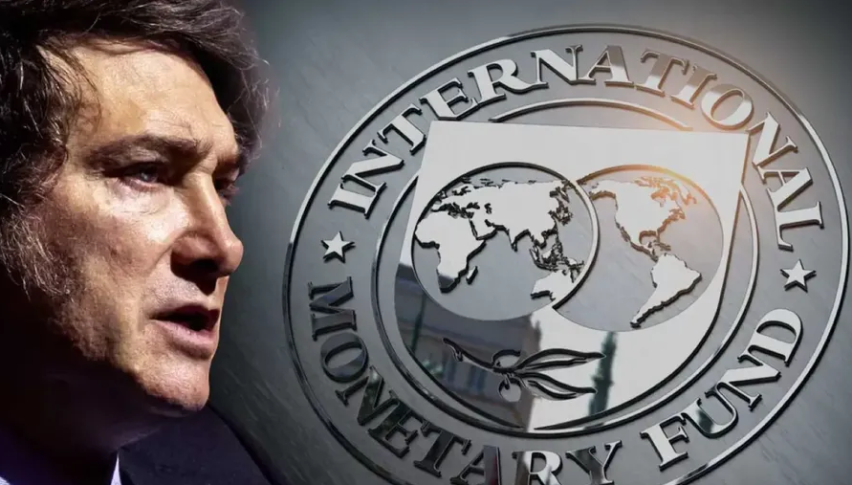
- The IMF is conducting a review of Argentina's policy targets amid increasing global risk aversion.
The dollar-denominated S&P Merval sank 3.4%, while declines in sovereign bonds prevented Argentina’s country risk from breaking back below the key 500-point threshold.

Dollar-denominated bonds fell again on Wall Street this Thursday, extending the negative trend seen in recent sessions. Against this backdrop, Argentina’s country risk, measured by J.P. Morgan, rose sharply and moved closer to 520 basis points. Argentine stocks trading in New York, meanwhile, plunged by as much as 11%.
Across the curve, Global bonds posted losses of up to 0.4%, led by the GD41, followed by the GD38 (-0.3%), while Bonares slipped as much as 0.3%, driven by the AL35. As a result, country risk climbed 14 points (+2.8%) to 516 basis points, according to J.P. Morgan—marking its largest increase since November 21.
Markets extended their downward streak on Thursday amid unexpected domestic developments, including the resignation of Marco Lavagna from Argentina’s national statistics agency (INDEC), while an International Monetary Fund (IMF) mission arrived in the country to conduct a review of policy targets.
The government decided not to update the 2004 base year used to calculate monthly inflation, a change previously pledged by Lavagna. The decision triggered his departure and dampened investor interest in local assets.
Economy Minister Luis Caputo reaffirmed that adjustments to CPI weightings will be implemented only after the disinflation process is complete. He explained that both he and President Javier Milei opposed the change on technical grounds, arguing that the proposed revisions relied on outdated data from 2017 and 2018. The political noise surrounding INDEC pushed country risk back above 500 basis points, after having fallen last week to its lowest levels in nearly eight years.
At the same time, the IMF sent an official delegation to Argentina to review performance targets. A source at the central bank (BCRA) expressed confidence in current results. Globally, risk aversion also intensified, with major U.S. stock indexes posting losses of up to 1.4%.
Argentine ADRs traded sharply lower as well, with declines of up to 11.1%, led by Bioceres, followed by Grupo Supervielle (-8.5%), BBVA (-8.5%), and Grupo Financiero Galicia (-8.2%).
- Check out our free forex signals
- Follow the top economic events on FX Leaders economic calendar
- Trade better, discover more Forex Trading Strategies
- Open a FREE Trading Account
- Read our latest reviews on: Avatrade, Exness, HFM and XM

Related Articles
Sidebar rates

Related Posts
 Save
Save